How Deep Is a Bathroom Vanity?
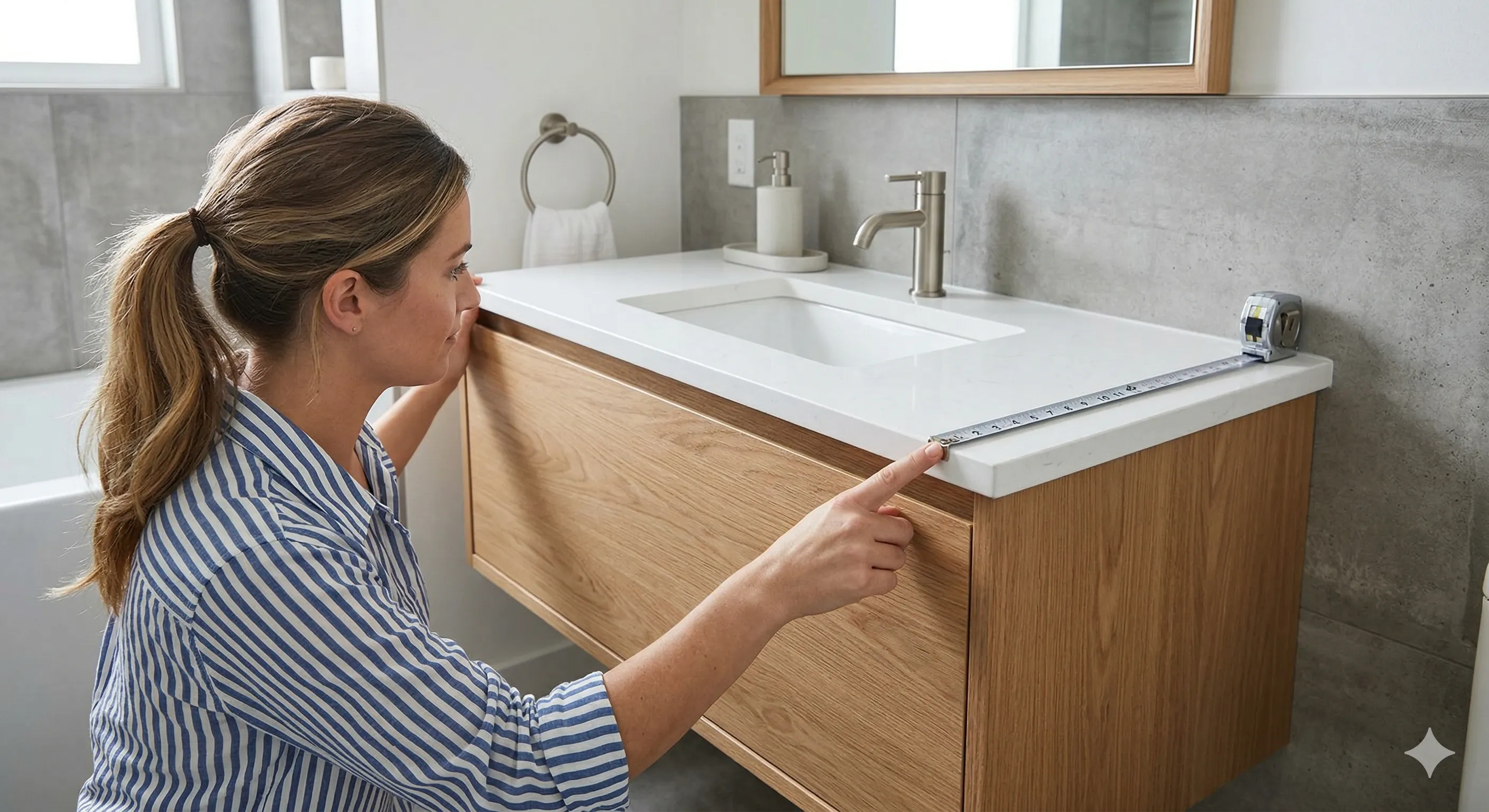
When shopping for a bathroom vanity, width and style get most of the attention. But depth — the front-to-back measurement — is arguably the most critical dimension for functionality and bathroom flow. A vanity that's too deep makes a small bathroom feel cramped and can block doorways, shower entries, or toilet access. A vanity that's too shallow may not accommodate standard sinks or provide enough counter space to be practical.
Understanding how deep is a bathroom vanity and which depth is right for your space helps you avoid costly ordering mistakes and ensures your bathroom is both functional and comfortable.
Standard Vanity Depth Sizes
| Category | Depth Range | Cabinet Depth | Best For |
|---|---|---|---|
| Narrow/Shallow | 16–18 inches | 14–16 inches | Powder rooms, half baths, tight spaces |
| Standard | 18–21 inches | 16–19 inches | Guest baths, hall baths, most bathrooms |
| Deep | 22–24 inches | 20–22 inches | Master baths, custom bathrooms |
| Extra Deep (furniture-style) | 24–28 inches | 22–26 inches | Large master baths, furniture conversions |
Important note: Vanity depth is typically measured including the countertop, which usually overhangs the cabinet by 1–1.5 inches on the front. So a "21-inch" vanity typically has a cabinet that's about 19.5 inches deep with a countertop that extends to 21 inches.
How to Measure Vanity Depth
Measuring the Existing Space
- Measure from the wall where the vanity will sit (back of vanity) straight out toward the center of the bathroom
- Identify obstructions — measure the distance to the nearest obstacle on the opposite side: toilet, shower/tub, door swing arc, opposite wall, or another cabinet
- Calculate clearance — subtract the vanity depth from the total available distance. You need at least 21" of clear floor space in front of the vanity.
Measuring an Existing Vanity
- Measure from the back of the cabinet (against the wall) to the front edge of the countertop — this is the total vanity depth
- Measure from the back of the cabinet to the front face of the cabinet doors/drawers — this is the cabinet depth
- Note the difference — typically 1–1.5 inches of countertop overhang
Choosing Vanity Depth by Room Type
Powder Room / Half Bath (16–18 inches)
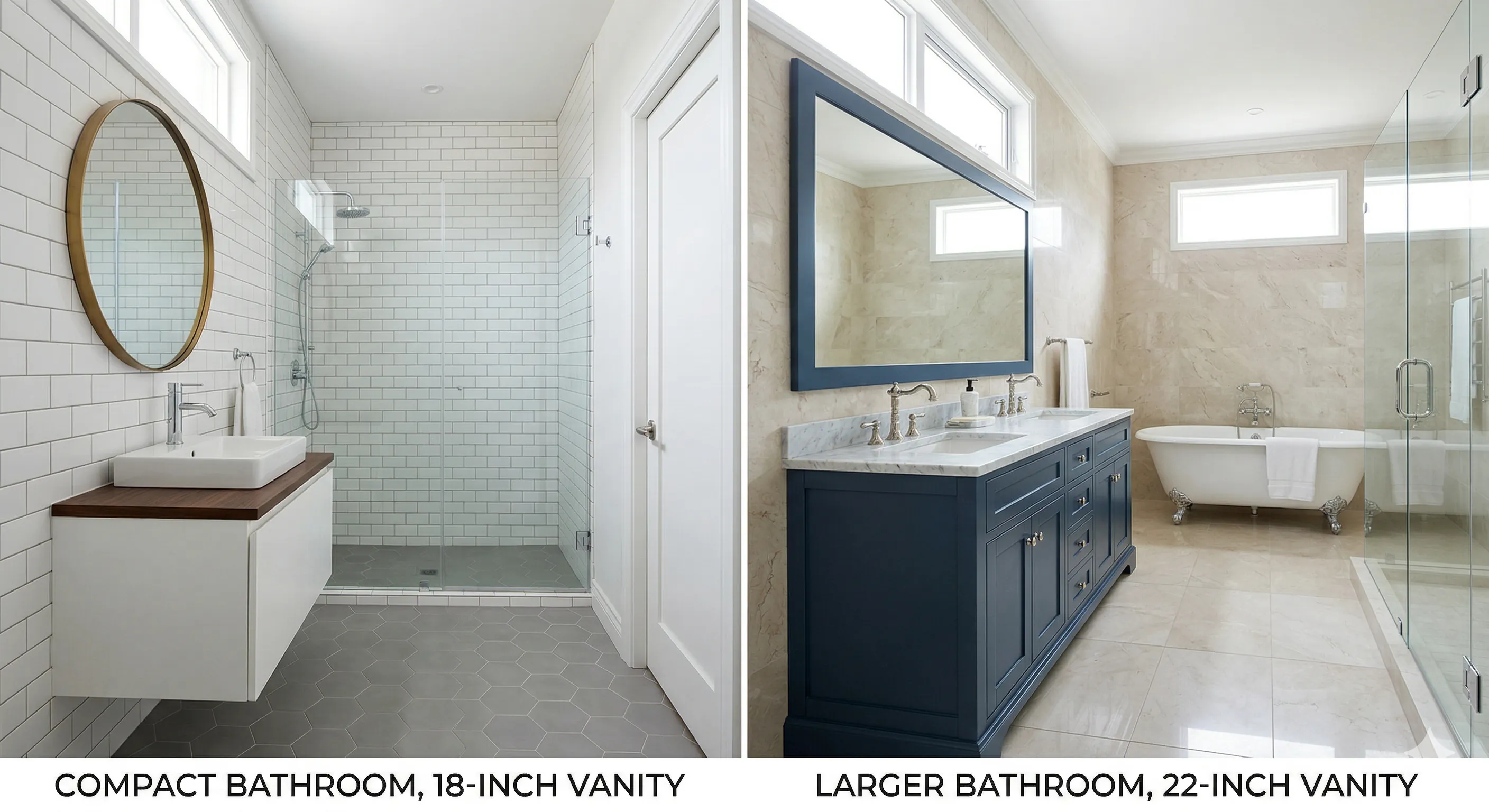
Powder rooms are typically the smallest bathrooms in the house (often 3' × 5' or 3' × 6'). A standard 21-inch vanity leaves only 15–21 inches of standing room in a 3-foot-wide room, which feels claustrophobic. A 16–18 inch narrow-depth vanity provides adequate sink space while keeping the room functional.
Guest Bath / Hall Bath (18–21 inches)
Standard 18–21 inch depth works well in most guest and hall bathrooms, which are typically 5' × 8' or larger. This depth accommodates standard drop-in or undermount sinks and provides adequate counter space for daily grooming.
Master Bathroom (21–24 inches)
Master bathrooms are typically large enough for deeper vanities. A 22–24 inch depth provides noticeably more counter space and interior storage, which is especially valuable for double-sink vanities where counter real estate is shared between two users.
ADA-Accessible Bathrooms (17–19 inches, with open front)
ADA guidelines require knee clearance under the sink for wheelchair users. ADA-compliant vanities are typically 17–19 inches deep with an open front (no cabinet doors below the sink area) to provide the required 8-inch deep knee space at 27 inches above the floor.
Standard Width and Height Dimensions
For context, here are the full standard dimensions:
Standard Widths
| Vanity Type | Common Widths |
|---|---|
| Single sink | 24", 30", 36", 48" |
| Double sink | 48", 60", 72" |
| Narrow single | 18", 24" |
Standard Heights
| Height Type | Height | Notes |
|---|---|---|
| Traditional | 30–32 inches | Standard for decades, lower and more accessible |
| Comfort height | 34–36 inches | Modern standard, matches kitchen counter height, easier on the back |
| ADA compliant | 34 inches max (to counter top) | Required for accessible bathrooms |
How Sink Type Affects Depth Requirements
The type of sink you choose directly impacts the minimum vanity depth:
- Drop-in sink — requires at least 17–18" of cabinet depth to fit the basin. Most drop-in sinks are 16–20" front-to-back. Works with standard or deep vanities.
- Undermount sink — same depth requirements as drop-in, but needs a solid countertop material (stone, quartz, solid surface) — not laminate.
- Vessel sink (sits on top) — the most forgiving for shallow vanities since the basin sits above the counter. A 16" deep vanity works fine with a vessel sink because the sink's own depth is added vertically, not horizontally.
- Integrated sink/counter — a one-piece unit where the sink and counter are a single molded piece. Available in standard and narrow depths. Easy to clean but offers fewer style options.
- Pedestal sink — not technically a vanity, but worth mentioning for tiny bathrooms. Pedestal sinks are only 8–10" deep at the base, providing maximum floor space with minimal storage.
- Wall-mounted sink — attaches directly to the wall with no vanity or pedestal. Saves the most floor space (zero depth at floor level) but provides no storage.
Plumbing Considerations for Vanity Depth
Plumbing rough-in locations can limit your vanity depth options:
- Drain location — the drain pipe typically exits the wall 16–18" above the floor and 4–6" from the wall surface. A shallow vanity may not have enough depth to accommodate the trap and drain alignment.
- Supply lines — hot and cold supply valves are typically set 4–6" from the wall center. Shallower vanities may require relocated supply lines or flexible connectors.
- P-trap clearance — the P-trap needs space to connect the sink drain to the wall drain. Minimum depth for P-trap clearance is usually 14–16" from the wall to the inside front of the cabinet.
- If switching to a shallower vanity — have a plumber verify the existing drain and supply locations work with the new depth before purchasing. Moving plumbing inside the wall costs $300–$800.
Required Clearances and Building Codes
| Clearance Type | Code Minimum | Recommended |
|---|---|---|
| In front of vanity | 21 inches | 24–30 inches |
| Between vanity and toilet center | 15 inches (to toilet centerline) | 18+ inches |
| Between vanity and bathtub/shower | No code minimum | 6+ inches |
| Door clearance (door swing) | Must not block exit | Full door swing clear of vanity |
| Between two opposing vanities | 21 inches each side | 48+ inches total |
Practical tip: Take the total distance from the vanity wall to the opposite obstruction (wall, tub, toilet), subtract 24–30 inches for comfortable standing clearance, and the remainder is your maximum vanity depth. For example, in a 5-foot-wide bathroom: 60" – 30" clearance = 30" maximum vanity depth (well above any standard vanity, so you have full flexibility). In a 3-foot-wide powder room: 36" – 21" minimum clearance = 15" maximum depth (you'd need a narrow vanity or a pedestal/wall-mount sink).
Best Narrow-Depth Vanities for Small Bathrooms
If you need a vanity shallower than 18 inches, here are your best options:
- Wall-mounted vanities — float off the floor at 16–18" depth, making the room feel larger by exposing floor space underneath
- Corner vanities — fit into an unused corner with a diagonal front, effectively reducing how much room depth they consume
- Vessel sink vanities — a 16" deep cabinet with a vessel bowl on top provides a full sink experience in a narrow footprint
- Open-shelf vanities — no cabinet doors mean the visual depth feels less imposing, even at standard dimensions
- Custom-built vanities — built to exact specifications for non-standard spaces. Cost $500–$2,000+ depending on materials and complexity.
Vanity Costs by Size (2026)
| Type | Depth | Price Range |
|---|---|---|
| Budget stock (Home Depot/Lowe's) | 18–21" | $150–$500 |
| Mid-range stock | 18–21" | $500–$1,500 |
| Premium/designer | 21–24" | $1,500–$4,000 |
| Narrow-depth (16–18") | 16–18" | $200–$800 |
| Custom built | Any | $800–$3,000+ |
| Floating/wall-mount | 16–20" | $250–$1,500 |
For more bathroom remodeling ideas, explore our kitchen and bath guide.
Want to learn more about kitchen and bathroom renovations?
Read Our Complete Kitchen & Bath Guide →Frequently Asked Questions
More Kitchen & Bath Guides
You May Also Like
How Much Is Epoxy Flooring Per Square Foot
Complete cost breakdown for epoxy flooring — garage, basement, and commercial. Materials, labor, and DIY vs pro pricing.
How to Repair Swollen Laminate Flooring Without Replacing
Fix water-damaged laminate floors without tearing everything out. DIY repair methods that actually work.
How Long Do Water Softeners Last
Water softener lifespan by type, maintenance tips to extend life, and signs it's time for replacement.
How to Connect a Water Softener
Complete water softener installation guide. Plumbing connections, bypass valve setup, and initial programming.
Disclaimer: This content is for informational purposes only. Always verify local building codes for your specific jurisdiction. HouseFixGuide may earn a commission from links on this page.