A clogged toilet is a household emergency — especially when it's your only bathroom, it's overflowing onto the tile floor, or you have guests arriving in an hour. In those moments, you'll pay almost anything to make it work again. But understanding what plumbers actually charge helps you know whether you're getting a fair deal or being taken advantage of during a stressful moment.
This guide breaks down how much does a plumber charge to unclog a toilet by method, time of day, severity, and region — plus what to try yourself before making that call.
Cost by Unclogging Method (2026)
| Method | Cost Range | Time | When Used |
|---|
| Plunger | $100–$150 | 5–15 min | Simple organic clogs (toilet paper, waste) |
| Closet auger (toilet snake) | $100–$200 | 15–30 min | Deeper clogs or objects stuck in the trap |
| Drain snake (through cleanout) | $150–$300 | 30–60 min | Clogs past the toilet in the drain line |
| Power/motorized snake | $200–$400 | 30–90 min | Stubborn or deep clogs, partial blockages |
| Hydro jetting | $300–$600 | 1–2 hours | Grease buildup, tree roots, scale deposits |
| Camera inspection + clearing | $200–$500 | 30–90 min | Diagnosing repeated clogs, finding root cause |
| Main sewer line clearing | $300–$600+ | 1–3 hours | Blockage in main line affecting all fixtures |
| Toilet removal + clog clearing | $200–$400 | 1–2 hours | Object lodged deep in toilet trap (toys, phones) |
Cost Breakdown Explained
Service Call / Trip Fee ($50–$100)
Nearly every plumber charges a service call fee — also called a trip fee, dispatch fee, or diagnostic fee. This covers the cost of driving to your home with a fully equipped service van. It's charged regardless of whether any work is performed, though most plumbers apply it toward the total bill if you proceed with the repair.
Hourly Labor ($75–$150/hour)
Most plumbers charge $75–$150 per hour for labor. A simple toilet clog takes 15–30 minutes, so you may be charged for a minimum call (usually 1 hour minimum) rather than a fractional hour. Some plumbers charge flat rates for specific services instead of hourly.
Equipment Fees ($0–$100)
Basic tools (plunger, closet auger) are included in the labor rate. Specialized equipment — power snake, hydro jetter, camera — may carry additional equipment charges of $50–$100 per use.
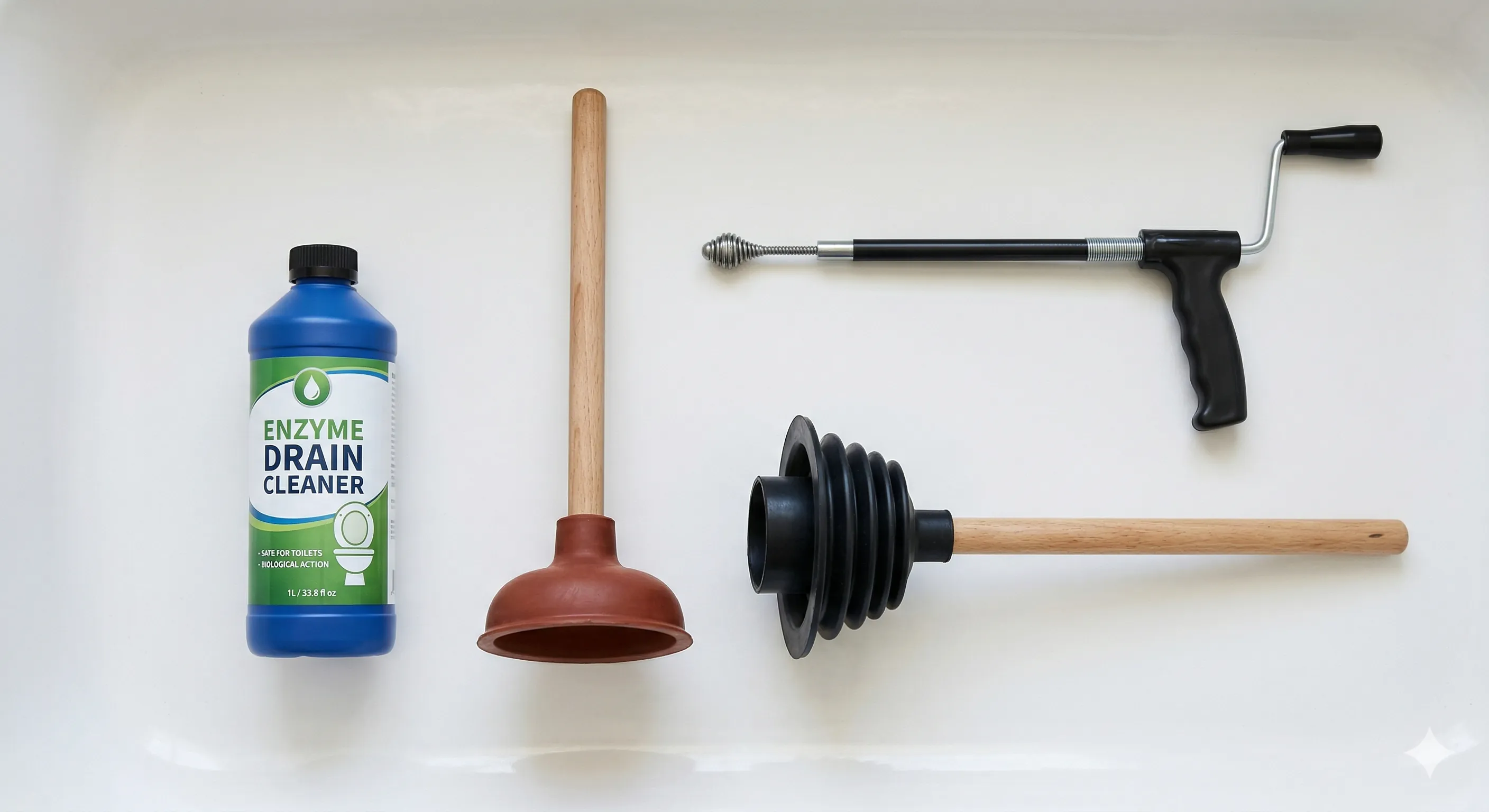 From least to most expensive: plunger ($100–$150), closet auger ($100–$200), drain snake ($150–$300), hydro jetting ($300–$600)
Factors That Affect the Price
1. Clog Severity
A simple toilet paper clog that a plunger handles in 5 minutes costs far less than a toy lodged in the trap that requires pulling the toilet off the flange. Severity is the single biggest cost variable.
2. Time of Service
| Timing | Typical Markup |
|---|
| Business hours (M–F, 8am–5pm) | Standard rate |
| Evenings (5pm–10pm) | +$50–$100 |
| Weekends | +$50–$150 |
| Holidays / late nights | +$100–$200 (1.5×–2× rate) |
3. Location
Urban areas with high cost of living (NYC, LA, SF, Chicago) charge 30–50% more than rural areas or small cities. Regional averages:
- Northeast / West Coast: $150–$350
- Midwest / Southeast: $100–$250
- Rural areas: $80–$200
4. Clog Location
A clog in the toilet's internal trap is cheaper to clear than one in the drain line below the floor, which is cheaper than a main sewer line blockage. Each step deeper into the system requires larger, more specialized equipment and more time.
5. Recurring Issue
If the plumber determines the clog is a symptom of a bigger problem (tree roots in the sewer line, bellied pipe, inadequate venting), the diagnostic and repair costs increase significantly. A camera inspection ($150–$300) may be recommended to identify the root cause.
DIY: Try These Before Calling a Plumber
1. The Plunger (Works 90% of the Time)
Use a flange plunger (the kind with an extended rubber lip that fits into the toilet drain). Flat cup plungers (for sinks) don't create a good seal in toilets.
- Place the plunger over the drain opening, ensuring a full seal
- Push and pull vigorously for 15–20 strokes
- The push compresses air and water against the clog; the pull creates suction that dislodges it
- Test by flushing. Repeat 2–3 times before giving up.
2. Hot Water and Dish Soap
For organic clogs (toilet paper, waste):
- Squirt a generous amount of dish soap into the toilet bowl
- Add a bucket of hot (not boiling — boiling water can crack porcelain) water from waist height
- Wait 10–15 minutes for the soap and heat to lubricate and soften the clog
- Try plunging again — the soap often makes the difference
3. Closet Auger ($25–$40 at Home Depot)
A closet auger (toilet auger) is a specialized hand-crank snake designed specifically for toilets. The protective rubber sleeve prevents scratching the porcelain:
- Insert the auger into the toilet drain opening
- Crank the handle to feed the cable and rotating tip into the drain
- When you feel resistance, continue cranking — the auger tip will either break through or hook the obstruction
- Pull back slowly — the clog (or the object causing it) should come with it
When to Call a Plumber (Don't DIY)
- Plunging doesn't work after 10–15 minutes — repeated plunging without results means the clog is beyond the toilet's internal trap
- Toilet is overflowing and you can't stop it — turn off the water supply valve behind the toilet, then call
- Multiple drains are affected — if the toilet, shower, and sink are all draining slowly, the problem is in the main line, not the toilet
- Sewage backing up — sewage in the bathtub or shower drain is a main line emergency
- You suspect a non-flushable object — toys, wipes, feminine products, and other objects often require toilet removal to retrieve
- The clog keeps coming back — recurring clogs suggest tree roots, pipe damage, or systemic issues that need professional diagnosis
Emergency vs. Regular Service Costs
| Scenario | Regular Hours | Emergency/After-Hours |
|---|
| Simple clog (plunger/auger) | $100–$150 | $200–$300 |
| Snake required | $150–$300 | $250–$450 |
| Toilet removal needed | $200–$400 | $350–$600 |
| Main line issue | $300–$600 | $500–$900 |
Tip: Unless sewage is actively backing up or the toilet is the only one in the house and it's completely unusable, wait until regular business hours. Waiting saves $100–$200+ on emergency markups.
How to Avoid Overcharging
- Get a quote before they start — ask for a flat-rate quote or a "not-to-exceed" estimate before any work begins
- Ask about the service call fee — confirm whether it's applied to the total or in addition to the repair cost
- Get a second opinion for large repairs — if the plumber recommends sewer line replacement ($5,000–$15,000), always get a second opinion
- Know the minimum charge — most plumbers have a 1-hour minimum. If the job takes 10 minutes, you'll still pay for the hour.
- Bundle multiple issues — if you have a clogged toilet plus a leaky faucet, address both in one visit to save on the service call fee
Preventing Toilet Clogs
- Only flush toilet paper and waste — nothing else. No wipes (even "flushable" ones), feminine products, cotton balls, dental floss, or paper towels.
- Use reasonable amounts of toilet paper — fold, don't wad. Flush once halfway through if using a lot.
- Keep the toilet lid closed — prevents objects (phones, toys, toothbrushes) from falling in
- Flush regularly — toilets in guest bathrooms that aren't used often can develop buildup
- Consider a bidet attachment — reduces toilet paper usage by 75–80%, dramatically reducing clog potential ($30–$80 for a basic attachment)
For more plumbing guidance, check our guide to unclogging plumbing vents and our complete plumbing resource center.
Frequently Asked Questions
$100–$300 during regular business hours for most clogs. Includes a $50–$100 service call fee plus the repair work. Simple clogs (plunger/auger) are $100–$150, while deeper clogs requiring a snake run $150–$300. Emergency/after-hours calls add $100–$200 to the total.
Try a plunger first — it works for about 90% of toilet clogs and costs you nothing. Call a plumber if: plunging doesn't work after 10–15 minutes, the toilet is overflowing uncontrollably, multiple drains are clogged simultaneously, or you see sewage backing up. Also call if you suspect a non-flushable object (toy, wipes) is stuck.
You're paying for: the service call (driving to your home with a $50,000+ equipped service van), professional tools ($2,000–$10,000+ in specialized equipment), licensing and insurance, expertise in diagnosing whether the clog is simple or a symptom of a bigger problem, and often emergency availability. Most plumbers also have a 1-hour minimum charge.
Yes, several alternatives: (1) Squirt dish soap into the bowl and add hot (not boiling) water — wait 10–15 minutes for the soap to lubricate the clog. (2) Use a closet auger ($25–$40 from any hardware store). (3) As a last resort, a wire coat hanger (straightened, with a rag wrapped around the tip) can reach shallow clogs, though it may scratch the porcelain.
Disclaimer: Costs are national averages and vary by region, plumber, and clog severity. Always get a quote before work begins. HouseFixGuide may earn a commission from links on this page.