How to Measure a Door Jamb
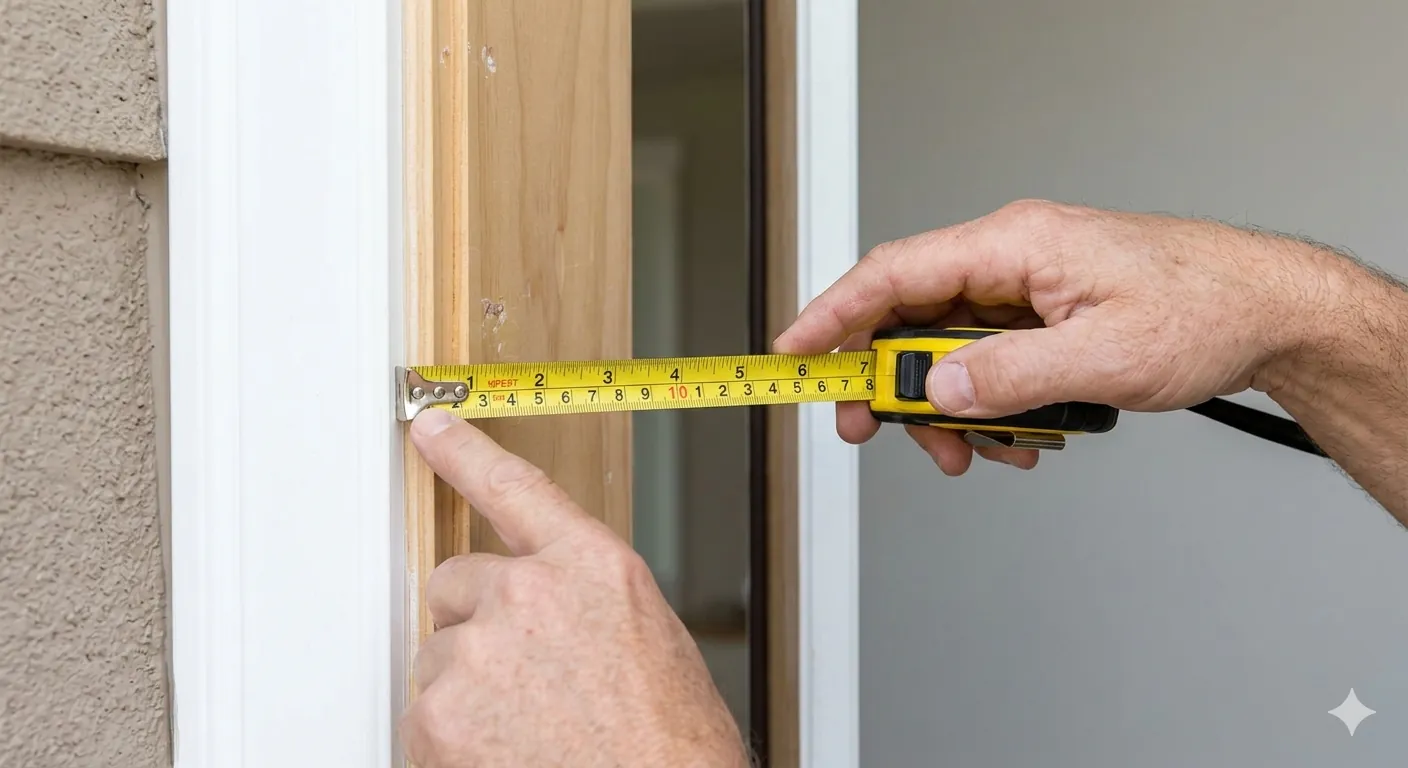
- Why Accurate Door Jamb Measurements Matter
- Door Jamb Anatomy
- Tools You Need
- How to Measure Door Jamb Width
- How to Measure Door Jamb Height
- How to Measure Door Jamb Depth
- Measuring for Interior Doors
- Measuring for Exterior Doors
- Prehung vs. Slab Door: What to Measure
- Standard Door and Jamb Sizes
- Common Measuring Mistakes
- Door Replacement Costs in 2026
- Frequently Asked Questions
Whether you're replacing a damaged door, upgrading from a hollow-core to a solid-core interior door, or installing a new exterior door for better security and energy efficiency, the process starts with one critical step: accurately measuring the door jamb. Get it right and the new door fits perfectly. Get it wrong and you're making return trips to the home center, shimming excessively, or — worst case — rebuilding the rough opening.
Knowing how to measure a door jamb properly requires understanding three dimensions: width (the opening), height (floor to head), and depth (wall thickness). This guide covers all three in detail, with specific instructions for interior doors, exterior doors, prehung units, and slab-only replacements.
Why Accurate Door Jamb Measurements Matter
Door jamb measurements determine everything about your replacement door purchase:
- The door slab size — a 32" jamb opening takes a 32" door slab (actually 31-3/4" to allow for clearance)
- The jamb stock depth — a mismatch means the jamb either doesn't cover the full wall thickness (leaving a gap) or sticks out past the wall surface (looking unprofessional and preventing proper casing installation)
- Prehung unit sizing — prehung doors come as a complete assembly with the door already hung in its frame. The entire unit must fit the rough opening.
- Hinge and latch placement — accurate height measurements ensure the hinge positions and latch bore align properly, especially important when replacing a slab in an existing jamb
Door Jamb Anatomy
Before measuring, identify these components:
- Side jambs (legs) — the two vertical pieces that form the sides of the door frame. These are what the hinges and strike plate attach to.
- Head jamb (header) — the horizontal piece across the top
- Jamb depth (width of the jamb stock) — the dimension that matches the wall thickness. This is NOT the opening width.
- Door stop — a thin strip attached to the jamb that the door closes against. It defines the closed position of the door.
- Casing (trim) — decorative molding nailed to the wall and jamb edge that covers the gap between the jamb and the wall surface. Not part of the jamb itself.
- Rough opening — the framed hole in the wall studs. The jamb assembly sits inside the rough opening with shims filling any gaps.
- Threshold/sill — the bottom piece, primarily on exterior doors. Interior doors typically don't have a threshold — the jamb legs sit on the finished floor or subfloor.
Tools You Need
- Steel tape measure (16' or 25')
- Notepad and pen
- Level (2' or 4')
- Utility knife — to score paint that may have sealed the casing to the wall
- Flat pry bar — only if you need to remove casing to access the rough opening
How to Measure Door Jamb Width (Opening Width)
The jamb width is the horizontal distance between the inside faces of the two side jambs — the actual opening that the door sits in. Measure it at three points:
- Top — measure across the opening just below the head jamb
- Middle — measure at the approximate center height of the opening
- Bottom — measure across the opening about 6 inches above the floor
Use the smallest of the three measurements. In older homes, side jambs can bow or shift, making the opening slightly different at different heights. Using the smallest number ensures the new door fits at the tightest point.
Common standard door widths: 24", 28", 30", 32", 34", 36" for interior doors. Exterior doors are typically 32" or 36", with 36" being the most common for main entry doors (and the minimum required by most building codes for ADA accessibility).
How to Measure Door Jamb Height
Measure the vertical distance from the finished floor surface (or the top of the threshold on exterior doors) to the underside of the head jamb:
- Left side — measure from floor to head jamb on the hinge side
- Right side — measure from floor to head jamb on the latch side
Use the shorter of the two measurements. If there's a significant difference (more than 1/4"), the head jamb may not be level — note this for the installer.
Important distinction: If you're measuring for a slab door (just the door panel, without a new jamb), measure the existing door slab, not the opening. The slab should be the same size as the old one, which you can measure by removing it from the hinges. If you're measuring for a prehung door (door + new jamb assembly), measure the rough opening (see below).
Standard interior door height is 80 inches (6'8"). Some newer homes and custom builds use 84" (7') or 96" (8') doors. Exterior doors are almost always 80".
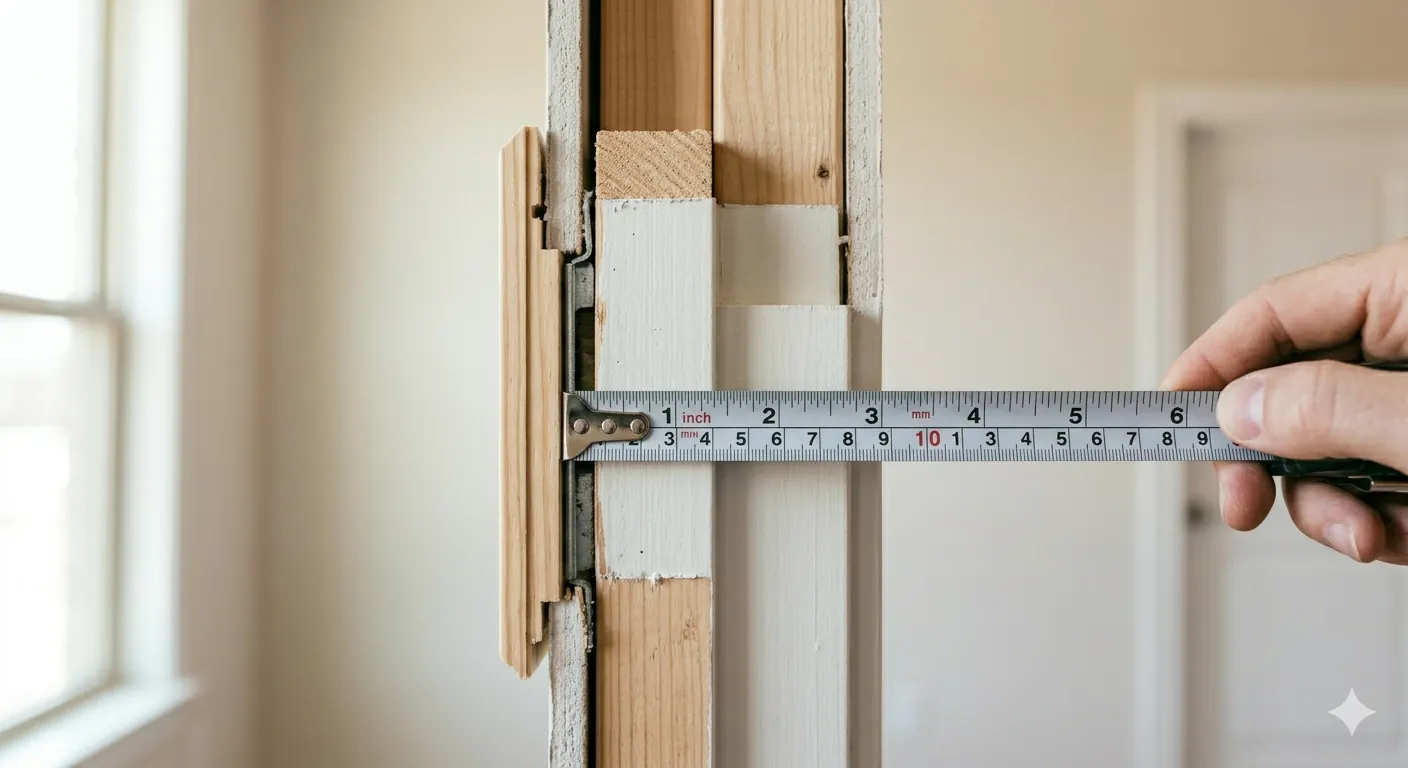
How to Measure Door Jamb Depth (The Most Critical Measurement)
This is the measurement most people either forget or get wrong, and it's the most important one when buying jamb stock or a prehung door. The jamb depth must match your wall thickness so the jamb sits flush with both the interior and exterior wall surfaces.
How to Measure It
- Find a spot where you can see the edge of the existing jamb — either above the door (at the head jamb), or remove a small section of casing to expose the jamb edge
- Measure from the inside (room-facing) edge of the jamb straight across to the opposite (other room or exterior) edge of the jamb
- Alternatively, measure the full wall thickness at the door opening — from the finished surface on one side to the finished surface on the other side. This is the jamb depth you need.
Standard Jamb Depths
| Wall Construction | Wall Thickness | Standard Jamb Depth |
|---|---|---|
| 2×4 studs + 1/2" drywall both sides | 4-1/2" | 4-9/16" |
| 2×4 studs + 5/8" drywall both sides | 4-3/4" | 4-13/16" or use 4-9/16" + extension |
| 2×6 studs + 1/2" drywall both sides | 6-1/2" | 6-9/16" |
| 2×6 studs + 5/8" drywall both sides | 6-3/4" | 6-13/16" or use 6-9/16" + extension |
| Exterior wall with brick veneer | Varies (8–10") | Custom or use jamb extensions |
Pro tip: If your wall thickness falls between standard jamb depths, buy the next smaller size and use jamb extensions — thin strips of matching wood that attach to the jamb edge to make up the difference. This is far easier than trying to trim down an oversized jamb.
Measuring for Interior Doors
Interior doors are simpler because there's no threshold, weatherstripping, or sill to contend with:
- Measure the opening width (jamb-to-jamb) at three heights → use smallest
- Measure the opening height (floor to head jamb) on both sides → use shortest
- Measure the jamb depth (wall thickness)
- Note the swing direction: does the door swing into the room (standard) or out? Is it a left-hand or right-hand door? Stand on the side where the door swings toward you — if the hinges are on the left, it's a left-hand door; hinges on the right, it's right-hand.
For closets and pantries, many homeowners opt for bifold or sliding doors, which have different measurement requirements — measure the full width of the opening and the finished height.
Measuring for Exterior Doors
Exterior door measurement is more complex due to the threshold, weatherstripping, and brick mold (exterior casing):
- Width: same three-measurement approach, jamb to jamb
- Height: measure from the top of the threshold (or subfloor if you're replacing the threshold too) to the head jamb
- Depth: exterior walls are often thicker than interior walls (2×6 framing, brick veneer, etc.). Measure carefully — this is where exterior door purchases most commonly go wrong.
- Threshold type: note whether the existing threshold is an integral part of the door frame or a separate piece screwed to the subfloor
- Brick mold: if your exterior door has a brick mold (a wide casing that sits against brick or siding), note its dimensions. Prehung exterior doors are sold with or without brick mold.
Prehung vs. Slab Door: What to Measure
For a Prehung Door (New Jamb + Door)
You're replacing the entire assembly — door, jambs, hinges, and sometimes threshold. Measure the rough opening:
- Remove the existing interior casing (trim) to expose the gap between the jamb and the rough framing
- Measure the rough opening width between the jack studs (the studs on each side)
- Measure the rough opening height from the subfloor to the underside of the header
- The rough opening should be 2" wider and 2-1/2" taller than the nominal door size
For a Slab Door (Door Only, Same Jamb)
You're keeping the existing jamb and just swapping the door panel. Measure the existing door slab:
- Measure the door width at top, middle, and bottom
- Measure the door height on both edges
- Measure the door thickness (standard is 1-3/8" for interior, 1-3/4" for exterior)
- Mark the hinge locations (measure from the top of the door to the top of each hinge mortise) and the latch bore location (center of the bore from the door edge, and from the bottom of the door)
Standard Door and Jamb Sizes
| Location | Common Width | Standard Height | Thickness |
|---|---|---|---|
| Interior bedroom/living room | 30" or 32" | 80" | 1-3/8" |
| Interior bathroom | 24" or 28" | 80" | 1-3/8" |
| Interior closet | 24" or 30" | 80" | 1-3/8" |
| Exterior front entry | 36" | 80" | 1-3/4" |
| Exterior back/side entry | 32" or 36" | 80" | 1-3/4" |
| Sliding patio door | 60", 72", or 96" | 80" | Varies |
Common Measuring Mistakes
- Measuring the old door slab when buying prehung — if you're getting a prehung door, you need the rough opening dimensions, not the door slab dimensions
- Ignoring jamb depth — buying a 4-9/16" jamb for a 6-9/16" wall means 2 inches of wall are uncovered. Buying 6-9/16" for a 4-9/16" wall means the jamb protrudes 2 inches past the wall.
- Forgetting to note the swing direction — a left-hand prehung door won't work in a right-hand opening without rebuilding the hinge and strike mortises
- Not accounting for flooring changes — if you're planning to install new flooring that's thicker than the current floor, the door may not clear. Adjust the height measurement accordingly (or plan to trim the door bottom).
- Measuring over carpet or thick rugs — measure to the subfloor or hard floor surface, not the top of carpet pile. The door needs clearance over the highest floor surface in its swing arc.
- Measuring casing-to-casing instead of jamb-to-jamb — the casing (trim) is much wider than the actual opening. Always measure the jamb opening behind or inside the casing.
Door Replacement Costs in 2026
| Door Type | Door Cost | Installation | Total |
|---|---|---|---|
| Interior hollow-core slab | $30–$80 | $80–$150 | $110–$230 |
| Interior solid-core slab | $80–$250 | $80–$150 | $160–$400 |
| Interior prehung (hollow-core) | $80–$200 | $150–$250 | $230–$450 |
| Interior prehung (solid-core) | $150–$400 | $150–$250 | $300–$650 |
| Exterior prehung (fiberglass) | $300–$800 | $250–$500 | $550–$1,300 |
| Exterior prehung (steel) | $200–$500 | $250–$500 | $450–$1,000 |
| Exterior prehung (wood) | $500–$2,000+ | $300–$600 | $800–$2,600 |
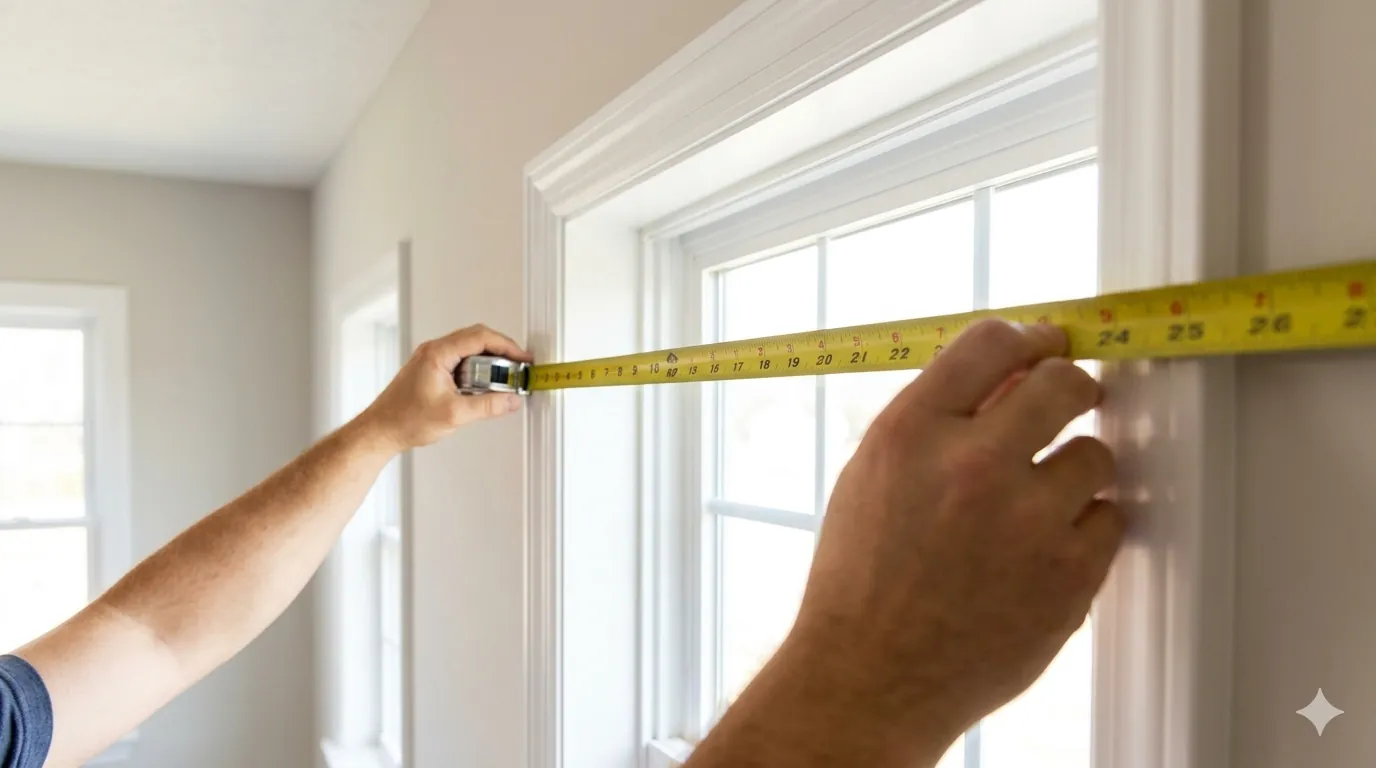
Learn more about measuring windows for replacement if you're doing a full window and door upgrade project.
Want to learn more about windows and doors?
Read Our Complete Windows & Doors Guide →Frequently Asked Questions
More Windows & Doors Guides
You May Also Like
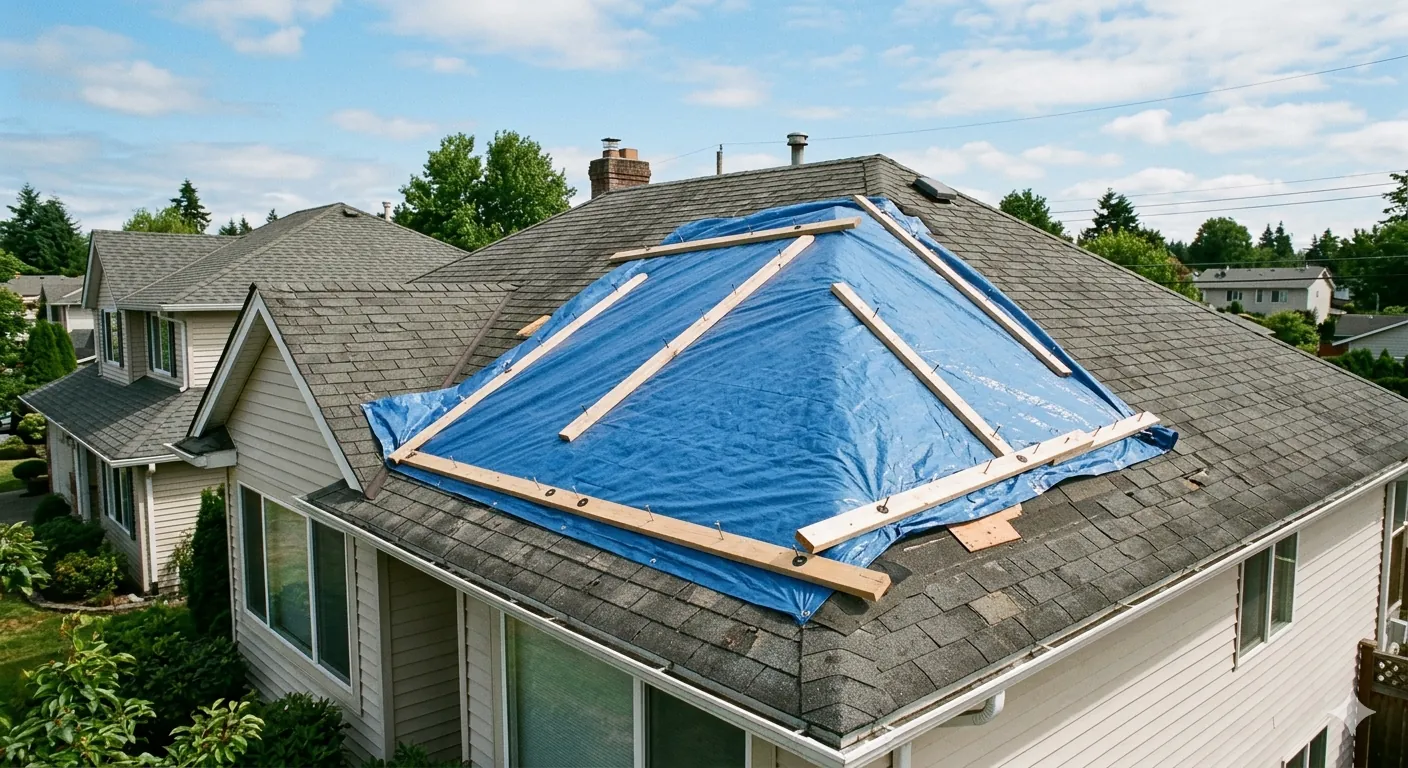
How to Tarp a Roof
Step-by-step guide to emergency roof tarping after storm damage. Protect your home from water damage with proper tarp installation.
How Much Hail Damage to Replace Roof
Learn what level of hail damage qualifies for a full roof replacement through your insurance. Adjuster criteria explained.
How Long Do AC Units Last in Florida
Florida AC lifespan data, climate factors that shorten unit life, and signs your AC needs replacing.
How to Fix Short Cycling Air Conditioner
Diagnose and fix an AC that keeps turning on and off. Common causes from dirty filters to bad capacitors.
Disclaimer: This content is for informational purposes only. Always verify measurements with your door manufacturer or installer before ordering. HouseFixGuide may earn a commission from links on this page.