How Much Hail Damage to Replace Roof?
- The Hail Damage Threshold for Replacement
- Types of Hail Damage on a Roof
- How to Inspect Your Roof for Hail Damage
- What Insurance Adjusters Look For
- The Insurance Claim Process Step by Step
- How to Negotiate with Your Insurance Company
- Cosmetic vs. Functional Damage
- What to Do If Your Claim Is Denied
- Roof Replacement Costs After Hail in 2026
- Frequently Asked Questions
After a severe hailstorm, the question every homeowner asks is: how much hail damage to replace roof does insurance actually require? It's a critical question because the difference between a repair and a full replacement can be $5,000 versus $15,000 or more — and whether your insurance covers it determines whether you pay out of pocket or just your deductible.
The answer isn't always straightforward. Insurance companies, roofing contractors, and public adjusters often have different perspectives on what constitutes "enough" damage. This guide breaks down exactly what the industry standards are, how insurance adjusters evaluate hail damage, and how to ensure you get a fair outcome on your claim.
The Hail Damage Threshold for Roof Replacement
There is no single universal number that triggers a roof replacement across all insurance companies. However, the industry generally follows these guidelines:
The 8-Per-Square Rule
The most widely cited threshold is 8 or more functional hail hits per roofing square (a "square" equals 100 square feet, or a 10×10 foot area). At this density, it's generally accepted that enough shingles are compromised that spot repairs aren't practical — you'd be replacing so many individual shingles across the roof that a full replacement is more cost-effective and provides a better long-term result.
However, this "8 per square" number isn't an absolute rule:
- Fewer hits may justify replacement if the individual impacts are severe (large hail, significant granule loss, exposed mat, cracked shingles)
- More hits may still result in a repair if the damage is cosmetic only (dents without functional compromise)
- Older roofs may get approved with less damage since the remaining shingle life is limited anyway
- The pattern matters — damage concentrated on one slope (the side that faced the storm) may justify replacing just that slope, or the adjuster may approve the full roof since mismatched shingles are a valid concern
Hail Size and Damage Severity
| Hail Size | Approximate Diameter | Typical Roof Damage |
|---|---|---|
| Pea-sized | 1/4" | Usually cosmetic only; minimal granule loss |
| Marble-sized | 1/2" | Moderate granule displacement; possible shingle bruising |
| Dime to quarter | 3/4"–1" | Functional damage likely; significant granule loss, possible mat exposure |
| Golf ball | 1.75" | Severe functional damage; cracked shingles, dented flashing, possible decking damage |
| Tennis ball+ | 2.5"+ | Catastrophic; shattered shingles, punctured decking, almost always full replacement |
Hail that is quarter-sized (1 inch) or larger almost always produces functional damage sufficient for an insurance claim. Below that, the determination depends on the shingle age, quality, and the specific impact characteristics.
Types of Hail Damage on a Roof
Understanding the different types of hail damage helps you communicate with your adjuster and contractor effectively:
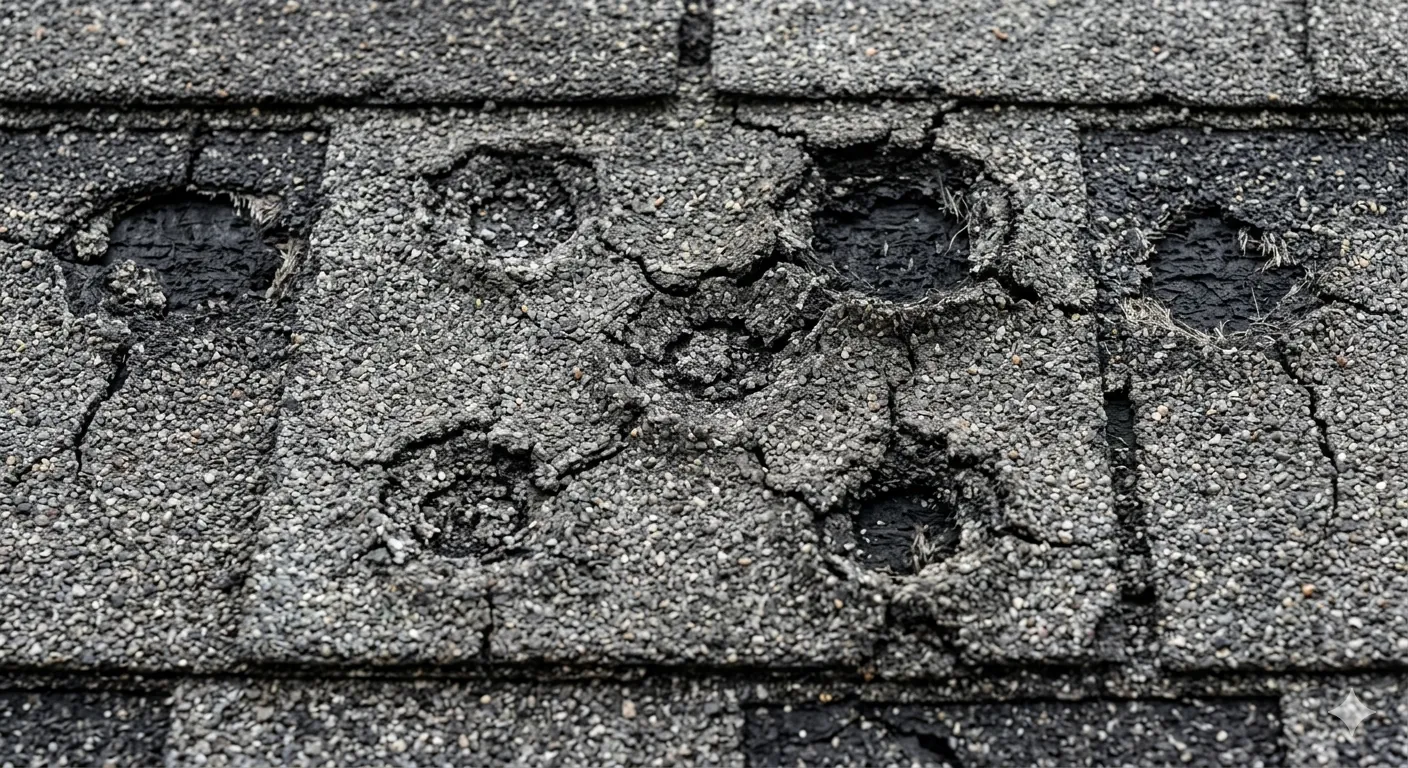
Granule Loss
This is the most common form of hail damage. The colored granules that coat asphalt shingles protect the underlying asphalt and fiberglass from UV exposure. When hail knocks granules loose, it exposes the shingle to accelerated UV degradation, significantly shortening its remaining lifespan. Look for dark spots on light shingles (or light spots on dark shingles) where granules are missing, and check your gutters and downspout splash blocks for excessive granule accumulation.
Shingle Bruising
A hail impact can crush the fiberglass mat underneath the surface without visibly breaking the shingle. These "bruises" feel soft or spongy when you press on them compared to the firm feel of undamaged shingles. Bruised shingles have compromised structural integrity and will fail prematurely, but they're easy for an inexperienced eye to miss. This is why a professional inspection matters.
Cracking
Large hail can physically crack or split shingles, especially in cold weather when the shingle material is more brittle. Cracks are the most obvious form of functional damage and almost always support a replacement claim.
Dented Flashing and Vents
Don't forget to check the metal components. Hail dents on pipe boots, ridge vents, drip edge, and flashing confirm that hail impacted the roof with force. Dented soft metals (aluminum vents, lead pipe boots) are strong evidence of hail damage even when shingle damage is harder to assess.
How to Inspect Your Roof for Hail Damage
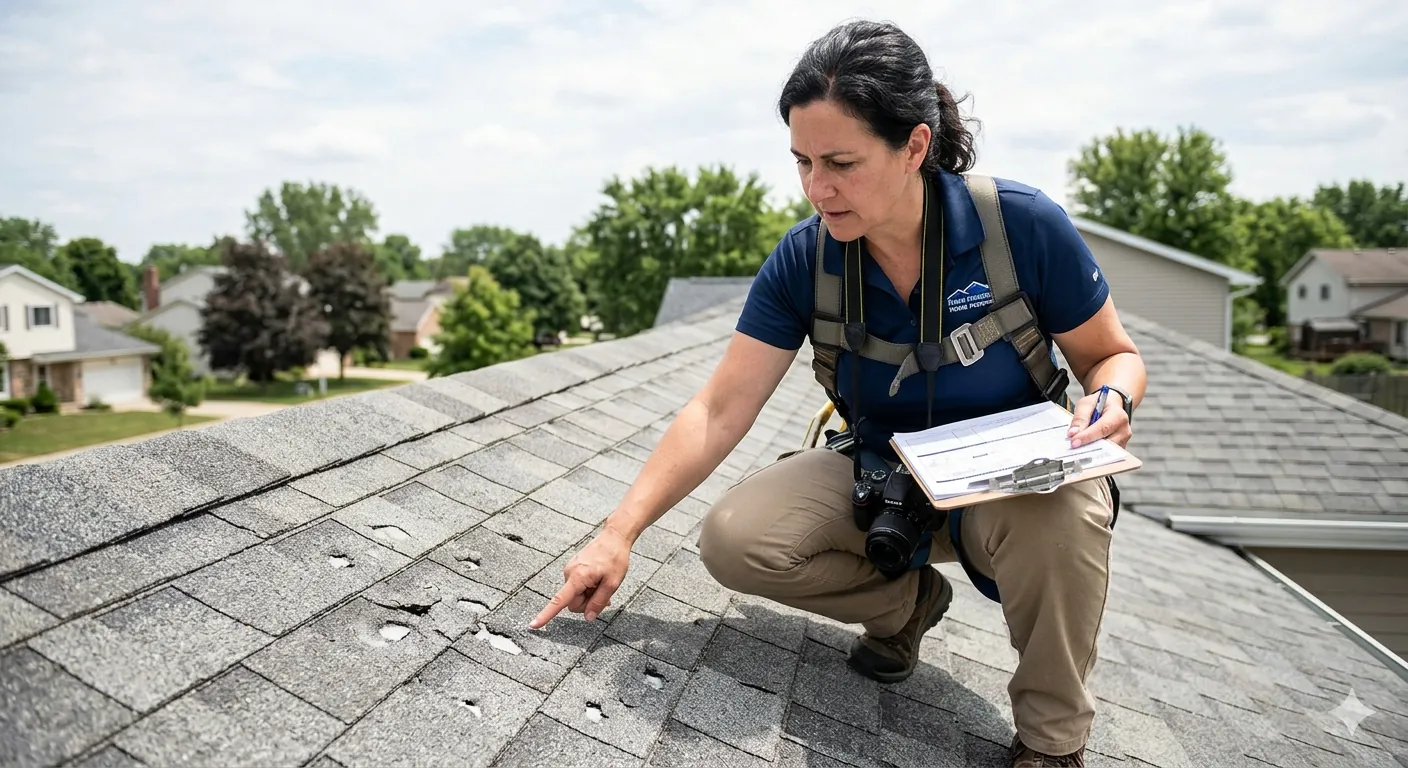
Before calling your insurance company, get a professional roofing contractor to inspect the roof first. Here's why and how:
Ground-Level Indicators
- Check downspout splash blocks for piles of granules (some granule loss is normal with age, but hail produces a noticeable increase)
- Look at gutters for dents — hail that dents aluminum gutters definitely impacted the roof
- Check air conditioning units, painted wood surfaces (deck rails, window sills), and cars for hail damage — these "soft metal" and painted surfaces show damage more obviously than shingles
- Look at your siding for hail marks, especially on the storm-facing side
Roof-Level Inspection
A roofing contractor's inspection is almost always free (they're motivated by the potential roofing job). A good contractor will:
- Document damage with photos on every slope of the roof
- Mark hail hits with chalk to count density per square
- Check multiple test squares across different areas and slopes
- Inspect all flashing, vents, pipe boots, and ridge caps
- Assess the shingle age and pre-existing condition
- Provide a written damage report you can present to your insurance company
What Insurance Adjusters Look For
Insurance adjusters use a systematic process to evaluate hail damage claims:
- Verify the storm event — they check National Weather Service data to confirm hail was reported in your area on the date you claim damage occurred
- Inspect test squares — typically 3–5 random 10×10 foot areas across the roof, counting hits per square
- Differentiate hail from other damage — adjusters look for the characteristic random pattern of hail (hits scattered in no predictable pattern) versus mechanical damage (regular pattern), normal aging (uniform degradation), or blistering (bubbles from manufacturing defects or attic heat)
- Assess functional vs. cosmetic damage — functional damage compromises the shingle's ability to shed water. Cosmetic damage is visual only.
- Consider the roof's pre-existing condition — a 20-year-old roof near end of life may receive less claim value than a 5-year-old roof, depending on your policy type (ACV vs. replacement cost)
The Insurance Claim Process Step by Step
- Document the damage immediately — photograph everything: shingles, gutters, vents, siding, windows, outdoor furniture, vehicles. Include wide shots and close-ups. Time-stamp matters.
- Get a professional roof inspection — before calling your insurer, have a roofing contractor inspect and provide a written damage report
- File the claim with your insurance company — call your agent or claims hotline. Provide the storm date and description of damage.
- Meet the adjuster on-site — schedule the adjuster inspection. Have your contractor present if possible — they can point out damage the adjuster might miss.
- Review the adjuster's report — compare their findings to your contractor's assessment. If there's a significant discrepancy, you have options (see negotiation section below).
- Get supplemental estimates if needed — if the initial claim amount doesn't cover the full scope of work, your contractor can submit a supplement with detailed line items.
- Proceed with repairs — once the claim is approved, choose your contractor and schedule the work. You pay your deductible; insurance covers the rest (up to your policy limits).
How to Negotiate with Your Insurance Company
If your insurance company's initial offer seems low or they want to repair instead of replace, you have several options:
- Request a re-inspection — if the adjuster missed damage, request a second inspection. You can have your roofing contractor present to point out specific damage areas.
- Submit a contractor's estimate — a detailed line-item estimate from a reputable contractor gives the insurance company specific numbers to respond to.
- Hire a public adjuster — these are licensed professionals who work for you (not the insurance company). They typically charge 10–15% of the claim amount but often recover significantly more than the initial offer. Learn more about how to negotiate roof replacement with insurance.
- Invoke the appraisal clause — most insurance policies have an appraisal clause that allows both parties to hire independent appraisers and an umpire to settle disputes. This is less expensive and faster than litigation.
- File a complaint with your state insurance commissioner — if you believe the insurance company is acting in bad faith, your state's insurance regulatory body can intervene.
Cosmetic vs. Functional Damage: The Critical Distinction
An increasing number of insurance policies now include a cosmetic damage exclusion. Understanding this distinction is essential:
- Functional damage = the shingle's ability to shed water is compromised. Granule loss exposing the mat, cracking, splitting, or mat fracture all qualify as functional damage.
- Cosmetic damage = the shingle looks different (dents, discoloration) but its waterproofing function is still intact.
If your policy excludes cosmetic damage, you need to prove that the hail impacts caused functional compromise. A skilled roofing contractor can help demonstrate this through proper testing (pressing on impact sites to feel mat compromise, documenting granule loss patterns, etc.).
Check your policy carefully. If you're in a hail-prone area, consider switching to a policy without cosmetic damage exclusions at your next renewal — the premium difference is usually minimal compared to the potential claim value.
What to Do If Your Claim Is Denied
- Get the denial in writing and review the specific reasons cited
- Request a re-inspection with your contractor present
- Hire a public adjuster to provide an independent assessment
- Contact your state insurance commissioner if you believe the denial is unjustified
- Consult a roofing insurance attorney (many work on contingency for denied claims)
- Don't sign anything from the insurance company until you've explored all options
Roof Replacement Costs After Hail Damage in 2026
| Roof Size | Asphalt Shingles | Architectural Shingles | Impact-Resistant (Class 4) |
|---|---|---|---|
| 1,000 sq ft | $4,000–$6,000 | $5,000–$8,000 | $7,000–$10,000 |
| 1,500 sq ft | $6,000–$9,000 | $7,500–$12,000 | $10,500–$15,000 |
| 2,000 sq ft | $8,000–$12,000 | $10,000–$16,000 | $14,000–$20,000 |
| 2,500 sq ft | $10,000–$15,000 | $12,500–$20,000 | $17,500–$25,000 |
Pro tip: if you're replacing a hail-damaged roof, consider upgrading to Class 4 impact-resistant shingles. They cost 20–30% more but many insurance companies offer a 10–28% premium discount for impact-resistant roofs, which pays for the upgrade within 5–7 years. In hail-prone states like Texas, Colorado, and Oklahoma, this discount can save $500–$1,500 per year on premiums.
Want to learn more about roofing repair and replacement?
Read Our Complete Roofing Guide →Frequently Asked Questions
More Roofing Guides
Related Calculators
- Planning a new driveway too? Use our driveway cost calculator
- Compare asphalt vs concrete costs for your driveway
You May Also Like
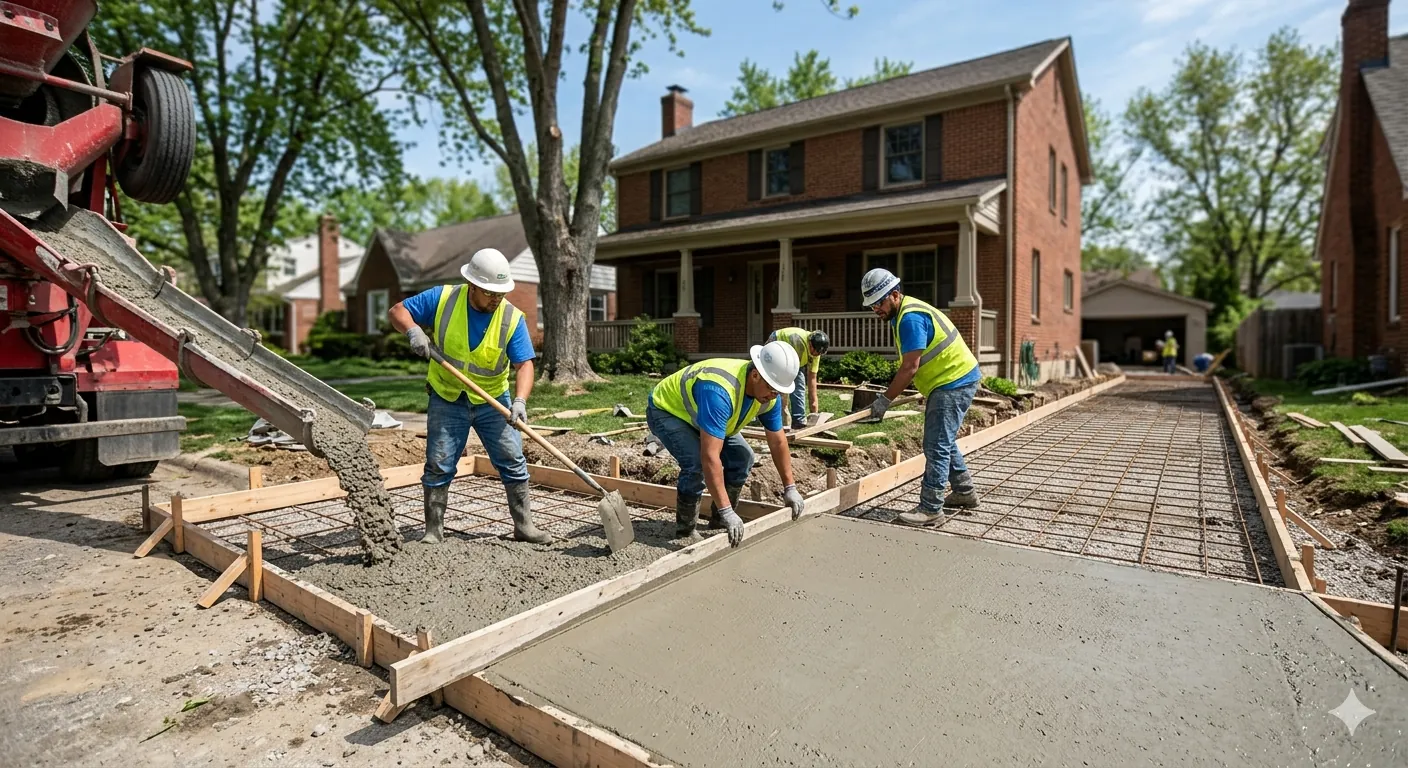
How Thick Should Concrete Be for a Driveway
Proper concrete thickness for driveways by use case. Standard cars, heavy vehicles, and code requirements explained.
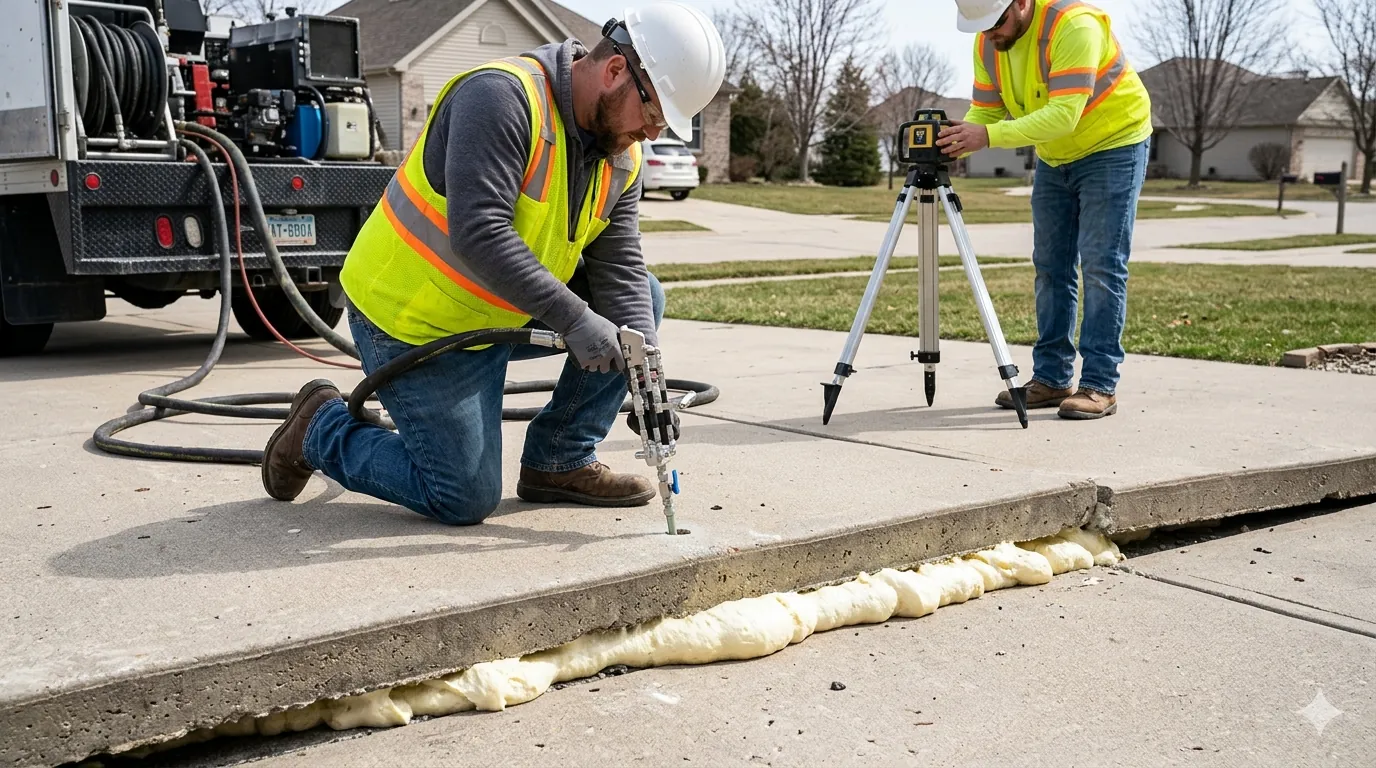
How Much Does Concrete Lifting Cost
Mudjacking vs foam jacking costs compared. Average prices, when lifting works, and when replacement is better.
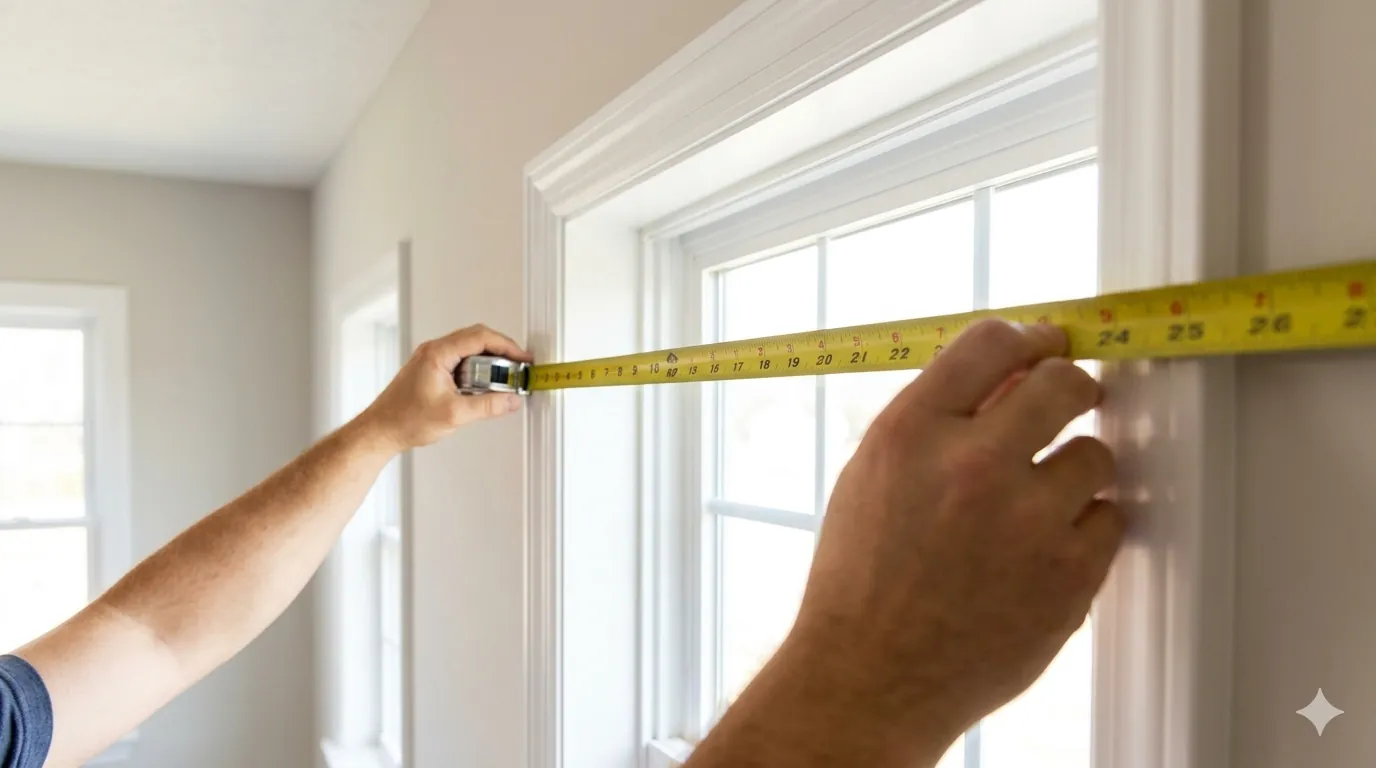
How to Measure Windows
Precise window measuring guide for replacements. Width, height, and depth measurements with diagrams.
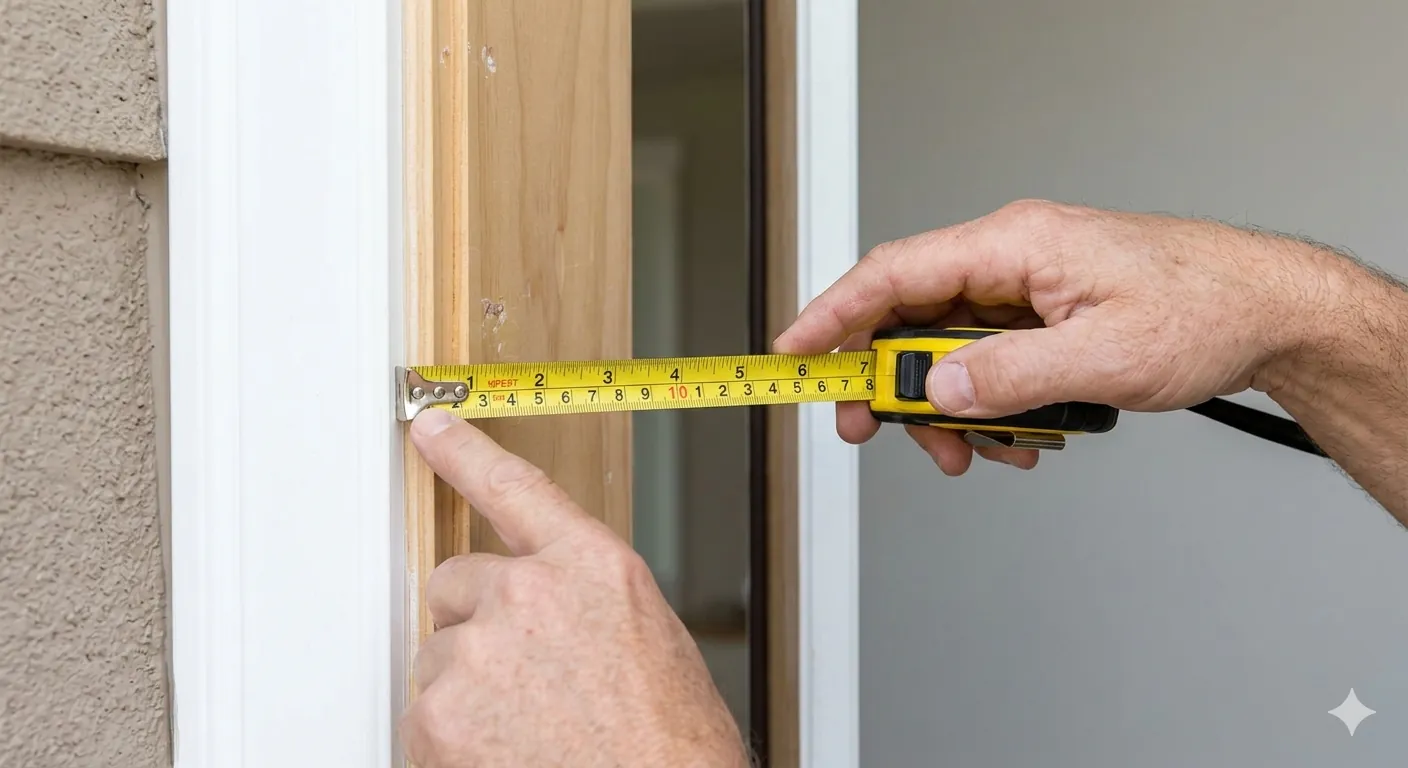
How to Measure a Door Jamb
Step-by-step door jamb measurement for replacement doors. Get the right fit every time.
Disclaimer: This content is for informational purposes only and does not constitute insurance or legal advice. Consult your insurance agent and a licensed roofing contractor for your specific situation. HouseFixGuide may earn a commission from links on this page.