How Much Does Concrete Lifting Cost?
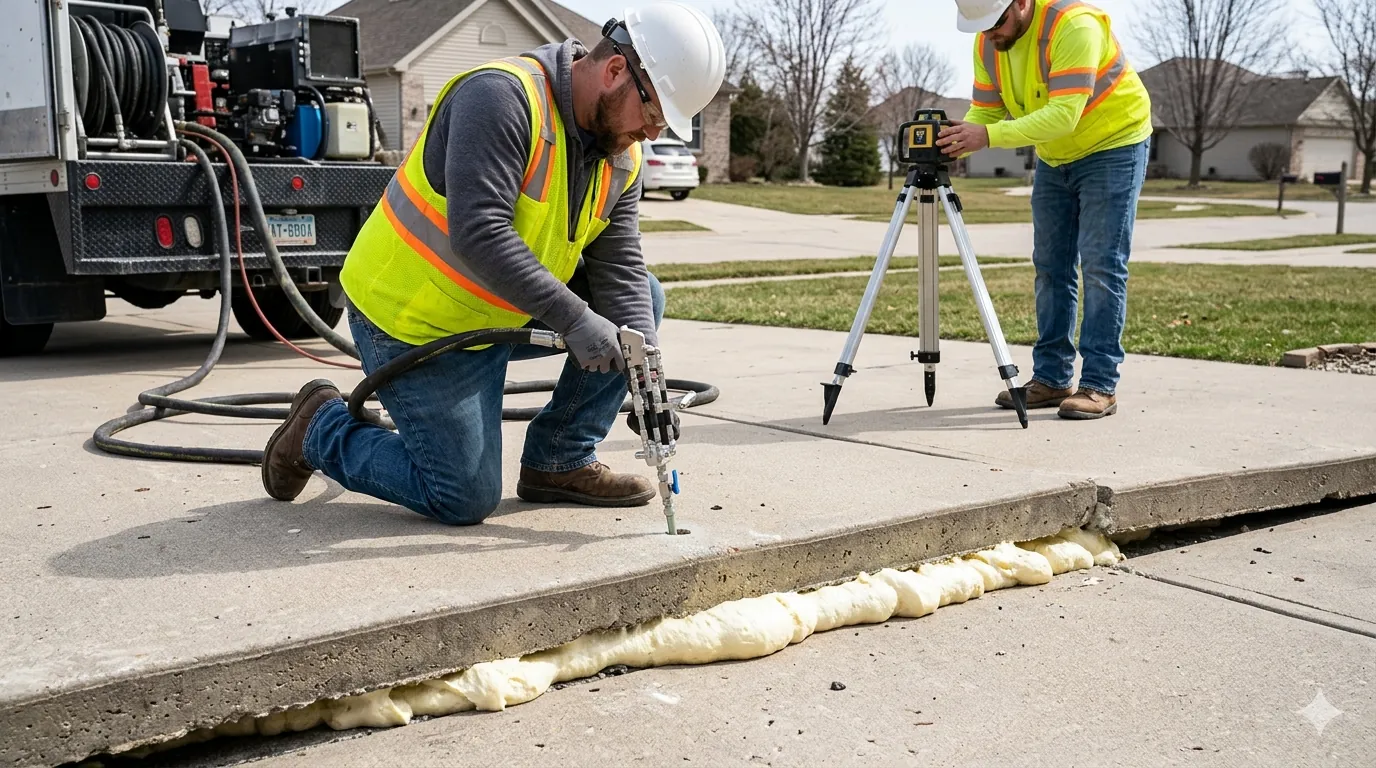
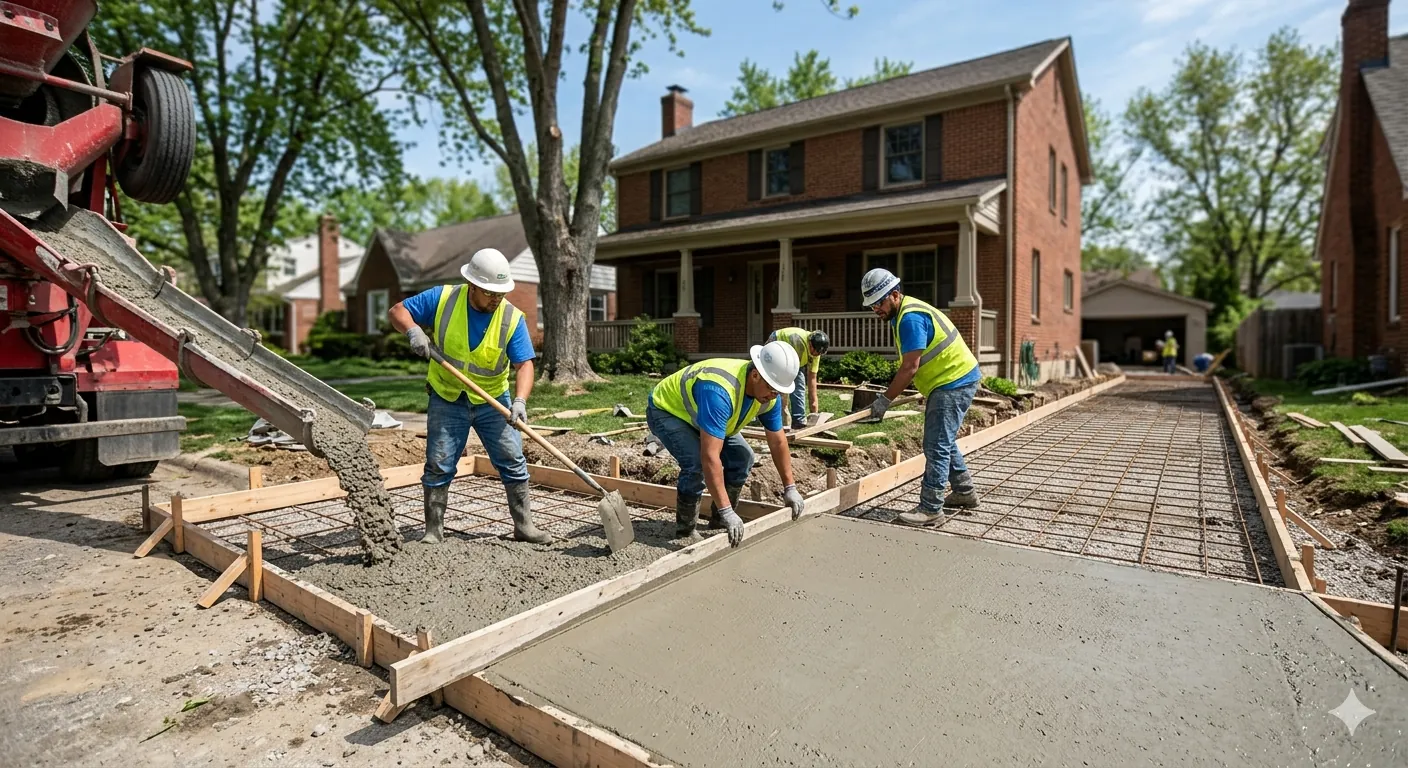
You've got a sunken driveway slab, a sidewalk trip hazard, or a sloping garage floor. The concrete itself is in good shape — no major cracks, no crumbling — it's just sunk down from where it should be. Replacing it means jackhammering out the old concrete, hauling it away, re-grading the base, pouring new concrete, and waiting 7+ days for it to cure. The cost: $5,000–$10,000+.
Or you can lift the existing slab back to its original position through concrete lifting — a process that takes a few hours, costs a fraction of replacement, and lets you use the surface the same day. Understanding how much does concrete lifting cost helps you decide which method is right for your project and budget.
Cost Overview by Method (2026)
| Method | Cost Per Sq Ft | Minimum Service Call | Typical Project |
|---|---|---|---|
| Mudjacking (slab jacking) | $3–$6 | $500–$800 | $500–$1,500 |
| Polyurethane foam jacking | $5–$25 | $800–$1,200 | $1,000–$3,000 |
| Stone slurry grout | $4–$8 | $600–$900 | $700–$2,000 |
Note: Most companies have a minimum service call charge ($500–$1,200) regardless of the area being lifted. This covers equipment mobilization, materials minimums, and site setup. Small jobs (a single sidewalk panel) often cost the minimum regardless of square footage.
Mudjacking Costs Explained
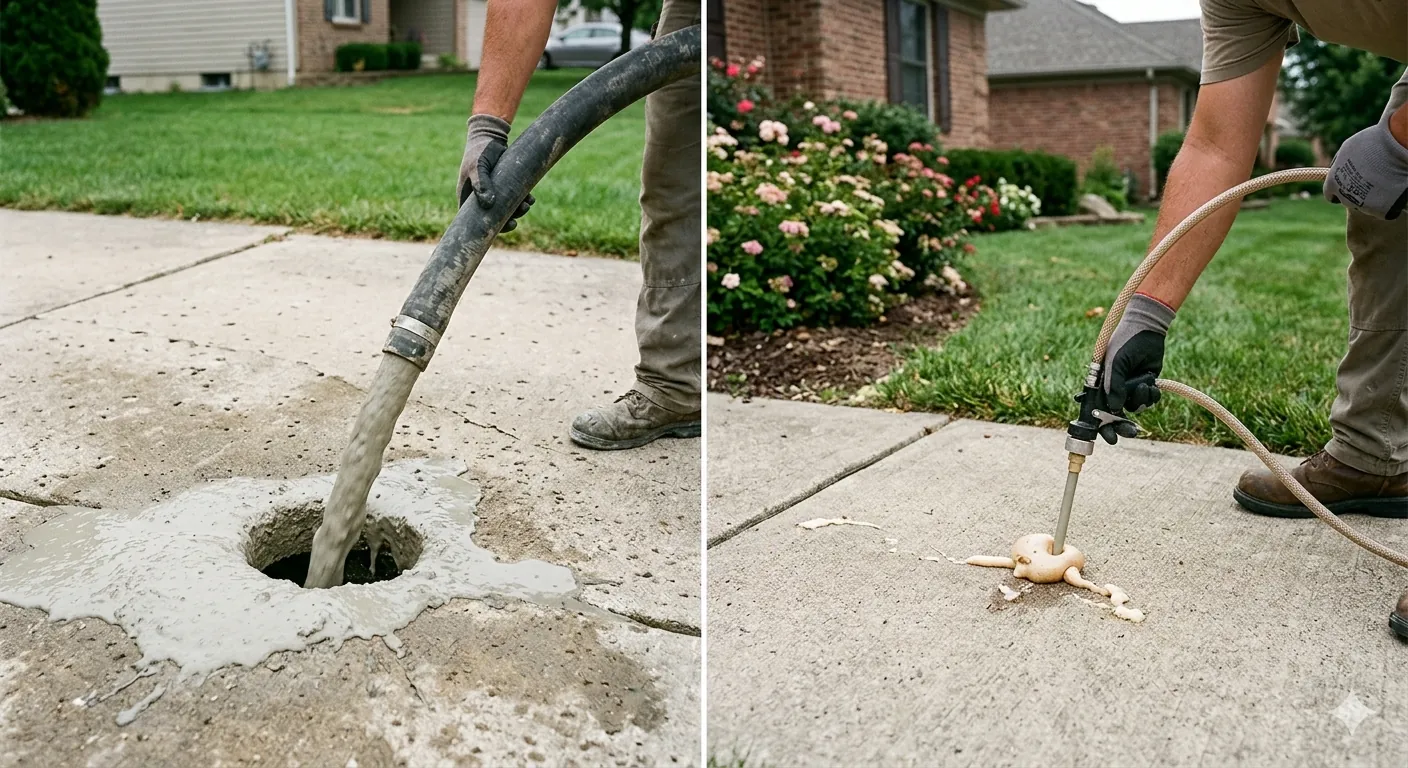
Mudjacking (also called slab jacking or pressure grouting) is the traditional method that's been used since the 1930s:
How It Works
- Drill 1–2 inch diameter holes through the sunken slab (typically every 3–4 feet)
- Pump a cement-based slurry (mixture of water, soil, sand, and Portland cement) through the holes under pressure
- The slurry fills voids under the slab and the pressure lifts the concrete back to level
- Patch the holes with concrete
Mudjacking Cost Breakdown
| Cost Component | Amount |
|---|---|
| Materials (slurry) | $0.50–$1.50/sq ft |
| Labor | $2.00–$3.50/sq ft |
| Equipment | $0.50–$1.00/sq ft |
| Total | $3.00–$6.00/sq ft |
Pros and Cons of Mudjacking
- ✅ Cheapest option — 40–60% less expensive than foam jacking
- ✅ Widely available — most areas have mudjacking contractors
- ✅ Proven technique with 90+ years of track record
- ❌ Heavy material adds ~100 lbs/cu ft to already weak soil
- ❌ Slurry can wash out over time if drainage issues persist
- ❌ Larger drill holes (1–2") are more visible after patching
- ❌ Typical lifespan: 5–10 years before re-settling is possible
Polyurethane Foam Jacking Costs Explained
Polyurethane foam jacking (also called poly leveling, foam lifting, or by brand names like PolyLevel, HMI, or Polyjacking) is the modern alternative:
How It Works
- Drill 5/8-inch diameter holes (penny-sized) through the sunken slab
- Insert an injection port connected to a delivery gun
- Inject two-part polyurethane foam that expands 15–20× its liquid volume
- The expanding foam fills all voids and lifts the slab with precisely controlled force
- Foam cures in 15–30 minutes; the slab is usable almost immediately
Foam Jacking Cost Breakdown
| Cost Component | Amount |
|---|---|
| Polyurethane foam material | $3.00–$12.00/sq ft |
| Labor | $2.00–$8.00/sq ft |
| Equipment | $0.50–$5.00/sq ft |
| Total | $5.00–$25.00/sq ft |
Why the wide range? The amount of foam needed depends on the size of the void under the slab. A slab that's sunk 1/2" has a much smaller void than one that's sunk 3 inches. The depth of settling is the primary cost variable in foam jacking.
Pros and Cons of Foam Jacking
- ✅ Lightweight — foam weighs 2–4 lbs/cu ft vs. ~100 lbs/cu ft for mudjacking slurry. Won't overload weak soil.
- ✅ Waterproof — closed-cell foam doesn't absorb water, erode, or wash away
- ✅ Longer lasting — 20+ year lifespan (often the remaining life of the slab)
- ✅ Smaller holes — 5/8" holes are nearly invisible after patching
- ✅ Faster cure — slab is usable in 15–30 minutes vs. 24–72 hours for mudjacking
- ❌ More expensive — typically 50–100% more than mudjacking
- ❌ Less widely available in rural areas
- ❌ Material is not recyclable or biodegradable
Cost by Area Type
| Area | Typical Size | Mudjacking Cost | Foam Jacking Cost |
|---|---|---|---|
| Sidewalk (1 panel) | 25–35 sq ft | $500–$800 (min call) | $800–$1,200 (min call) |
| Sidewalk (3–5 panels) | 75–175 sq ft | $500–$1,000 | $800–$2,000 |
| Front porch/stoop | 30–80 sq ft | $500–$800 | $800–$1,500 |
| Patio | 100–300 sq ft | $500–$1,500 | $1,000–$3,000 |
| Driveway (partial) | 50–200 sq ft | $500–$1,200 | $800–$2,500 |
| Driveway (full) | 400–800 sq ft | $1,200–$4,000 | $2,000–$8,000 |
| Garage floor | 200–600 sq ft | $800–$3,000 | $1,500–$5,000 |
| Pool deck | 200–500 sq ft | $800–$2,500 | $1,500–$5,000 |
Factors That Affect Concrete Lifting Price
1. Depth of Settlement
The deeper the slab has sunk, the more material is needed to fill the void. A slab that's settled 1/2" requires far less material than one that's dropped 3 inches. Every additional inch of settling can increase material costs by 30–50%.
2. Number of Slabs
Multiple slabs on the same project reduce the per-square-foot cost because mobilization and setup costs are spread across more area. Getting 5 sidewalk panels lifted at once is much cheaper per-panel than lifting them one at a time.
3. Accessibility
Slabs that are easy to access (driveways, sidewalks) cost less than those requiring equipment to be carried through tight spaces (backyard patios accessed through gates, basement floors).
4. Slab Condition
Cracked or damaged slabs require extra care and may limit lifting methods. Severely cracked slabs may not be liftable — they'll just crack further. Most contractors will assess slab condition before quoting and may recommend replacement if the slab is too deteriorated.
5. Root Cause
If the settlement is caused by an ongoing issue (poor drainage, plumbing leak, tree root decay, organic soil decomposition), the root cause must be addressed in addition to lifting. Otherwise the slab will settle again. Drainage correction, plumbing repair, or soil stabilization can add $500–$3,000+ to the total project cost.
6. Geographic Location
Concrete lifting costs vary 20–40% by region. Higher costs in the Northeast and West Coast; lower costs in the Southeast and Midwest.
Mudjacking vs. Foam Jacking: Complete Comparison
| Feature | Mudjacking | Foam Jacking |
|---|---|---|
| Cost per sq ft | $3–$6 | $5–$25 |
| Material weight | ~100 lbs/cu ft | 2–4 lbs/cu ft |
| Drill hole size | 1–2 inches | 5/8 inch |
| Cure/use time | 24–72 hours | 15–30 minutes |
| Lifespan | 5–10 years | 20+ years |
| Waterproof | No (can wash out) | Yes (closed-cell) |
| Precision | Good | Excellent (1/10" accuracy) |
| Best for | Large areas, budget projects | Precision lifting, long-term results |
Lifting vs. Full Replacement: Cost Analysis
| Scenario | Lifting Cost | Replacement Cost | Savings |
|---|---|---|---|
| Sidewalk (3 panels, 100 sq ft) | $500–$1,500 | $1,500–$3,000 | 50–67% |
| Driveway section (200 sq ft) | $600–$2,500 | $2,000–$5,000 | 50–70% |
| Full driveway (600 sq ft) | $1,800–$6,000 | $5,000–$10,000 | 40–64% |
| Garage floor (400 sq ft) | $1,200–$4,000 | $4,000–$8,000 | 50–70% |
| Pool deck (300 sq ft) | $900–$3,500 | $3,000–$7,500 | 53–70% |
Concrete lifting is the clear winner on cost — saving 50–75% compared to full replacement in most scenarios. The savings are even greater when you factor in the avoided downtime (replacement requires 7–14 days before the surface is usable vs. same-day for foam jacking).
When to Lift vs. When to Replace
Lift When:
- The concrete is in good structural condition (few cracks, no crumbling)
- Settlement is less than 4–6 inches
- You want to preserve the existing finish, color, or pattern
- Budget is a priority
- You need the surface back in use quickly
Replace When:
- The concrete is severely deteriorated (spalling, crumbling, large cracks in multiple directions)
- Settlement is extremely deep (6+ inches)
- The slab has broken into multiple pieces that have shifted relative to each other
- The subgrade has fundamental issues (sinkholes, large-scale erosion) that require excavation
- You want to change the design, size, or finish of the concrete
For more information on concrete thickness and construction, see our guide on how thick a concrete driveway should be.
Finding a Reputable Concrete Lifting Contractor
- Get 3+ quotes — pricing varies significantly between companies
- Ask about the method — mudjacking and foam jacking have different results, costs, and lifespans
- Ask about the warranty — reputable foam jacking companies offer 5–10 year (or lifetime) warranties on settling. Mudjacking warranties are typically shorter.
- Check references and reviews — look for before/after photos of completed projects
- Ask if they address the root cause — a good contractor will identify WHY the slab settled and recommend solutions, not just lift and leave
- Verify insurance — concrete lifting involves drilling and injecting material under your property. Make sure the contractor carries general liability and workers' compensation insurance.
Want to learn more about concrete and driveways?
Read Our Complete Concrete & Driveways Guide →Frequently Asked Questions
More Concrete & Driveways Guides
Helpful Driveway Calculators
- Use our concrete driveway cost calculator to estimate your project
- Compare asphalt vs concrete driveway costs
- See driveway costs per square foot by material
You May Also Like
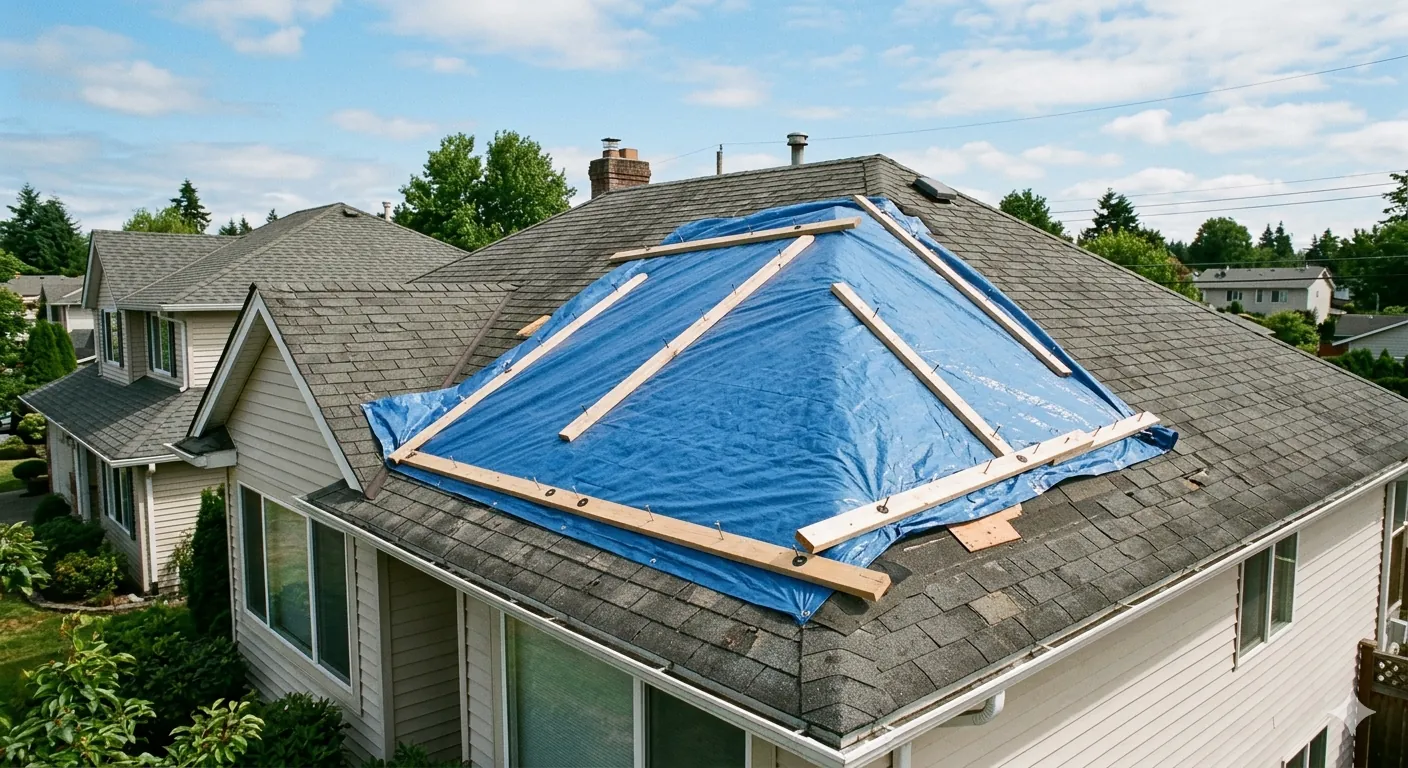
How to Tarp a Roof
Step-by-step guide to emergency roof tarping after storm damage. Protect your home from water damage with proper tarp installation.
How Much Hail Damage to Replace Roof
Learn what level of hail damage qualifies for a full roof replacement through your insurance. Adjuster criteria explained.
How Much Is Epoxy Flooring Per Square Foot
Complete cost breakdown for epoxy flooring — garage, basement, and commercial. Materials, labor, and DIY vs pro pricing.
How to Repair Swollen Laminate Flooring Without Replacing
Fix water-damaged laminate floors without tearing everything out. DIY repair methods that actually work.
Disclaimer: Costs are national averages and vary by region, contractor, and project specifics. Get multiple quotes for your specific project. HouseFixGuide may earn a commission from links on this page.