How Thick Should Concrete Be for a Driveway?
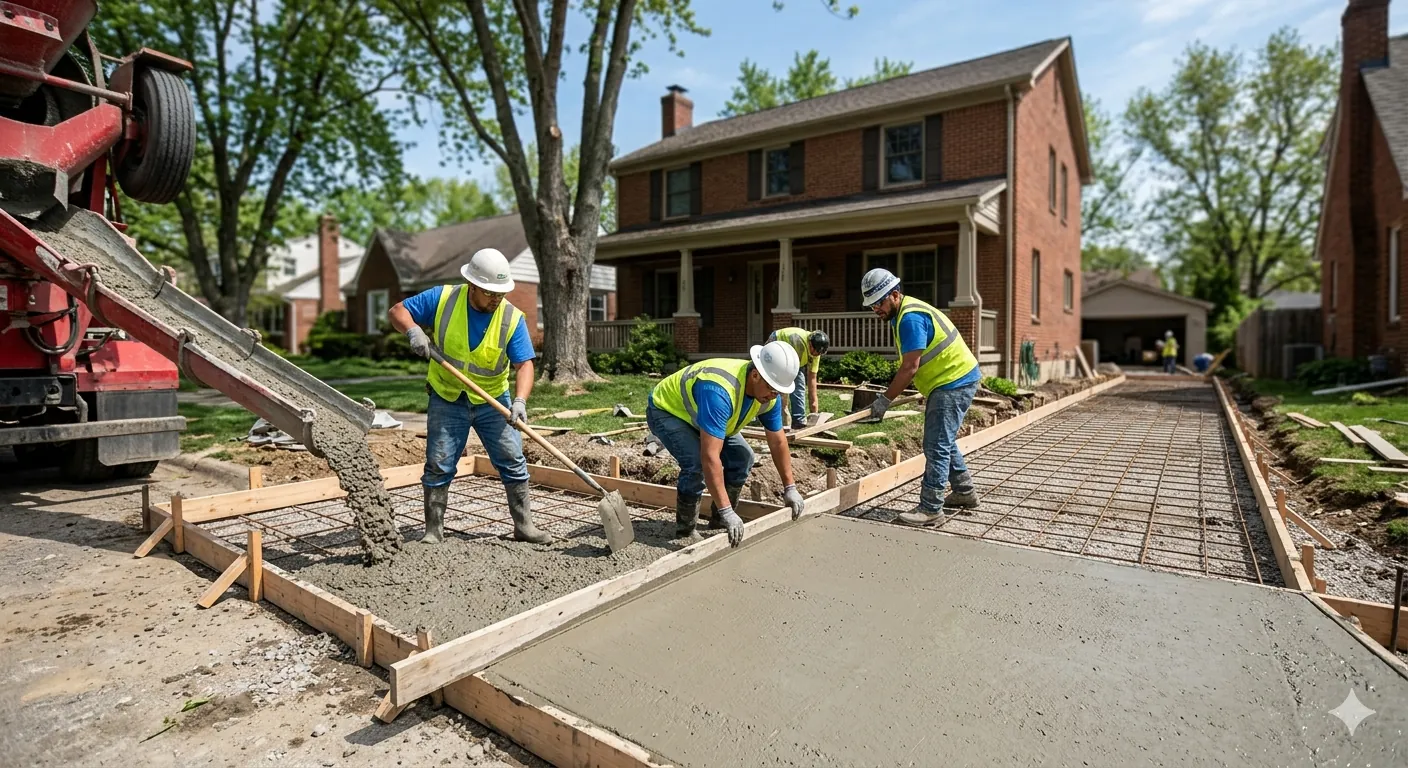
- Driveway Thickness Quick Reference
- Why Thickness Matters
- Thickness by Vehicle Type
- How Soil Conditions Affect Required Thickness
- The Gravel Base: Just as Important as Thickness
- Reinforcement Options
- What PSI Concrete to Use
- Thickened Edges and Apron Design
- Control Joints and Their Role
- Climate Considerations
- Cost Impact of Different Thicknesses
- Frequently Asked Questions
Getting the thickness right on a concrete driveway isn't just an engineering detail — it's the difference between a driveway that lasts 30+ years and one that cracks within the first 5. Under-build it and the concrete can't support the loads crossing it daily. Over-build it and you've wasted hundreds of dollars on unnecessary material. This guide gives you the exact thickness recommendations for every residential scenario.
Driveway Thickness Quick Reference
| Use Case | Recommended Thickness | Concrete PSI | Reinforcement |
|---|---|---|---|
| Passenger cars only | 4 inches | 3,500 PSI | Wire mesh or fiber |
| Cars + light trucks (F-150, SUVs) | 4 inches | 3,500–4,000 PSI | Wire mesh or #3 rebar |
| Heavy trucks, RVs, boats on trailers | 5–6 inches | 4,000 PSI | #4 rebar on 18" centers |
| Driveway edges (all applications) | 6 inches | Same as main slab | Same as main slab |
| Apron (street to sidewalk) | 6 inches minimum | 4,000 PSI | #4 rebar recommended |
| Commercial/heavy equipment | 6–8 inches | 4,500+ PSI | #4 or #5 rebar on 12" centers |
Why Concrete Thickness Matters
Concrete is a remarkably strong material in compression (supporting weight from above), but it's weak in tension (bending or flexing). When a vehicle parks on or drives across a concrete slab, the weight creates both compression on the top surface and tension on the bottom. If the slab is too thin for the load, the tension on the bottom exceeds the concrete's tensile strength and it cracks — first hairline cracks, then structural failures that allow water penetration, frost heave, and progressive deterioration.
The relationship between thickness and load capacity is not linear — it's exponential. Increasing thickness from 4 inches to 5 inches (a 25% increase) roughly doubles the load-bearing capacity. Going from 4 to 6 inches approximately quadruples it. This is why the 4-to-6-inch thickness range covers everything from a Honda Civic to a fully loaded RV.
Thickness by Vehicle Type
4 Inches: Passenger Cars and Light Trucks
A 4-inch concrete driveway over a properly compacted gravel base supports vehicles up to approximately 10,000 lbs gross vehicle weight. This covers:
- All sedans, coupes, and hatchbacks (3,000–4,500 lbs)
- Standard SUVs (4,500–6,000 lbs)
- Light pickup trucks — Ford F-150, Chevy Silverado 1500, RAM 1500 (5,000–7,500 lbs loaded)
- Minivans (4,500–5,500 lbs)
For the vast majority of residential driveways, 4 inches is the standard and has been for decades. If you only park cars and light trucks and your soil conditions are decent, 4 inches is plenty.
5 Inches: Heavier Vehicles and Marginal Soil
Consider 5 inches if:
- You regularly park a heavy-duty pickup (F-250/350, Silverado 2500/3500) with loads
- Delivery trucks (UPS, FedEx, garbage trucks) routinely drive over the driveway
- Your soil is clay-dominant, expansive, or has poor load-bearing capacity (see soil section below)
- You want extra peace of mind without the full cost of 6 inches
6 Inches: RVs, Boats, Heavy Equipment
A 6-inch driveway is recommended when:
- You park a motorhome or RV (15,000–30,000 lbs) on the driveway
- A boat on a trailer sits on the driveway (trailer + boat can reach 8,000–15,000 lbs)
- Construction equipment or heavy delivery vehicles (concrete trucks, moving trucks) are expected
- The driveway serves as a parking area that sees concentrated loads repeatedly in the same spots
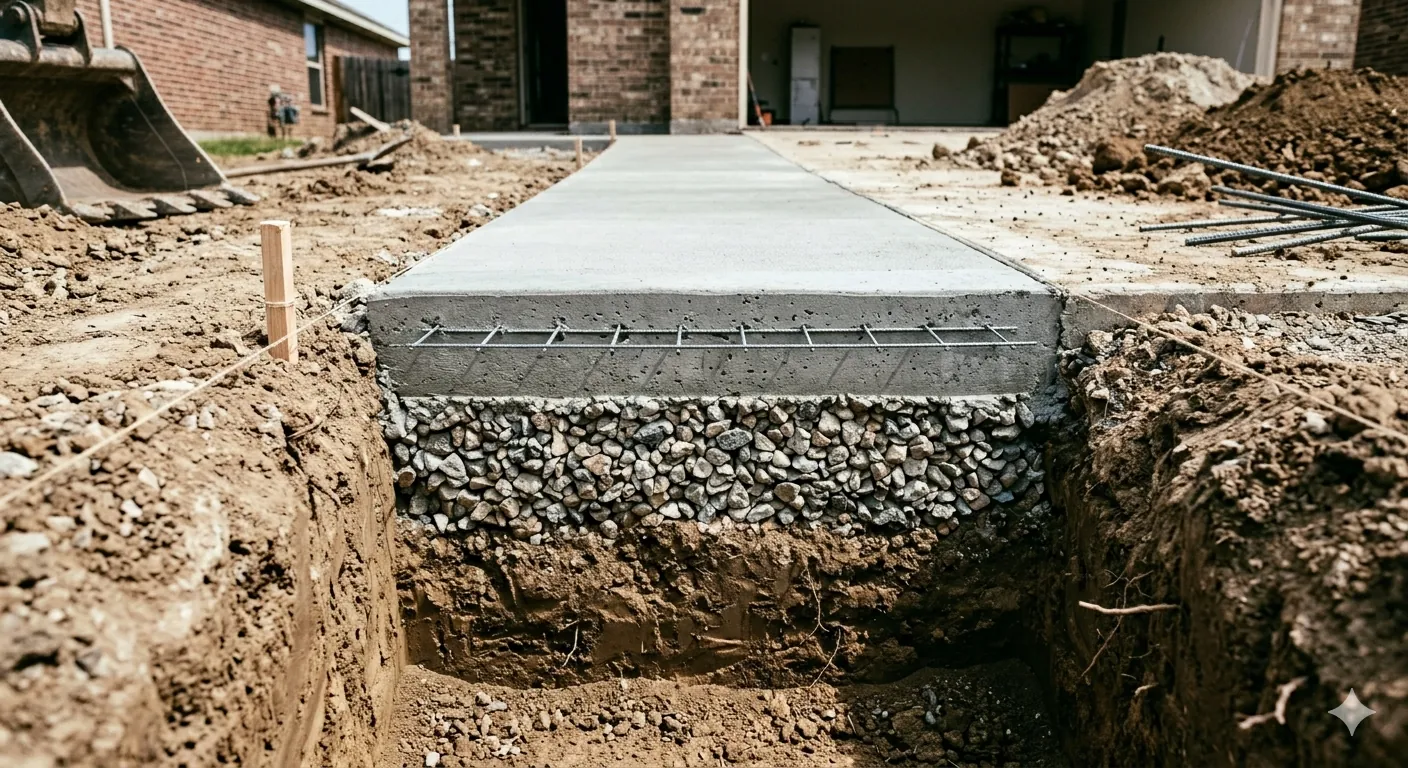
How Soil Conditions Affect Required Thickness
The soil beneath the gravel base is the ultimate foundation. Its load-bearing capacity directly affects how thick your concrete needs to be:
| Soil Type | Load-Bearing Quality | Effect on Thickness |
|---|---|---|
| Sand/gravel (well-drained) | Excellent | Standard 4" is sufficient for most loads |
| Sandy loam | Good | Standard 4" is usually sufficient |
| Silty soil | Fair | Consider 5" or extra base material |
| Clay (non-expansive) | Fair to poor | Consider 5" with thicker base |
| Expansive clay | Poor | Minimum 5–6" with reinforced base and drainage |
| Organic/peat soil | Very poor | Must excavate and replace with engineered fill |
Expansive clay deserves special attention. Common in Texas, Colorado, the Midwest, and parts of the Southeast, expansive clay swells when wet and shrinks when dry — creating cyclical heaving and settling that cracks slabs from below. On expansive clay, you need a thicker slab (5–6"), a thicker base (6–8" of gravel), and ideally a layer of geotextile fabric between the soil and gravel base to prevent clay migration.
The Gravel Base: Just as Important as Thickness
A concrete driveway is only as good as the base beneath it. The gravel base serves three critical functions:
- Load distribution — spreads vehicle weight over a larger area of soil, reducing point loads
- Drainage — allows water to flow away from the bottom of the slab, preventing hydrostatic pressure and frost heave
- Stable platform — provides a uniform, compacted surface that doesn't shift, settle, or expand
Base Specifications
- Material: crushed stone (3/4" minus or "process gravel") — angular edges lock together better than round river gravel
- Thickness: 4 inches minimum; 6–8 inches for clay soils or heavy loads
- Compaction: must be mechanically compacted with a plate compactor to minimum 95% modified Proctor density. This is the single most critical base requirement — uncompacted gravel settles, creating voids under the slab and eventual cracking.
- Grade: the base should slope consistently for drainage (minimum 1/8" per foot away from the house or toward the street)
Never pour concrete directly on bare dirt (unless it's natural, undisturbed sand/gravel soil with excellent drainage). Soil under concrete must be either naturally well-draining or supplemented with a gravel base.
Reinforcement Options
Welded Wire Mesh (WWM)
6×6 W1.4/W1.4 wire mesh is the standard reinforcement for 4-inch residential driveways. The mesh is placed on chairs (dobies) in the lower third of the slab to resist tensile cracking. Cost: $0.15–$0.30/sq ft (materials).
Rebar
For 5–6 inch driveways or heavy loads, #3 rebar (3/8" diameter) or #4 rebar (1/2" diameter) on 18–24 inch centers provides significantly more structural reinforcement than wire mesh. Cost: $0.30–$0.60/sq ft (materials + labor to tie).
Fiber Reinforcement
Synthetic or steel fibers mixed into the concrete provide three-dimensional reinforcement that resists surface cracking. Fiber alone is effective for surface crack control but does not replace structural reinforcement (rebar/mesh) for load-bearing applications. Cost: $0.10–$0.25/sq ft. Best used as a supplement to mesh or rebar, not a replacement.
What PSI Concrete to Use for a Driveway
PSI (pounds per square inch) measures the compressive strength of the cured concrete. For driveways:
- 3,500 PSI — minimum for residential driveways in mild climates (no significant freeze-thaw)
- 4,000 PSI — recommended for driveways in freeze-thaw climates, heavy vehicles, or when you want extra durability
- 4,500+ PSI — commercial/industrial applications or extreme conditions
Air entrainment is critical in cold climates. Air-entrained concrete contains 4–7% microscopic air bubbles that give the water inside the concrete room to expand when it freezes. Without air entrainment, freeze-thaw cycles cause surface scaling (the top layer flakes off) within a few winters. Always specify air-entrained concrete if your area experiences freezing temperatures.
Thickened Edges and Apron Design
The edges of a driveway are the most vulnerable to cracking because they have no adjacent concrete supporting them laterally. When a vehicle tire rides near or on the edge, all the load concentrates on one side of the slab.
- Thicken all edges to 6 inches — even on a 4-inch driveway, the outer 12 inches on each side should taper down to 6 inches thick
- Apron (street transition): the section between the street and the sidewalk (or the first 6–8 feet of the driveway) should be 6 inches thick minimum. This area bears the most abuse from turning vehicles, delivery trucks, and snowplows.
- Turnaround areas: if your driveway includes a turnaround or parking pad, consider 5–6 inches for the entire turnaround since tires repeatedly load the same spots during three-point turns
Control Joints and Their Role
Concrete cracks — that's a fact of the material. Control joints (also called contraction joints) give the concrete a predetermined weak spot to crack along, creating clean, straight lines instead of random, ugly fractures.
- Spacing: control joints should be spaced at intervals no more than 2–3 times the slab thickness in feet. For a 4-inch slab, that's 8–12 feet between joints. For a 6-inch slab, 12–18 feet.
- Depth: joints should be cut to a depth of at least 1/4 of the slab thickness (1 inch deep on a 4-inch slab)
- Timing: saw-cut joints within 6–18 hours of pouring (before the concrete develops enough strength to crack randomly). Timing depends on temperature and humidity.
- Panels should be as square as possible — long, narrow panels (length more than 1.5× the width) tend to crack mid-panel despite the joints
Climate Considerations
Cold Climates (Freeze-Thaw)
- Use air-entrained concrete (4–7% air content)
- Minimum 4,000 PSI recommended
- A thicker base (6–8") helps prevent frost heave
- Consider 5 inches of concrete for extra durability against de-icing salt damage
- Cure for at least 7 days before exposing to freezing temperatures
Hot Climates
- Thermal expansion is greater — use properly spaced control joints
- Light-colored concrete or a reflective sealer reduces heat absorption and surface temperatures
- Standard 4 inches and 3,500 PSI is typically adequate since no freeze-thaw stress exists
Wet/High Water Table Climates
- Ensure excellent base drainage with 6–8 inches of clean crushed stone
- Consider a vapor barrier (6-mil poly) if the driveway abuts the house foundation
- Built-up gravel base lifts the slab above the water table influence zone
Cost Impact of Different Thicknesses
| Thickness | Concrete Volume (per 100 sq ft) | Material Cost Difference | Total Installed Cost/Sq Ft |
|---|---|---|---|
| 4 inches | 1.23 cubic yards | Baseline | $8–$12 |
| 5 inches | 1.54 cubic yards (+25%) | +$0.75–$1.50/sq ft | $9–$14 |
| 6 inches | 1.85 cubic yards (+50%) | +$1.50–$3.00/sq ft | $10–$16 |
For a typical 600 sq ft two-car driveway, going from 4" to 6" adds approximately $900–$1,800 in total cost — a worthwhile investment if you're parking heavy vehicles or have challenging soil. Learn more about concrete costs in our concrete and driveways guide.
Want to learn more about concrete and driveways?
Read Our Complete Concrete & Driveways Guide →Frequently Asked Questions
More Concrete & Driveways Guides
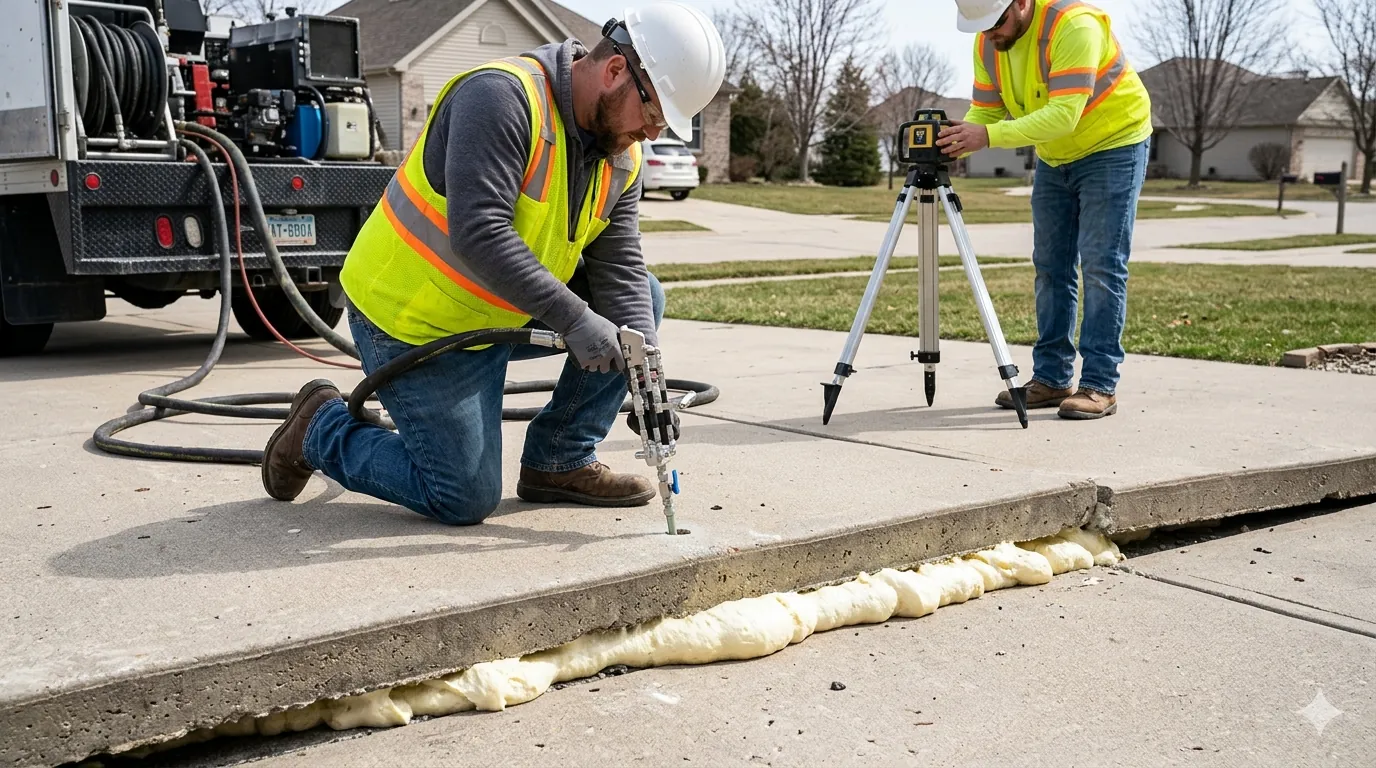
Helpful Driveway Calculators
- Use our concrete driveway cost calculator to estimate your project
- Compare asphalt vs concrete driveway costs
- See driveway costs per square foot by material
You May Also Like
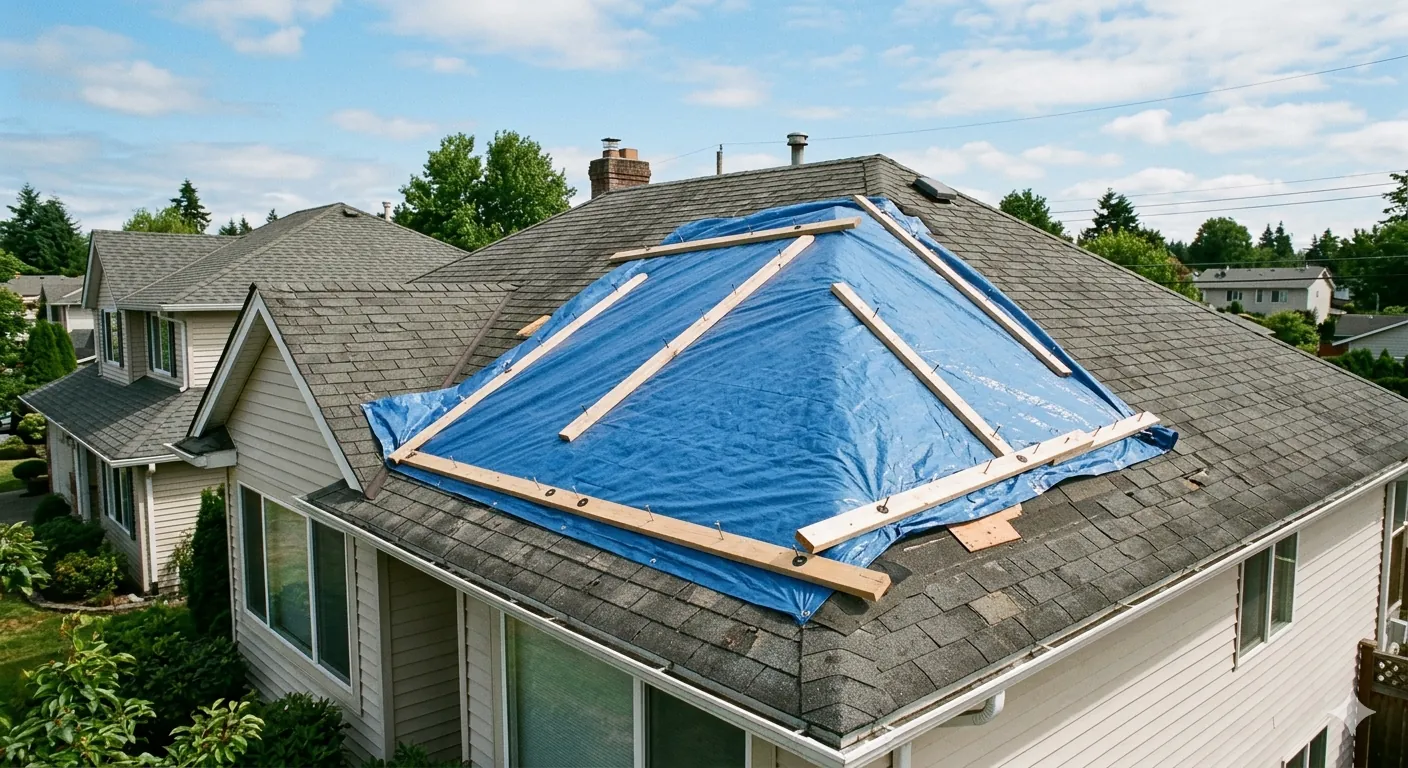
How to Tarp a Roof
Step-by-step guide to emergency roof tarping after storm damage. Protect your home from water damage with proper tarp installation.
How Much Hail Damage to Replace Roof
Learn what level of hail damage qualifies for a full roof replacement through your insurance. Adjuster criteria explained.
How Much Is Epoxy Flooring Per Square Foot
Complete cost breakdown for epoxy flooring — garage, basement, and commercial. Materials, labor, and DIY vs pro pricing.
How to Repair Swollen Laminate Flooring Without Replacing
Fix water-damaged laminate floors without tearing everything out. DIY repair methods that actually work.
Disclaimer: This content is for informational purposes only. Always consult a local concrete contractor and verify soil conditions for your specific site. HouseFixGuide may earn a commission from links on this page.