How to Get Rid of Drain Flies
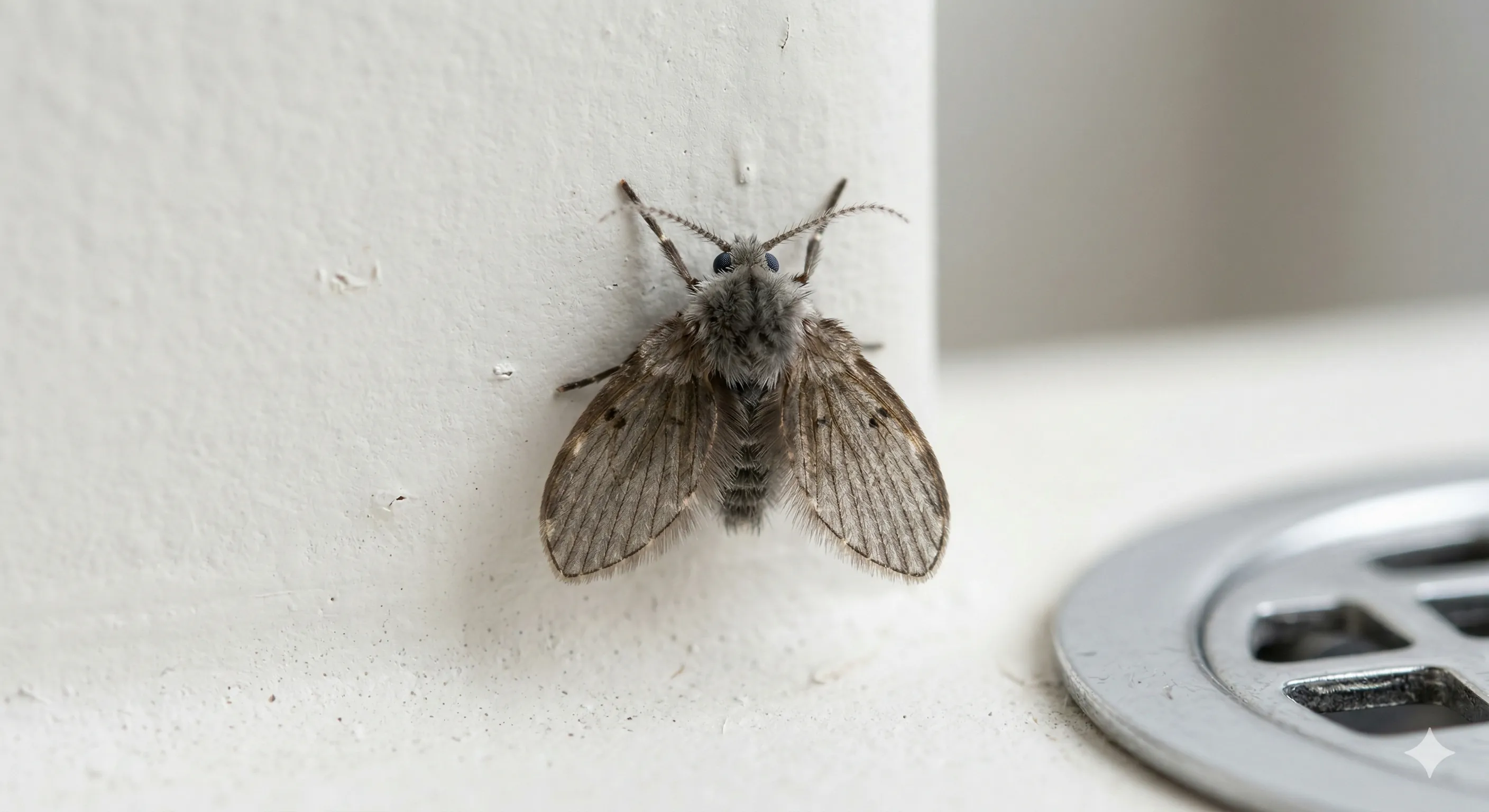
You walk into the bathroom and notice tiny, fuzzy, moth-like flies hovering near the sink or shower drain. One or two turn into five, then ten, then twenty. They're slow, easy to swat — but killing adults does nothing because hundreds more are breeding inside your drain pipes right now.
Drain flies (also called moth flies, sewer flies, or sewer gnats) are one of the most common — and most misunderstood — household pests. The good news: they're completely harmless (they don't bite, sting, or spread disease in most cases) and they're easy to eliminate permanently once you understand that the problem isn't the flies — it's the organic sludge inside your drains where they breed.
What Are Drain Flies?
Drain flies (family Psychodidae) are tiny insects, 2–5mm long, that breed in the thin film of organic matter — bacteria, decomposing food particles, soap scum, hair, and slime — that coats the inside of drain pipes. A female drain fly lays 30–100 eggs directly in this biofilm. Eggs hatch in 32–48 hours, and larvae feed on the organic matter for 9–15 days before pupating and emerging as adults.
This means a single drain can produce hundreds of new flies every 2–3 weeks if the biofilm isn't removed. Adult flies only live 2–3 weeks, but the constant emergence of new adults from the drain makes the population seem endless.
How to Identify Drain Flies
- Size: Very small — 2–5mm (about 1/8 inch), similar to a fruit fly
- Appearance: Fuzzy, moth-like wings held flat over the body when at rest. Wings and body are covered in tiny hairs, giving a furry appearance.
- Color: Gray, tan, or brown
- Flight: Weak, erratic fliers — they tend to hop and flutter rather than fly strongly. Easy to catch or swat.
- Location: Found on walls near drains, on ceilings, and around bathroom and kitchen sinks. They're attracted to light at night.
Drain Flies vs. Fruit Flies vs. Fungus Gnats
| Feature | Drain Flies | Fruit Flies | Fungus Gnats |
|---|---|---|---|
| Size | 2–5mm | 3–4mm | 2–5mm |
| Wings | Fuzzy, leaf-shaped, flat | Clear, rounded | Clear, long |
| Body | Furry/hairy | Smooth, round | Thin, mosquito-like |
| Color | Gray/tan | Tan/brown with red eyes | Black/dark gray |
| Found near | Drains, sinks | Fruit, garbage, vinegar | Houseplants, soil |
| Breeding site | Drain biofilm | Rotting fruit/organic matter | Damp plant soil |
Finding the Source Drain (The Tape Test)
Before treating, you need to identify which drain(s) are producing flies:
- Dry the area around each suspect drain with a towel
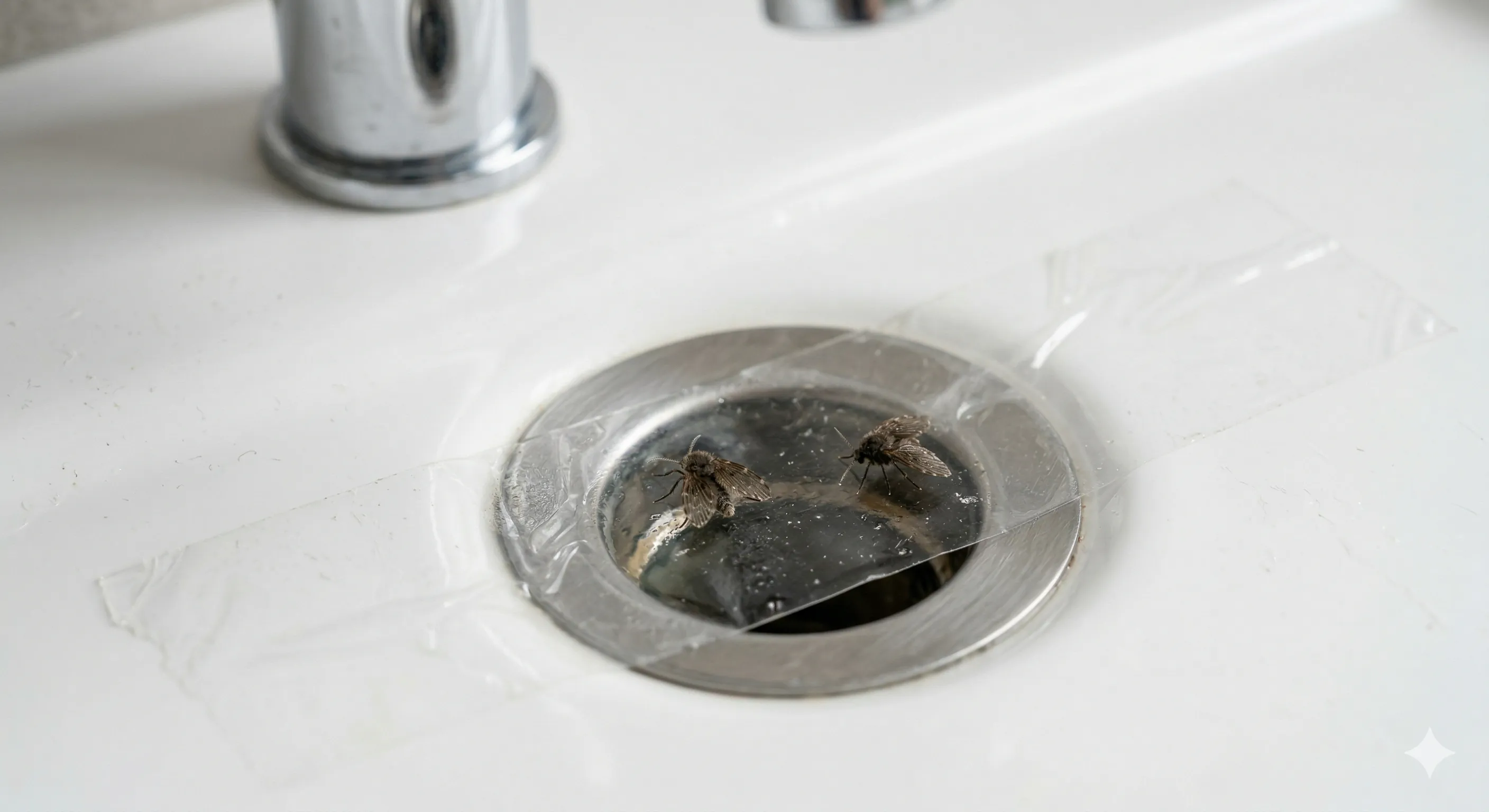
- Place a strip of clear packing tape over the drain opening (sticky side down), leaving small gaps at the edges so air can still flow — don't seal it completely
- Leave the tape overnight (drain flies are most active at night)
- Check the tape in the morning — if drain flies are stuck to the underside, that drain is a breeding source
- Repeat for 2–3 nights on multiple drains to identify all sources
Common source drains: bathroom sinks (most common), shower/tub drains, floor drains (basement, laundry room, garage), rarely-used guest bathroom drains, washing machine standpipes, and sump pits.
Step-by-Step Elimination Guide
Day 1: Physical Cleaning (Most Important Step)
- Remove the drain cover/stopper — clean it separately with hot soapy water and a brush
- Use a drain brush (pipe brush) — a long, stiff-bristled brush ($5–$10 at any hardware store) physically scrubs the biofilm off the inside of the drain pipe. Push it in and out while twisting to scrape the pipe walls. This is the most effective single technique.
- Flush with boiling water — pour 1–2 gallons of boiling water slowly down the drain to rinse away loosened biofilm
- Apply enzyme drain cleaner — pour enzyme cleaner (InVade Bio Drain, Green Gobbler Enzyme Drain Cleaner, or Drain Gel) according to label instructions. Enzyme cleaners contain beneficial bacteria that digest organic matter — they continue working for hours after application.
Days 2–5: Nightly Enzyme Treatment
- Each night before bed (when you won't be using the drain for several hours), pour enzyme cleaner down the affected drain(s)
- The extended contact time allows the enzymes to digest deeper layers of biofilm
- Don't run water for at least 6–8 hours after application
Days 5–7: Adult Die-Off
With the biofilm removed, no new eggs can be laid. Existing larvae and pupae in the drain die without food. Adult flies already alive will die naturally within their 2–3 week lifespan. Kill visible adults with a fly swatter, sticky traps, or vinegar traps to speed the process.
Day 7+: Confirmation
Repeat the tape test. If no new flies appear on the tape for 3 consecutive nights, the infestation is eliminated.
Treatment Methods Compared
| Method | Effectiveness | Cost | Notes |
|---|---|---|---|
| Pipe brush + enzyme cleaner | ⭐⭐⭐⭐⭐ | $10–$25 | Most effective combination |
| Enzyme cleaner only | ⭐⭐⭐⭐ | $10–$20 | Good, but slower without brushing first |
| Baking soda + vinegar + boiling water | ⭐⭐⭐ | $0–$3 | Helpful but often insufficient alone |
| Bleach | ⭐⭐ | $3–$5 | Kills on contact but doesn't remove biofilm |
| Drain cleaner (chemical, like Drano) | ⭐⭐ | $5–$10 | Dissolves clogs but doesn't target biofilm well |
| Vinegar traps (for adults only) | ⭐⭐ | $0–$2 | Catches adults but doesn't address breeding source |
| Insecticide spray | ⭐ | $5–$10 | Kills visible adults only — doesn't solve the problem |
DIY Traps for Adult Drain Flies
Apple Cider Vinegar Trap
- Fill a small jar or cup 1/3 full with apple cider vinegar
- Add 2–3 drops of dish soap (breaks surface tension so flies sink)
- Cover with plastic wrap and poke small holes
- Place near the affected drain
Sticky Traps
Place yellow sticky traps ($5–$8 for a pack) near drains. Drain flies are attracted to the color and get stuck.
Important reminder: Traps only catch adults. They're a supplement to drain cleaning, not a substitute. Without cleaning the drain, new flies emerge faster than traps can catch them.
What NOT to Do
- Don't just spray insecticide — spraying kills visible adults but doesn't touch the larvae and eggs inside the drain. New adults emerge within days.
- Don't rely on bleach alone — bleach kills on contact but slides over biofilm without dissolving it. The biofilm protects eggs and larvae.
- Don't pour boiling water as the sole treatment — it helps but doesn't remove established biofilm without mechanical scrubbing.
- Don't use chemical drain cleaners (like Drano) as your primary treatment — they're designed for clogs, not biofilm. Plus they're corrosive to older pipes.
- Don't ignore rarely-used drains — drains that sit unused for weeks are prime breeding sites because the P-trap water evaporates (letting sewer gas and flies in) and biofilm builds undisturbed.
Preventing Drain Flies from Returning
- Run water in every drain weekly — especially guest bathrooms, basement floor drains, and laundry drains. This keeps P-traps filled and flushes early biofilm.
- Monthly enzyme treatment — pour enzyme cleaner ($0.50–$1.00 per treatment) down each drain once a month as preventive maintenance.
- Clean drain covers/stoppers monthly — hair and soap scum on stoppers are the first breeding surface.
- Fix leaks — any moisture source (leaking pipe, dripping faucet, condensation) can create a breeding site outside the drain.
- Use drain screens — mesh screens ($2–$5) prevent hair and debris from entering the drain and forming biofilm.
- Keep the garbage disposal clean — run it regularly with cold water, clean with ice cubes and lemon peels monthly.
When to Call a Professional
- DIY treatment hasn't resolved the problem after 2 weeks of consistent effort
- The source doesn't seem to be a drain (flies may be coming from a broken sewer line, sump pit, or septic issue)
- Flies are appearing in large numbers from wall cracks or ceiling fixtures (possible broken pipe leaking inside the wall)
- Commercial/restaurant settings where sanitation compliance is required
Professional treatment cost: $100–$300 for drain fly treatment, which includes inspection, drain cleaning, and targeted treatment.
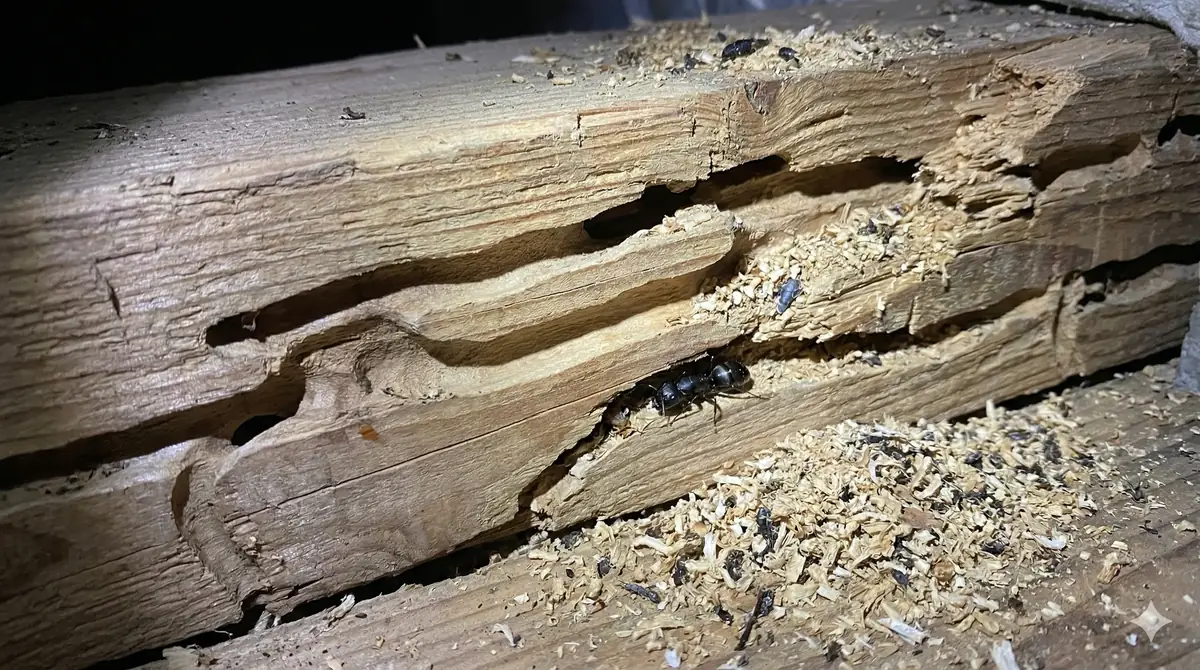
For more pest control information, check out our guide on getting rid of carpenter ants and our complete pest control guide.
Want to learn more about pest prevention and treatment?
Read Our Complete Pest Control Guide →Frequently Asked Questions
More Pest Control Guides
You May Also Like
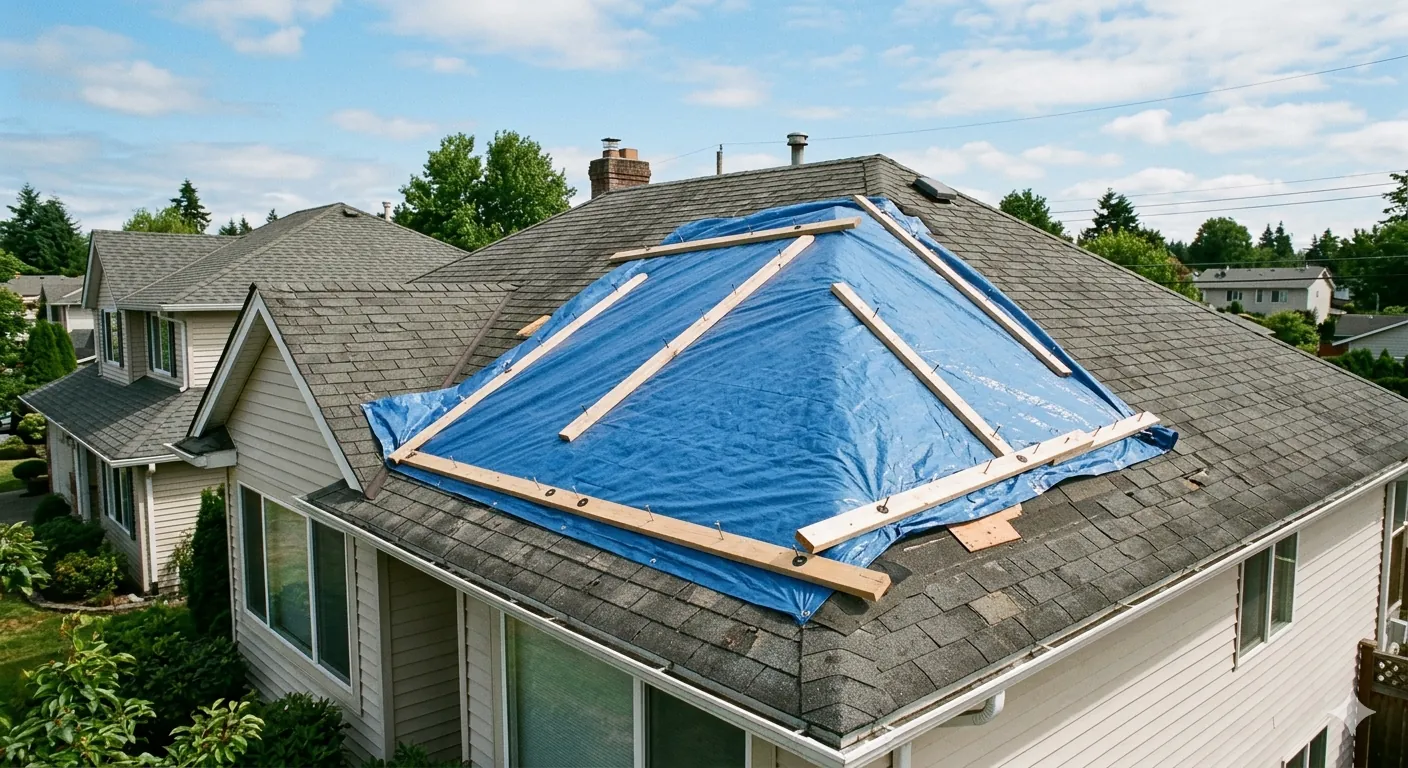
How to Tarp a Roof
Step-by-step guide to emergency roof tarping after storm damage. Protect your home from water damage with proper tarp installation.

How Much Hail Damage to Replace Roof
Learn what level of hail damage qualifies for a full roof replacement through your insurance. Adjuster criteria explained.
How to Unclog Plumbing Vent
Clear a clogged plumbing vent pipe from the roof. Symptoms, tools needed, and step-by-step process.
How Much Does a Plumber Charge to Unclog a Toilet
Plumber costs for toilet unclogging by method. DIY alternatives and when you actually need a professional.
Disclaimer: This content is for informational purposes only. Always follow product label instructions. HouseFixGuide may earn a commission from links on this page.