How to Repair Garage Door Cable
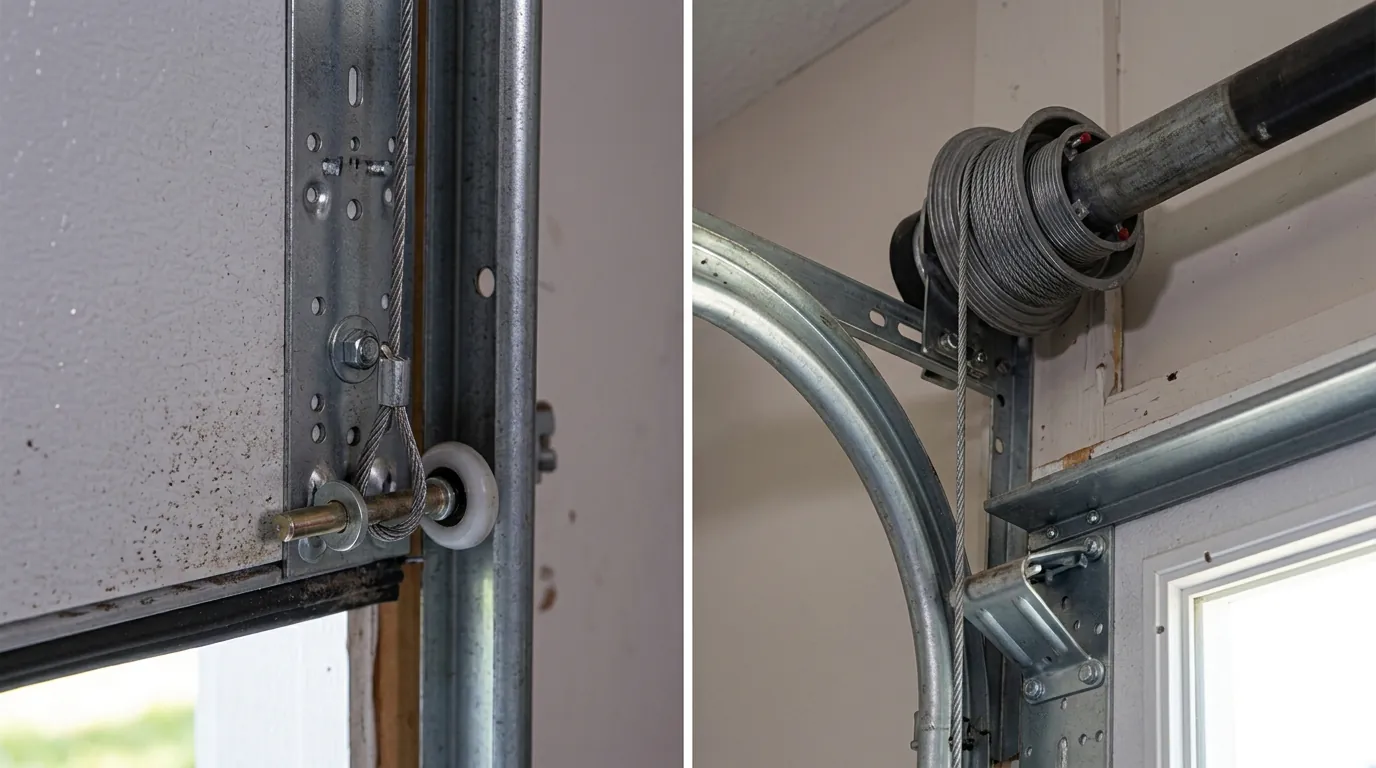
A garage door cable is one of the most critical components of your garage door system. These steel cables are what actually lift and lower the heavy door — working together with the torsion springs to convert the spring's stored energy into controlled vertical movement. When a cable breaks, the door becomes inoperable, crooked, or dangerously unbalanced.
Understanding how to repair garage door cable issues starts with knowing how the system works, recognizing the warning signs, and making an informed decision about whether to tackle the repair yourself or call a professional. Spoiler: for safety reasons, we strongly recommend a professional for this particular repair.
How Garage Door Cables Work
To understand cable repair, you first need to understand the cable system. A standard residential garage door uses two steel cables that work as follows:
- Each cable attaches to a bottom bracket on one of the bottom corners of the garage door
- The cable runs up along the track alongside the vertical portion of the door track
- At the top, each cable wraps around a cable drum — a grooved metal cylinder mounted on the torsion bar above the door
- The torsion bar runs horizontally above the door with the torsion spring(s) wound around it
- When the spring unwinds (during opening), it rotates the torsion bar and cable drums, winding the cables and pulling the door up
- When the door closes, the cables unwind from the drums, and the spring re-winds, storing energy for the next opening
This system is elegant but operates under extreme tension. A standard two-car garage door weighs 150–250 lbs, and the torsion spring stores all of that energy. The cables are the link between the spring's force and the door's movement — when one breaks, the system fails.
Signs Your Garage Door Cable Is Broken
Cable failure is usually obvious, but here's exactly what to look for:
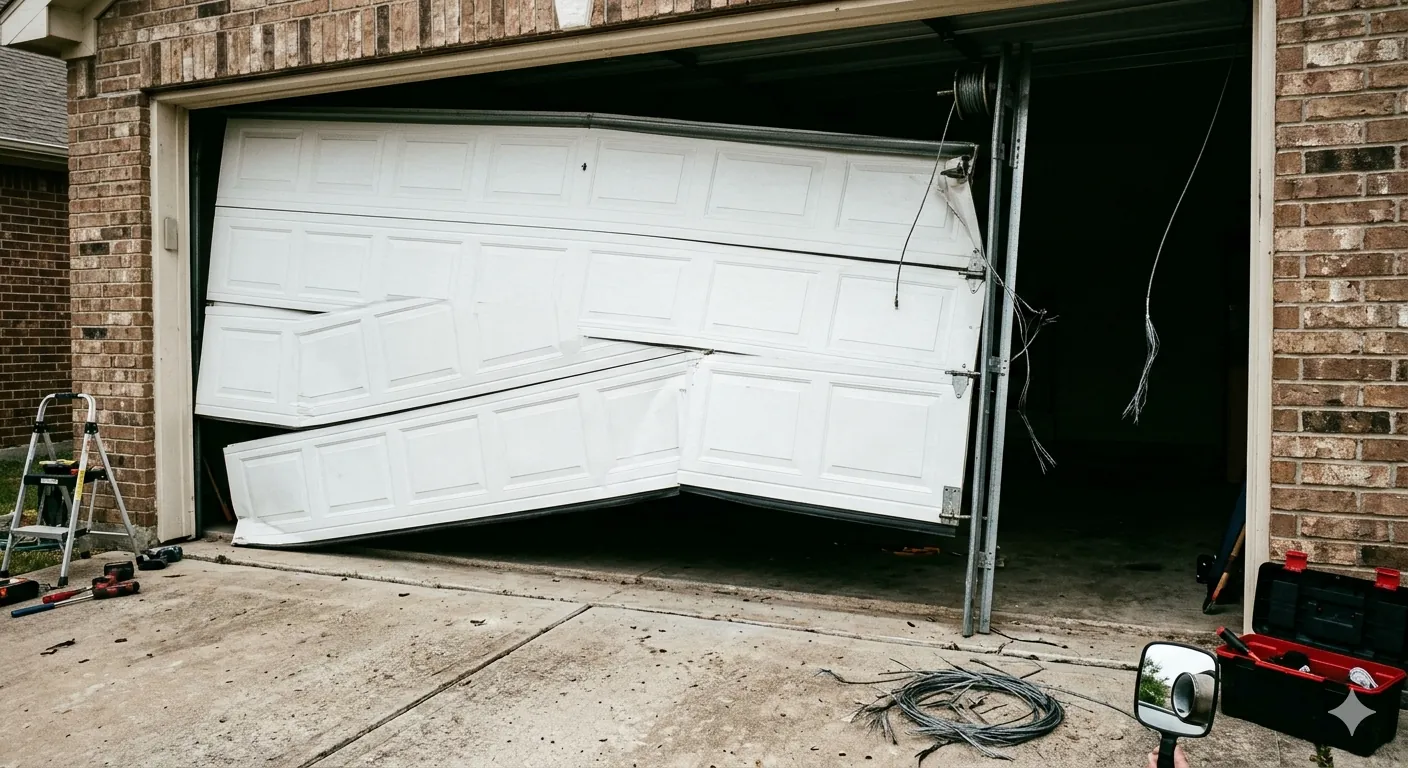
- The door hangs crooked or at an angle — if one cable breaks, the spring-loaded side lifts normally while the broken side drops, tilting the door diagonally in the opening. This is the most common and obvious symptom.
- A cable is visibly loose or hanging — look at the bottom brackets on each lower corner of the door. A broken cable will be hanging loose, coiled on the ground, or dangling from the drum above.
- The door came off its track — when one cable breaks and the other doesn't, the uneven force can pull the door out of its tracks on the broken side
- The door won't open at all — if both cables break (rare but possible, especially if they're the same age), the door has no connection to the spring system and is dead weight
- You heard a loud snap or bang — a breaking cable under tension makes a sharp, loud noise similar to a spring breaking
- The door feels very heavy on one side — if you can still move the door manually, one side will feel dramatically heavier than the other
- Frayed or worn cables — before a cable breaks completely, you may notice individual wire strands breaking and sticking out from the cable (looks like a fraying rope). This is a warning — replace the cable before it snaps completely.
What Causes Garage Door Cables to Break
- Normal wear and tear — cables flex thousands of times over their lifespan. Standard galvanized cables last 8–15 years with typical use (3–5 cycles per day).
- Corrosion — moisture, road salt (tracked in on car tires), and humidity corrode the steel cable over time, weakening individual strands until the cable fails
- Pulley wear — worn or damaged pulleys (in extension spring systems) develop rough edges that abrade the cable as it passes through
- Spring failure — when a torsion spring breaks, the sudden release of tension can overload and snap the cable. Often, cables and springs fail as a pair.
- Drum or track misalignment — if the cable drum shifts or the track becomes misaligned, the cable can jump out of the drum groove and tangle, creating a weak point
- Incorrect cable size — using cables that are too thin for the door weight causes premature failure. Standard residential cables are 1/8" (7×7 strand) for lighter doors or 3/32" for some single-car doors.
- Door obstruction — if the door hits something while closing and jerks to a stop, the sudden load shock can snap a weakened cable
Types of Garage Door Cables
| Cable Type | Used With | Description |
|---|---|---|
| Lift cables (torsion) | Torsion spring systems | Run from the bottom brackets up to cable drums on the torsion bar. Most common in residential doors. |
| Lift cables (extension) | Extension spring systems | Run from the bottom brackets through pulleys attached to the extension springs. Common on single-car doors and older installations. |
| Safety cables | Extension spring systems | Run through the center of the extension spring — if the spring breaks, the safety cable prevents the broken spring from becoming a projectile. Required by code. |
| Retaining cables | Some commercial doors | Specialty cables used in high-cycle commercial applications |
For residential systems, you'll almost always be dealing with lift cables — either torsion-style (running to cable drums) or extension-style (running through pulleys).
The Cable Repair Process
Here's what a professional technician does to replace a garage door cable (for educational purposes — we do not recommend DIY):
1. Secure the Door
The technician clamps locking pliers onto the tracks above the bottom roller on each side to prevent the door from moving during the repair. If the door is up, it must be carefully secured before any work begins.
2. Release Spring Tension
Using winding bars (never screwdrivers or other improvised tools), the technician slowly unwinds the torsion spring to release its stored energy. This is the most dangerous step — a single torsion spring for a two-car door stores enough energy to cause fatal injuries.
3. Remove the Old Cable
With the spring unwound, the cable is slack. The technician detaches the cable from the bottom bracket (usually held by a loop and a set screw or bolt) and unwinds it from the cable drum.
4. Install the New Cable
The new cable is threaded through the bottom bracket, secured with the proper loop or ferrule, run up along the track, and wound precisely into the cable drum grooves. Proper winding is critical — if the cable overlaps or misaligns in the drum, it will jump and fail again.
5. Re-Wind the Spring
The spring is re-wound to the manufacturer's specified number of turns (varies by door weight and spring specifications). Too few turns = the door feels heavy. Too many turns = the door flies up by itself. The technician counts turns carefully.
6. Test and Adjust
The locking pliers are removed, and the door is cycled multiple times. The technician checks for smooth operation, proper balance (the door should stay in place when lifted halfway and released), and correct cable tracking on the drums.
DIY vs. Professional Repair
Why We Recommend a Professional
- Safety — torsion springs under tension can cause broken bones, lacerations, or death if released uncontrolled
- Specialized tools — proper winding bars are essential; improvised tools slip off and cause injury
- Expertise — incorrect spring winding or cable routing leads to door imbalance, off-track events, or repeated cable failure
- Warranty protection — professional repair typically includes a warranty on parts and labor (90 days to 1 year)
- Liability — if you injure yourself doing a DIY spring/cable repair, your homeowner's insurance may not cover the medical costs since it qualifies as a known high-risk activity
When DIY Might Be Acceptable
The only scenario where DIY cable replacement is reasonably safe is on an extension spring system where you can safely secure the door, manually disconnect the extension springs, and work without spring tension. Even then, it requires mechanical aptitude and extreme caution. Never DIY on a torsion spring system unless you are a trained technician with proper tools.
Garage Door Cable Repair Costs in 2026
| Repair | Parts Cost | Labor | Total |
|---|---|---|---|
| Cable replacement (one side) | $15–$30 | $100–$200 | $115–$230 |
| Cable replacement (both sides) | $30–$60 | $125–$250 | $155–$310 |
| Cable + spring replacement | $60–$120 | $150–$300 | $210–$420 |
| Cable + spring + drum replacement | $80–$160 | $175–$350 | $255–$510 |
| Emergency/same-day service | Same | +$50–$100 surcharge | Variable |
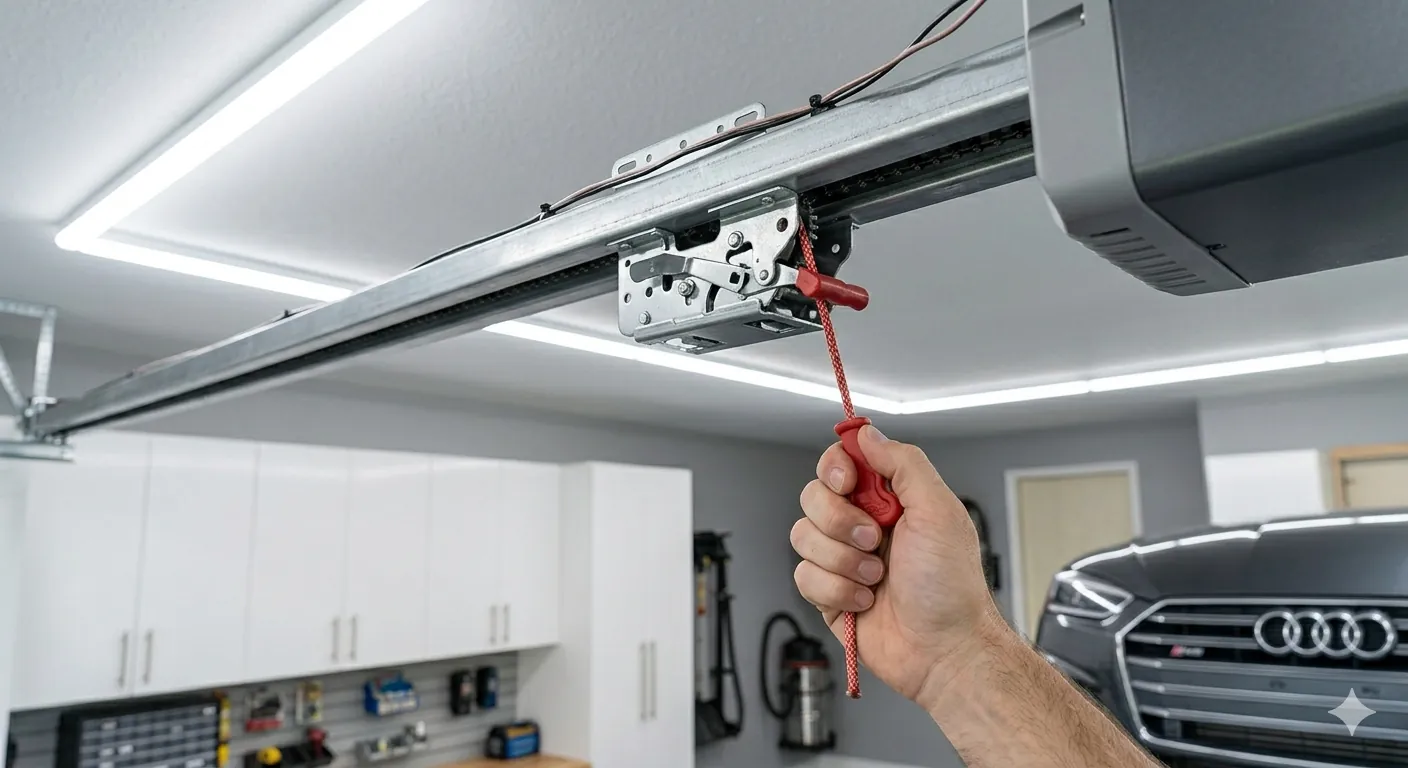
Pro tip: Always replace both cables at the same time, even if only one is broken. They're the same age and material — if one failed, the other is close behind. The incremental cost to do both is minimal ($15–$30 extra for the cable, same labor). Learn more about manually operating your garage door while waiting for a technician.
How to Prevent Cable Failure
- Visual inspection twice per year — look at the cables from the bottom brackets up to the drums. Check for fraying (individual broken wire strands sticking out), rust, kinks, or wear spots.
- Lubricate the cables annually — apply a light coat of garage door lubricant spray (not WD-40, which evaporates) to keep the steel strands flexible and prevent corrosion. A dedicated silicone or white lithium lubricant is ideal.
- Keep the tracks aligned — misaligned tracks cause uneven cable wear. If the door rubs or sticks at certain points, have a technician realign the tracks.
- Replace cables proactively at 10–12 years — cables are cheap ($15–$30 each). Replacing them during a routine spring maintenance visit is far less expensive than an emergency service call after a failure.
- Maintain the springs — balanced springs reduce stress on the cables. If the door feels heavy or the springs show signs of wear, have them serviced.
- Ensure proper cable drum condition — worn drum grooves cause cables to jump and tangle. During any cable replacement, ask the technician to inspect the drums.
Related Garage Door Issues
Cable problems often occur alongside other issues. If you're experiencing cable failure, check for these related problems:
- Broken springs — a spring failure often causes the cable to snap or jump off the drum. Address both simultaneously.
- Door off-track — an uneven cable failure pulls the door out of alignment. The track may need bending or roller replacement after re-cabling.
- Worn rollers — steel rollers that haven't been replaced in 10+ years can seize, putting extra strain on the cables.
- Bottom bracket damage — the bracket where the cable attaches can crack or bend, especially during a cable failure. Inspect it during any cable repair.
Want to learn more about garage doors?
Read Our Complete Garage Doors Guide →Frequently Asked Questions
More Garage Doors Guides
You May Also Like
How Long Do AC Units Last in Florida
Florida AC lifespan data, climate factors that shorten unit life, and signs your AC needs replacing.
How to Fix Short Cycling Air Conditioner
Diagnose and fix an AC that keeps turning on and off. Common causes from dirty filters to bad capacitors.
How Do Electrical Fires Start
The 10 most common causes of electrical fires in homes. Warning signs, prevention measures, and emergency response.
How Long Do Electrical Panels Last
Electrical panel lifespan by type, dangerous recalled brands (FPE, Zinsco), and upgrade costs.
Disclaimer: Garage door springs and cables operate under extreme tension. This content is for informational purposes only. Never attempt torsion spring or cable work yourself — contact a licensed garage door technician. HouseFixGuide may earn a commission from links on this page.