How Do You Close a Garage Door Manually?
- When You Need to Close a Garage Door Manually
- Safety Warnings Before You Start
- Step-by-Step: Manually Closing Your Garage Door
- How to Reconnect the Opener Afterward
- How to Open/Close From Outside During Power Outage
- What If a Spring Is Broken?
- Manual Operation for Different Door Types
- Security Concerns During Power Outages
- Preventing Emergency Manual Situations
- Frequently Asked Questions
The power goes out, and your garage door is stuck open. Or maybe your garage door opener just stopped working — the motor hums but nothing moves, or it's completely unresponsive. Either way, your car, tools, and everything else in the garage are exposed, and you need to close that door now.
The good news: every garage door with an automatic opener has a built-in emergency release mechanism that lets you disconnect the door from the opener and operate it by hand. Knowing how do you close a garage door manually is a basic homeowner skill that takes 30 seconds once you understand the process — but doing it wrong can damage the opener, the door, or injure you.
When You Need to Close a Garage Door Manually
Manual operation becomes necessary in several situations:
- Power outage — the most common reason. No electricity means the opener can't function.
- Opener malfunction — the motor has failed, gears are stripped, circuit board is fried, or the logic board needs a reset
- Broken trolley or chain/belt — the physical connection between the motor and the door has failed
- Sensor issues — the safety sensors are misaligned or malfunctioning and the door won't complete its closing cycle
- Remote/keypad battery dead — and the wall button is also unresponsive
- Emergency evacuation — you need to get your car out quickly and can't wait for the opener to cycle
In any of these scenarios, the emergency release mechanism is your friend. It's specifically designed for these situations and every garage door opener manufactured in the last 40 years has one.
Safety Warnings Before You Start
⚠️ Read these before touching anything:
- NEVER attempt manual operation if a spring is broken — garage door springs carry the full weight of the door (150–400 lbs for a two-car door). Without functioning springs, the full weight falls on you. Broken springs are visible: look for a gap in the coils above the door (torsion springs) or a stretched, elongated spring on the sides (extension springs). If springs are broken, do not operate the door — call a technician.
- Keep hands and fingers away from the track and hinges — the sections fold as the door moves, and the hinge joints can pinch with enough force to amputate fingers
- If the door is stuck partially open, approach with extra caution — it could be off-track or have a cable issue, and pulling the release may cause the door to drop
- Never stand directly under a door that's partially open while pulling the emergency release — stand to the side
- Keep children and pets away from the door while operating manually
Step-by-Step: How to Manually Close Your Garage Door
Step 1: Locate the Emergency Release Cord
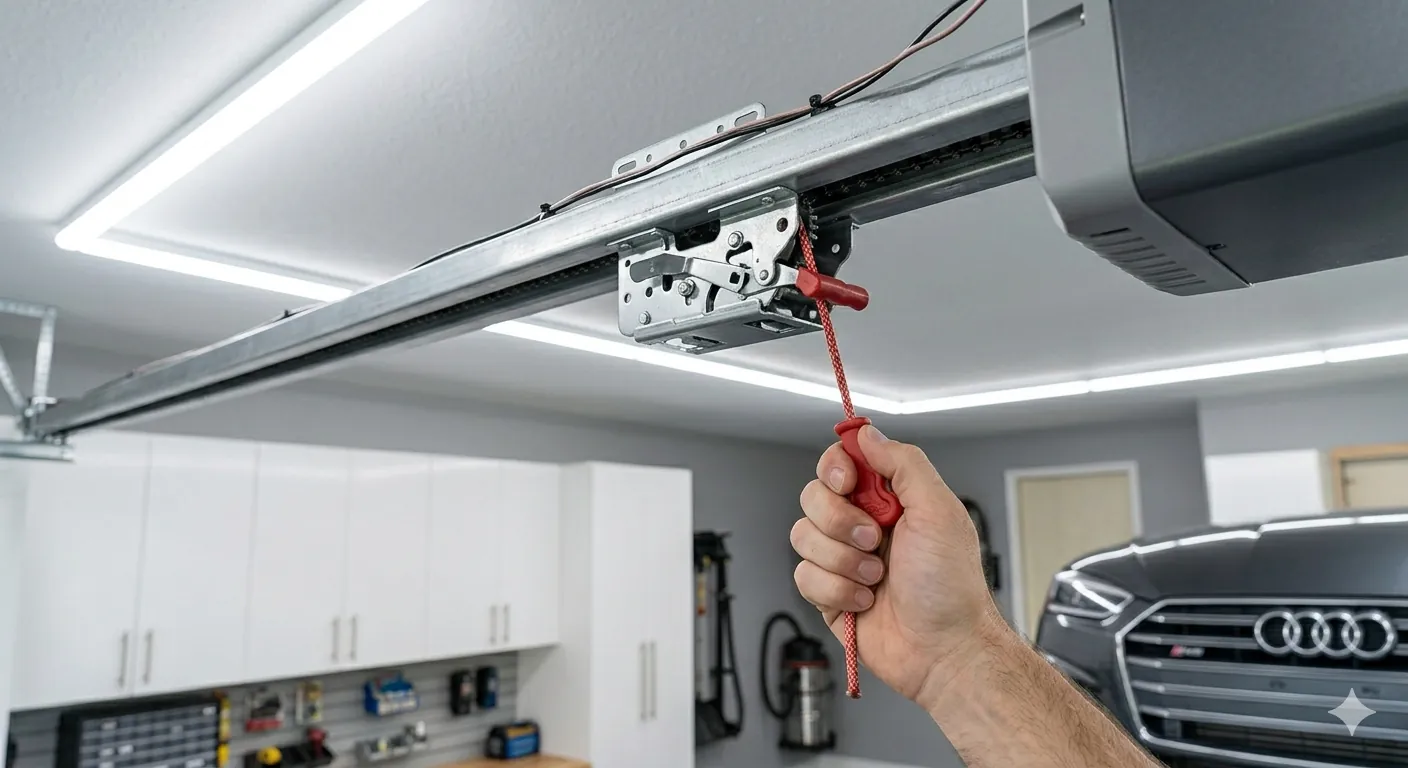
Look at the opener rail (the metal track that runs from the motor unit to the front wall above the door). You'll see a trolley carriage that moves along the rail — this is what connects the opener to the door via a curved arm. Hanging from the trolley, you'll see a red rope with a handle. This is the emergency release cord.
Step 2: Close the Door First (If Currently Open)
Important safety note: If the door is currently open, do NOT pull the emergency release cord while the door is in the up position unless you're standing to the side and the springs are working. Here's why: when you disconnect the trolley with the door up, the door is held in place only by the springs. If the springs are weak, damaged, or broken, the door could slam down with extreme force.
Best practice: If the door is in the up position, pull the release cord, then immediately grab the door by the bottom edge or handle and guide it down slowly and steadily. Don't let go until it's fully closed.
Step 3: Pull the Emergency Release Cord
Pull the red cord straight down and toward the garage door (away from the motor unit). You'll hear or feel a click as the inner trolley carriage disconnects from the outer trolley. The cord doesn't need much force — a firm tug is enough.
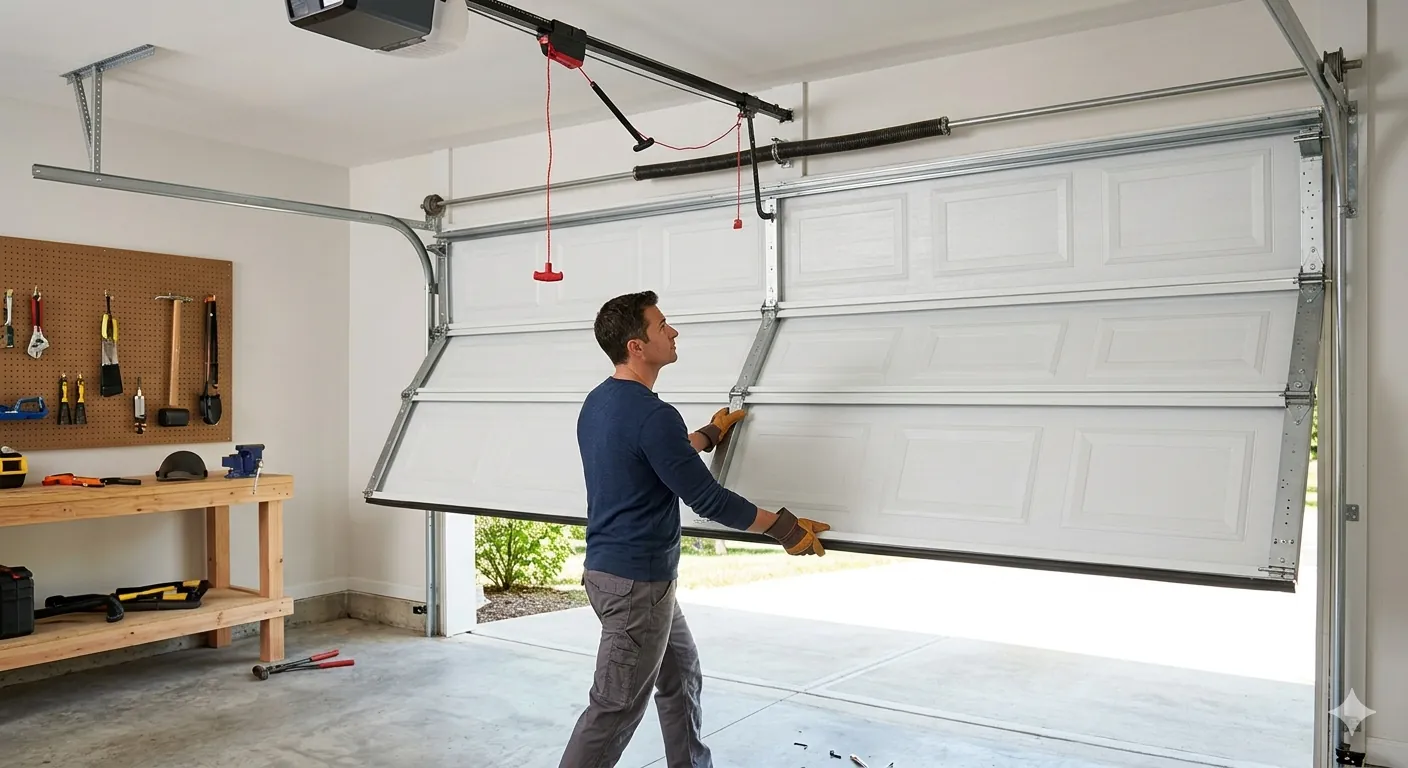
Step 4: Lower the Door by Hand
Grab the bottom edge or handle of the garage door and pull it down. A properly balanced door with working springs should feel light — you're only lifting/lowering about 10–15 lbs of effective weight, even though the door actually weighs 130–250 lbs (the springs carry the difference).
- Pull down smoothly and steadily — don't jerk or slam it
- Guide the door all the way down until it sits flat on the garage floor
- If the door feels excessively heavy (more than about 25–30 lbs of resistance), something is wrong — the springs may be weak, broken, or the door may be off-track. Stop and assess.
Step 5: Lock the Door (Security)
Most garage doors have a manual slide lock on the inside — a metal bar that slides into a slot in the track. Engage this lock to secure the door, especially during a power outage when the opener's automatic lock isn't functioning.
⚠️ Critical reminder: You MUST disengage this manual lock before trying to use the automatic opener again. Running the opener with the manual lock engaged will strip the gears, break the trolley, or bend the lock bar. Many expensive opener repairs start with someone forgetting to unlock the manual slide lock.
How to Reconnect the Opener Afterward
Once power is restored or the opener is repaired, you need to reconnect the door to the automatic opener:
Method 1: Automatic Re-Engagement (Most Common)
- Unlock the manual slide lock (if engaged)
- Make sure the door is fully closed
- Press the wall button or remote control
- The motor will run the inner trolley carriage along the rail. As it passes the disconnect lever, it catches and re-engages automatically
- You may hear a loud click when it re-engages — this is normal
- Test the door through a full open and close cycle to confirm proper operation
Method 2: Manual Re-Engagement
On some older or less common openers, you may need to manually push the trolley back into the engaged position:
- Pull the emergency release cord toward the motor (opposite direction from disconnecting)
- You should hear a click as the inner carriage snaps back into the outer trolley
- Then press the wall button to test normal operation
How to Open or Close the Door Manually From Outside
What if the power is out and you're outside the garage? You can't reach the emergency release cord from outside unless your door has an external release mechanism:
If You Have an External Emergency Release (Key Lock)
Look at the center-top of the garage door (exterior side). Many doors have a small key lock with a cylinder. Insert the key, turn it, and pull the lock cylinder outward — a cable connected to the lock releases the emergency disconnect inside, allowing you to lift the door manually from outside.
If You Don't Have an External Release
Your options are limited:
- Enter the garage through another door (side door, interior house door) to access the emergency release from inside
- If no alternate entry exists, wait for power to be restored
- Do NOT try to pry the door open — this damages the weather seal, panels, and tracks
- Consider installing an external key release ($15–$30) to prevent this situation in the future
What If a Spring Is Broken?
If you suspect a garage door spring is broken, do not attempt manual operation. Here's how to identify broken springs:
- Torsion springs (mounted on a bar above the door): look for a visible gap in the coil, or the spring wound tightly on one side with slack on the other
- Extension springs (mounted along the horizontal tracks on each side): look for a stretched, elongated spring or one that's hanging loose with no tension
- Clues without looking: if the door felt very heavy the last time it moved, if you heard a loud "bang" from the garage (springs breaking sound like a gunshot), or if the opener struggles/stalls trying to lift the door
A single-car garage door weighs 75–150 lbs; a two-car door weighs 150–250+ lbs. Without springs counterbalancing that weight, the door is essentially dead weight. A 200-lb door dropping uncontrolled can cause severe injury or death. Call a garage door professional — spring repairs cost $150–$350 and take under an hour. It's not worth the risk.
Manual Operation for Different Door Types
Sectional Overhead Doors (Most Common)
This is what 90%+ of American garages have — multiple horizontal panels connected by hinges that roll up along curved tracks. The emergency release process described above applies to these doors.
One-Piece Tilt-Up Doors
Older homes may have a single solid panel that tilts outward as it opens. These doors are heavier and balance differently. The emergency release process is similar, but the door swings outward as it opens (stand clear of the door's swing arc). These doors typically use extension springs on either side rather than a torsion spring above.
Roll-Up (Sheet) Doors
Common on commercial buildings and some sheds. These coil around a drum above the opening. Manual operation involves disengaging the motor and using a hand chain or crank to roll the door down. The process varies by manufacturer — check your specific model's manual.
Side-Hinged (Barn-Style) Doors
These swing outward or inward like traditional doors. Most don't have automatic openers, so they're already manual. If yours does have an opener, it will have a disconnect similar to overhead doors.
Security Concerns During Power Outages
When your garage door is in manual mode, the automatic lock on the opener is inactive. This creates a security vulnerability:
- Always engage the manual slide lock when leaving the door closed during an outage
- External release cylinders can be exploited — a thief can use a coat hanger through the weather seal to pull the emergency release and lift the door. To prevent this, install a zip tie on the emergency release lever — strong enough that the key release still works, but it prevents a coat hanger from pulling the cord
- Consider installing a deadbolt** or padlock-style lock on the inside track for added security during extended outages
- Never leave the garage door partially open thinking it'll be less obvious — a partially open door is an invitation
Preventing Emergency Manual Situations
You can minimize the need for manual operation with a few proactive steps:
- Install a battery backup opener — models from LiftMaster, Chamberlain, and Genie offer built-in battery backup that provides 24–48 hours of operation during power outages ($250–$400)
- Install an uninterruptible power supply (UPS) — a large UPS can power a standard opener for several cycles ($100–$200)
- Maintain your opener yearly — lubricate the chain/belt, check the trolley, test the sensors, and replace worn gears before they fail completely
- Keep the manual slide lock accessible — if it hasn't been used in years, the mechanism may be seized with rust. Test it periodically and apply lubricant.
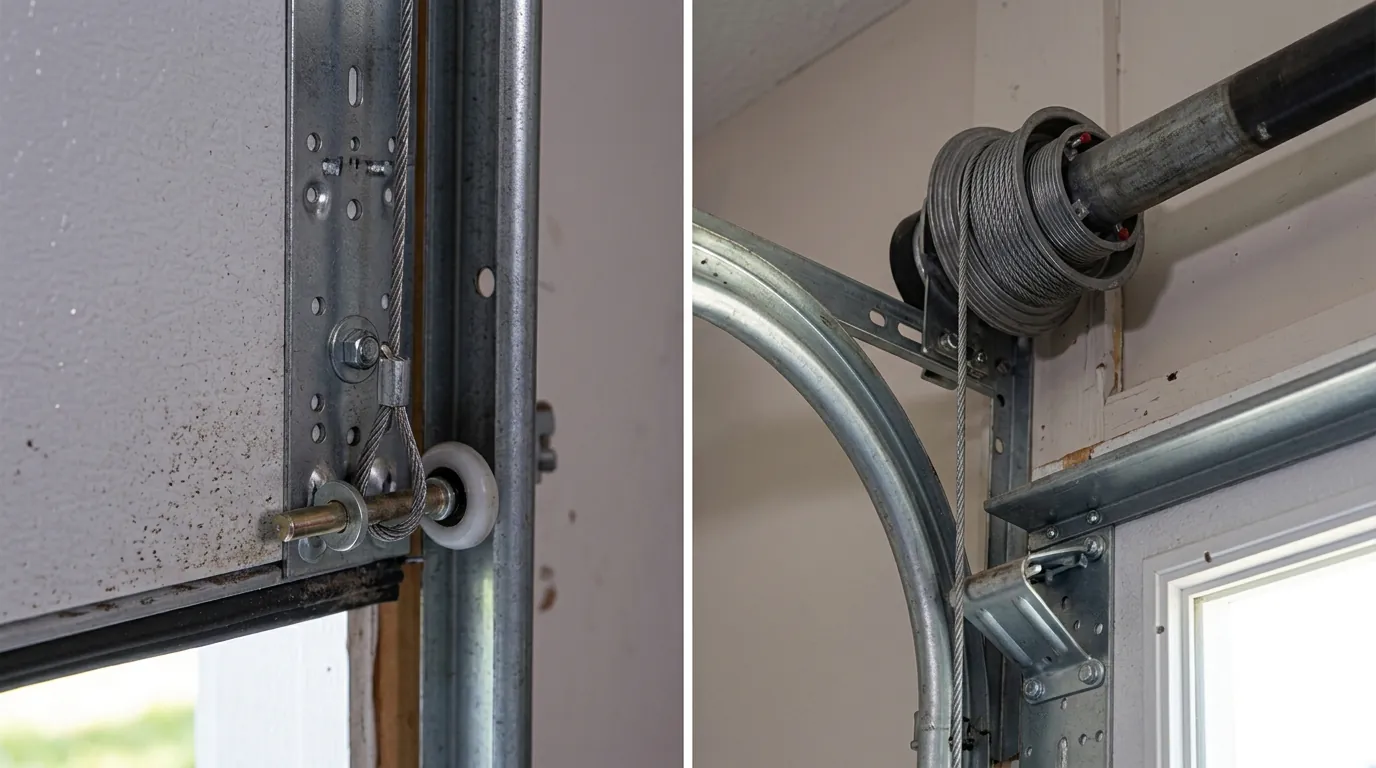
- Learn more about garage door cable repair to address issues before they become emergencies
Want to learn more about garage doors?
Read Our Complete Garage Doors Guide →Frequently Asked Questions
More Garage Doors Guides
You May Also Like
How Long Do AC Units Last in Florida
Florida AC lifespan data, climate factors that shorten unit life, and signs your AC needs replacing.
How to Fix Short Cycling Air Conditioner
Diagnose and fix an AC that keeps turning on and off. Common causes from dirty filters to bad capacitors.
How Do Electrical Fires Start
The 10 most common causes of electrical fires in homes. Warning signs, prevention measures, and emergency response.
How Long Do Electrical Panels Last
Electrical panel lifespan by type, dangerous recalled brands (FPE, Zinsco), and upgrade costs.
Disclaimer: Garage door systems involve high-tension springs that can cause serious injury. This content is for informational purposes only. Never attempt to repair springs yourself — contact a licensed garage door technician. HouseFixGuide may earn a commission from links on this page.