How Long Do Electrical Panels Last?
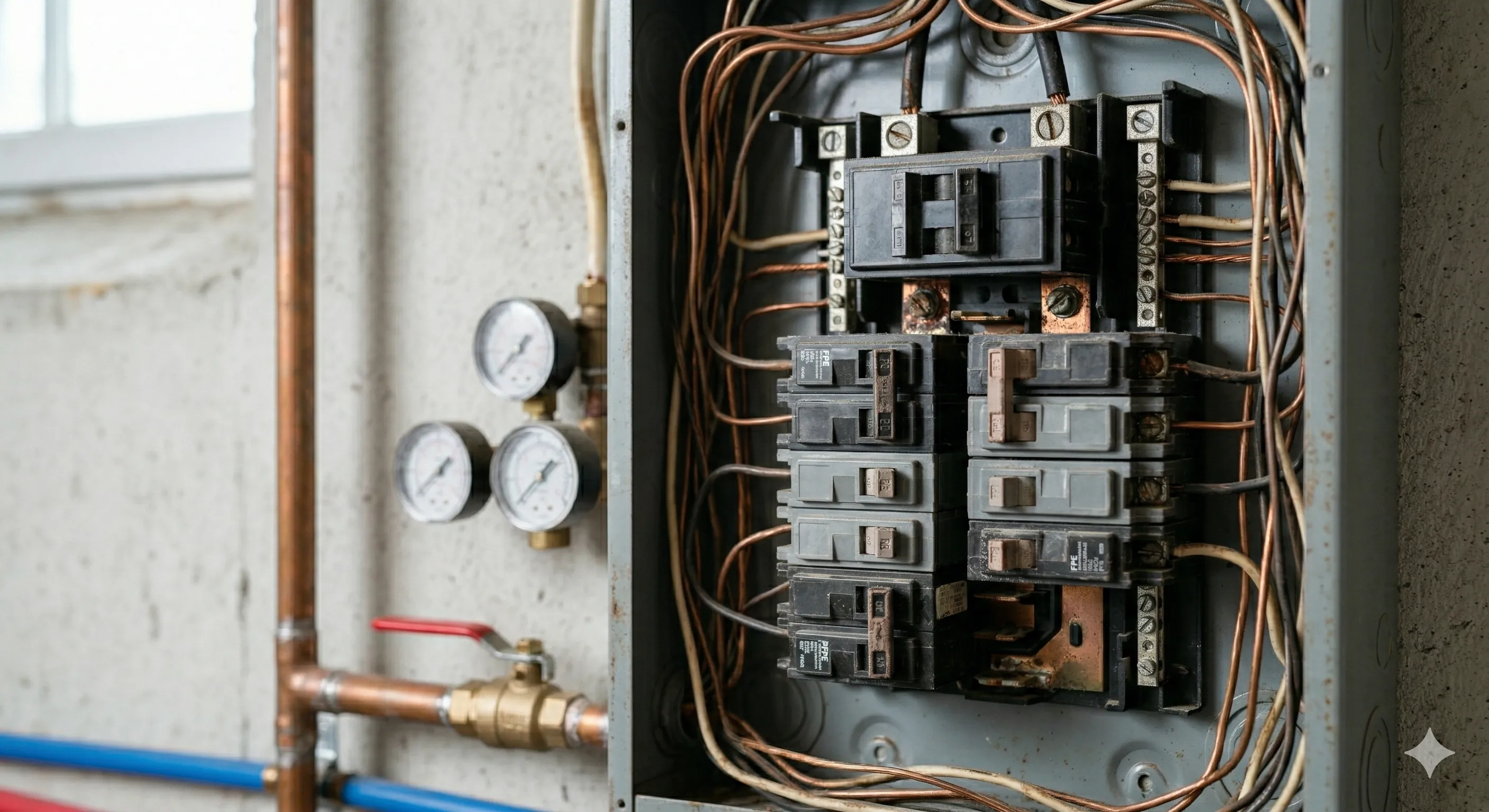
Your electrical panel is the heart of your home's electrical system — every circuit in the house connects through it. Yet most homeowners never think about their panel until something goes wrong: breakers tripping constantly, lights flickering, or worse, a burning smell from behind that gray metal door.
Understanding how long do electrical panels last helps you plan ahead for one of the most important (and most commonly overlooked) home maintenance investments.
Panel Lifespan by Type
| Panel Type | Expected Lifespan | Notes |
|---|---|---|
| Modern breaker panel (Square D, Siemens, Eaton) | 30–40+ years | Best longevity with quality components |
| Budget breaker panel | 25–35 years | Adequate for most residential use |
| Fuse box | 30–50 years (the box) | Safe if properly fused, but outdated for modern loads |
| Federal Pacific (FPE) | Replace ASAP | Known fire hazard regardless of age |
| Zinsco/GTE-Sylvania | Replace ASAP | Known fire hazard regardless of age |
| Individual breakers | Indefinite (but 30–40 year practical limit) | Mechanical mechanisms wear with repeated tripping |
Factors That Affect Panel Lifespan
Environment
- Humidity — panels in damp basements, garages, or coastal areas corrode faster. Moisture accelerates oxidation on bus bars, breaker contacts, and wire connections.
- Temperature extremes — panels in unconditioned spaces (attics, exterior walls) experience thermal cycling that loosens connections over time.
- Exposure — outdoor panels or panels in garages with poor sealing are exposed to dust, moisture, and pests that degrade components.
Load Demands
A panel that's consistently loaded near its capacity ages faster than one that's lightly loaded. Modern homes draw far more power than homes from the 1960s–1990s due to EV chargers, home offices, smart devices, and high-efficiency appliances that replaced their lower-draw predecessors.
Maintenance (or Lack of It)
Panels that are professionally inspected every 5–10 years and have loose connections tightened, corroded breakers replaced, and proper ventilation maintained last significantly longer than neglected panels.
Quality of Original Installation
Properly torqued connections, correct wire sizing, adequate ventilation, and professional-grade workmanship extend panel life. Poorly installed panels — loose connections, overcrowded wiring, missing knockouts — develop problems much sooner.
Dangerous Panel Brands to Replace Immediately
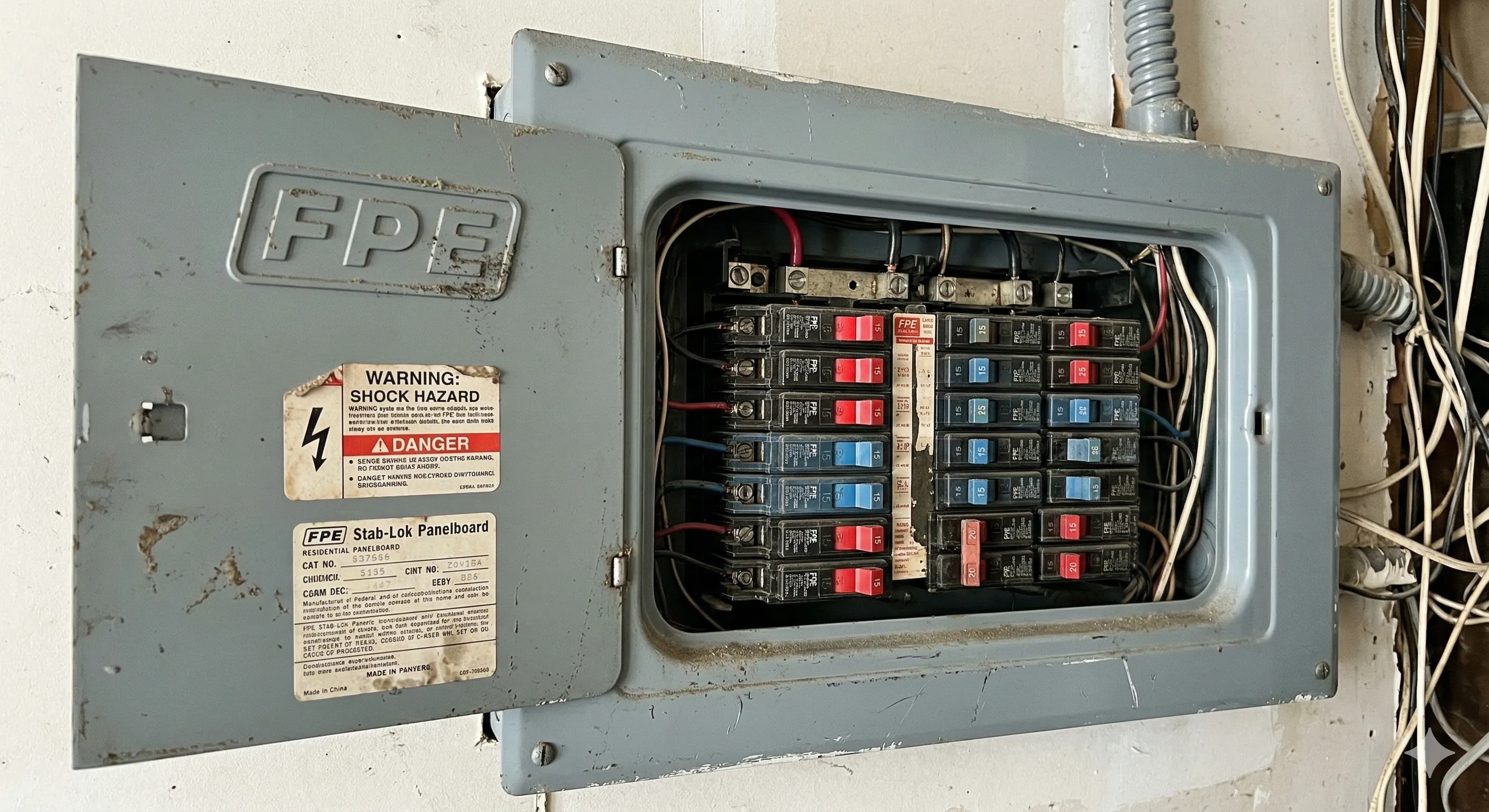
Federal Pacific Electric (FPE) Stab-Lok
Manufactured from the 1950s–1980s, FPE Stab-Lok panels were found to have breakers that fail to trip during overload conditions 25–40% of the time. When a breaker doesn't trip, the wire overheats without protection — the exact condition that starts electrical fires. Multiple independent studies and a class action lawsuit have confirmed this defect.
Action: Replace regardless of current condition or age. Do not attempt to "fix" by adding new breakers — the bus bar design itself is the problem.
Zinsco / GTE-Sylvania
Zinsco panels (also sold under GTE-Sylvania and Kearney brands) have breakers that can melt and fuse to the bus bar, making them impossible to trip even manually. Once fused, the breaker provides zero overcurrent protection.
Action: Replace regardless of condition or age.
How to Identify Your Panel
- Look at the panel door — the manufacturer name is usually printed or stamped on the inside of the door or on the dead front cover.
- Look at the breakers — FPE breakers say "Stab-Lok" on them. Zinsco breakers have a distinctive colorful appearance (pink, blue, green handles).
- If unsure, have an electrician identify it during an inspection ($100–$200).
Signs Your Electrical Panel Needs Replacement
- Frequent breaker trips — if the same breaker trips repeatedly under normal loads, it may be worn out or the circuit is overloaded beyond the panel's capacity.
- Rust or corrosion — visible on the panel exterior, bus bars, or breakers. Indicates moisture exposure and degraded connections.
- Burn marks or melting — scorch marks on breakers, the bus bar, or wire insulation inside the panel. This is a fire hazard — call an electrician immediately.
- Buzzing or crackling sounds — from inside the panel. Indicates arcing at loose connections.
- Warm panel cover — the dead front or panel door should be cool to the touch. Warmth indicates overloading or loose connections.
- Panel is full (no open breaker spaces) — if you need new circuits but have no room, it's time for a larger panel.
- Under 100 amps — homes with 60-amp or 100-amp panels struggle with modern electrical demands (EV chargers need 40–60 amps alone). A 200-amp panel is today's standard.
- Fuse box — while fuse boxes can be safe, they don't offer the convenience of breakers and are a red flag for insurance companies.
- Insurance issues — some insurers refuse to cover or charge premium surcharges for homes with FPE, Zinsco, or fuse panels.
When to Upgrade vs. Replace
| Situation | Action | Cost |
|---|---|---|
| Panel in good condition, need more circuits | Add a sub-panel | $500–$1,500 |
| Few worn breakers, panel otherwise fine | Replace individual breakers | $20–$60 per breaker (parts) |
| Panel over 40 years old, showing wear | Full panel replacement | $1,500–$3,000 |
| FPE or Zinsco panel (any age) | Full panel replacement (urgent) | $1,500–$3,000 |
| 100-amp panel, need 200-amp service | Service upgrade + new panel | $2,500–$4,500 |
| Fuse box, planning renovation | Replace with modern breaker panel | $1,500–$3,000 |
Panel Replacement Costs (2026)
| Service | Cost Range |
|---|---|
| Like-for-like panel swap (same amp, same location) | $1,500–$2,500 |
| 100-amp to 200-amp upgrade | $2,500–$4,000 |
| 200-amp to 400-amp upgrade (EV + solar ready) | $4,000–$8,000 |
| Sub-panel installation | $500–$1,500 |
| Panel relocation (different wall) | Add $500–$1,500 |
| Permit and inspection | $75–$300 |
| Breaker replacement (each) | $150–$250 (installed) |
What Happens During a Panel Replacement
- Permit pulled — electrical panel replacement requires a permit in virtually all jurisdictions ($75–$300)
- Power shut off — the utility company disconnects power to the home (coordinated by the electrician). Your home will be without power for 4–8 hours.
- Old panel removed — the electrician removes all wire connections, breakers, and the old panel enclosure
- New panel installed — the new panel is mounted, bus bars connected, and all circuit wires reconnected to new breakers
- Labeling — every breaker is labeled with its circuit location (kitchen outlets, master bedroom, bathroom GFCI, etc.)
- Testing — each circuit is tested for proper operation, correct polarity, and ground continuity
- Inspection — the local building inspector verifies the work meets code. This is required before the utility reconnects full service.
- Power restored — the utility reconnects service and you're back online
For related safety information, see our guide on how electrical fires start and our complete electrical guide.
Want to learn more about home electrical systems?
Read Our Complete Electrical Guide →Frequently Asked Questions
More Electrical Guides
You May Also Like
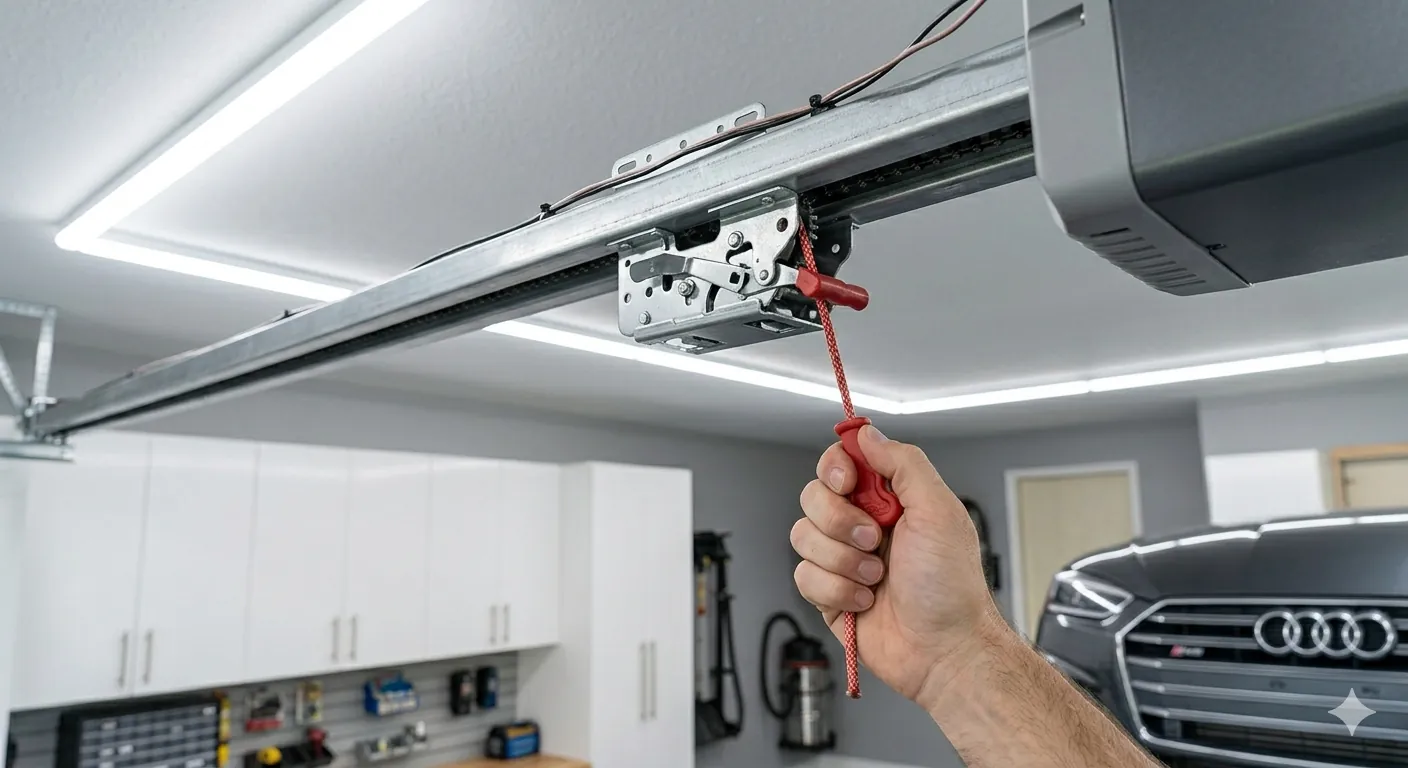
How Do You Close a Garage Door Manually
Emergency guide to manually closing your garage door when the opener fails. Step-by-step with safety tips.
How to Repair Garage Door Cable
Complete guide to diagnosing and repairing broken garage door cables. Safety warnings and when to call a pro.
How Long Do AC Units Last in Florida
Florida AC lifespan data, climate factors that shorten unit life, and signs your AC needs replacing.
How to Fix Short Cycling Air Conditioner
Diagnose and fix an AC that keeps turning on and off. Common causes from dirty filters to bad capacitors.
Disclaimer: This content is for informational purposes only. All electrical panel work must be performed by a licensed electrician with proper permits. HouseFixGuide may earn a commission from links on this page.