Roofing: The Complete Homeowner's Guide to Roof Repair & Replacement
Browse Articles
Your roof is the single most important structural element protecting your home. It handles extreme heat, freezing cold, driving rain, hail, falling branches, and UV radiation — every single day. When your roofing system fails, the damage cascades fast: water penetrates into your attic, soaks your insulation, rots your decking, stains your ceilings, and can even compromise your home's foundation.
Whether you're dealing with storm damage from last night's hail, aging shingles that have seen better days, or you're planning a full roof replacement, understanding how roofing works saves you thousands of dollars and prevents costly mistakes. This guide covers everything homeowners need to know about roofing — from emergency repairs to choosing the right contractor — with links to our detailed how-to articles for specific topics.
- Roofing Materials Compared
- How Long Does a Roof Last?
- Roof Damage Warning Signs
- Emergency Tarping After Storm Damage
- Roof Repair vs. Full Replacement
- Hail Damage and Insurance Claims
- Roofing Costs in 2026
- Metal Roofing for Homes and Sheds
- How Long Does a Flat Roof Last?
- Roof Maintenance Checklist
- Hiring a Roofer (Without Getting Ripped Off)
- Frequently Asked Questions
Roofing Materials Compared
The type of roofing material on your home determines its lifespan, cost, aesthetic, maintenance needs, and how well it handles your local climate. Choosing the right material is the most impactful roofing decision you'll make.
Asphalt Shingles
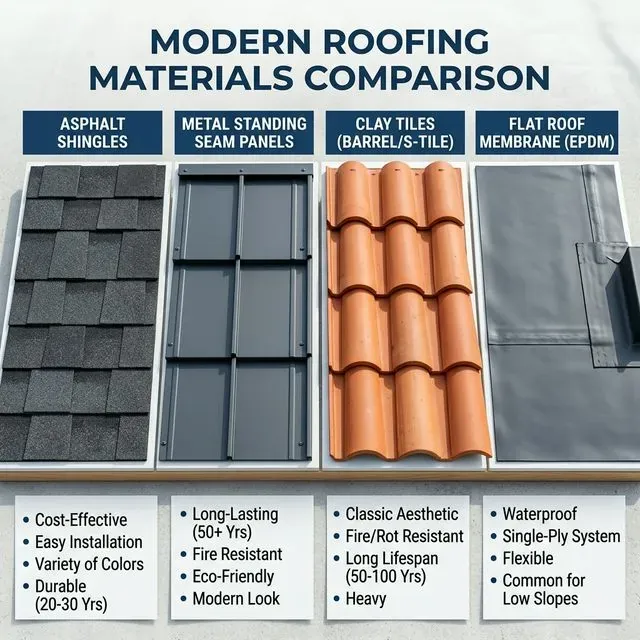
Asphalt shingles cover roughly 80% of American homes. They're affordable ($3.50–$5.50 per square foot installed), come in dozens of colors, and most roofing contractors can install them efficiently. Three-tab shingles are the most budget-friendly, while architectural (dimensional) shingles offer better durability, a thicker profile, and a more textured appearance that many homeowners prefer.
The trade-off is lifespan. Standard asphalt shingles last 15–25 years. In extreme heat climates like Arizona or Florida, expect the lower end. High-wind rated shingles cost a bit more upfront but can handle sustained gusts up to 130 mph — well worth it if you live in a hurricane-prone area.
When your asphalt roofing starts showing age, you'll notice granules accumulating in your gutters — that's the protective coating wearing away, and it's one of the clearest signals it's time to start planning a roof replacement. You can learn how to clean a shingle roof to help extend its life, but eventually every shingle roof needs replacing.
Standing Seam Metal Roofing
Metal roofing has surged in popularity over the past decade. Standing seam metal roofs last 40–70 years, reflect solar heat (cutting cooling costs by 10–25%), and handle high winds and hail damage far better than asphalt. The installed cost runs $7–$14 per square foot depending on the metal. Steel is most affordable, copper and zinc are premium.
One of the most common questions we get is about how to put a metal roof on a shed. The good news: outbuildings and sheds have simpler roof geometry, making metal roofing installation more straightforward and budget-friendly as a DIY project. For your main home, we recommend hiring a certified installer.
Tile Roofing (Clay, Concrete, Slate)
Clay and concrete tile roofs are the standard in Florida, the Southwest, and Mediterranean-style homes. Clay tile can last 50–100+ years, while concrete tile gives you 40–60 years at a lower price point. Natural slate is the ultimate: 75–200 years of service life. The catch? Slate is extremely heavy (requiring structural reinforcement) and costs $15–$30 per square foot. If you're wondering how long do tile roofs last in Florida specifically, the answer is 40–60 years for concrete and 75+ for clay, provided they're installed properly with hurricane clips.
| Roofing Material | Lifespan | Cost per sq ft | Best Climate |
|---|---|---|---|
| 3-Tab Asphalt Shingles | 15–20 years | $3.50–$4.50 | Mild, moderate wind |
| Architectural Shingles | 20–30 years | $4.00–$5.50 | Most climates |
| Standing Seam Metal | 40–70 years | $7–$14 | All climates, excellent for hail |
| Clay/Concrete Tile | 40–100 years | $8–$18 | Hot, dry climates |
| TPO/EPDM (Flat Roof) | 15–25 years | $5–$10 | Flat roofs, commercial |
| Natural Slate | 75–200 years | $15–$30 | Any; requires strong structure |
How Long Does a Roof Last?
Roof lifespan depends on three main variables: material quality, installation quality, and your local climate. A perfectly installed architectural shingle roof in a moderate Mid-Atlantic climate can hit 30 years. The same roofing system in Florida, battered by intense UV, humidity, salt air, and hurricane-season winds, might need replacing at just 18–22 years.
The factors that shorten roof life the most:
- Poor attic ventilation — trapped heat bakes shingles from below, accelerating aging by 25–40%. If your attic feels like a sauna in summer, you have a ventilation problem. Consider whether you need to replace a roof vent to improve airflow.
- Overhanging trees — debris buildup traps moisture and encourages moss/algae growth, which degrades shingle surfaces
- Walking on the roof — every trip damages granules on asphalt shingles, which is why minimizing foot traffic matters
- Poor flashing installation — valleys, chimneys, skylights, and vent pipes are always the first leak points
- Layering over old shingles — a second layer adds weight and hides underlying deck damage
- Neglecting gutters — clogged gutters cause ice dams in winter and water backup under roofing edges
Roof Damage: Warning Signs Every Homeowner Should Know
Catching roof damage early prevents expensive secondary damage to your ceilings, walls, insulation, wiring, and even your home's foundation. The cost difference between a $400 repair and a $15,000 replacement often comes down to timing.
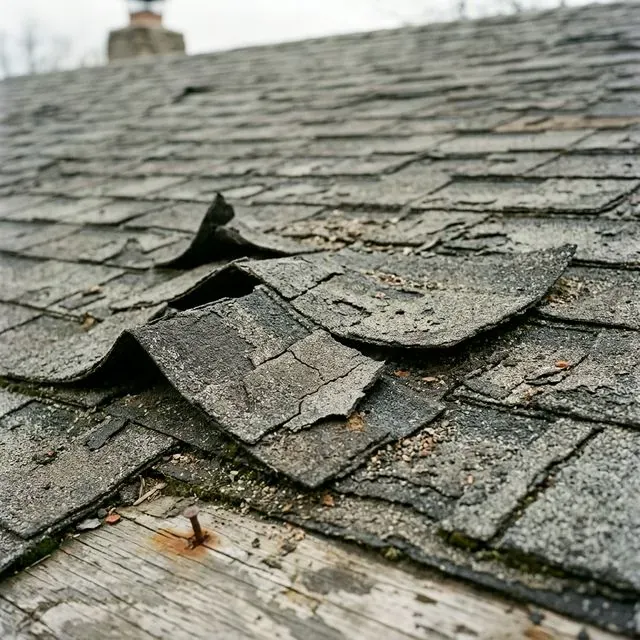
Here are the roof damage warning signs to watch for:
- Missing, cracked, or curling shingles — indicates wind damage, age, or manufacturing defects
- Granules accumulating in gutters — your asphalt roofing is losing its UV protection layer
- Dark stains or black streaks — algae (Gloeocapsa magma) growth, common in humid climates
- Interior water stains on ceilings or walls — active or intermittent roof leaks
- Sagging sections of roof deck — a structural issue that requires immediate professional attention
- Daylight visible through roof boards — check from inside the attic on a sunny day
- Rising energy bills — damaged roofing allows hot/cold air transfer, making HVAC work harder
- Damaged or missing flashing — the metal strips around chimneys, vents, and valleys are leak-prone
After any significant storm, do a ground-level visual inspection of your entire roofline. Use binoculars for a closer look. If you spot damage, photograph and document everything before touching anything — this documentation is essential if you plan to file an insurance claim. The question of how much hail damage to replace a roof comes up constantly, and the answer depends on coverage density: most insurers require damage on 8+ shingles per 100 square foot test square to approve a full replacement.
Emergency Roof Tarping After Storm Damage
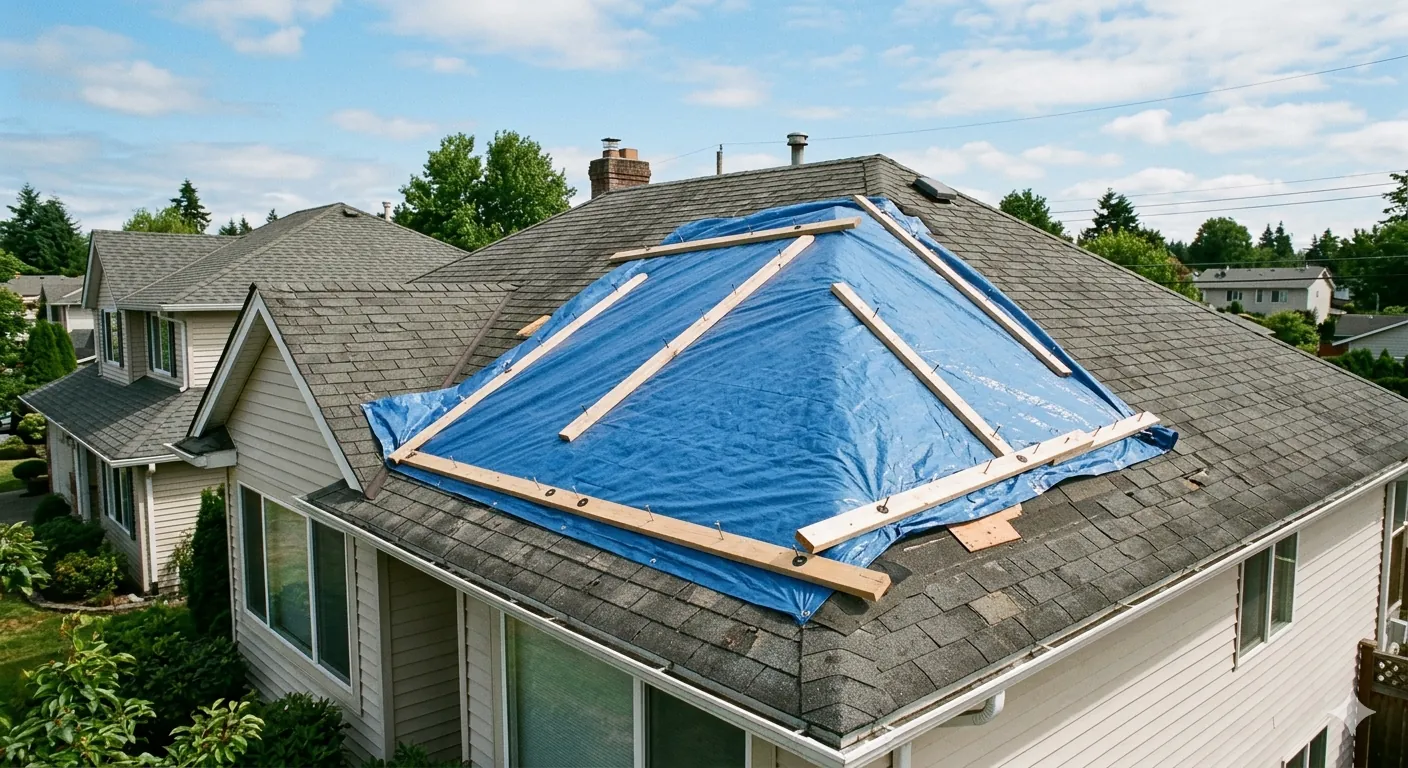
When a storm damages your roof and rain is in the forecast, knowing how to tarp a roof is an essential emergency skill. A properly installed tarp prevents thousands of dollars in water damage to your home's interior while you wait for a professional repair.
The basic process for tarping a damaged roof:
- Safety first — never go on a wet roof, and don't attempt this alone or in active storms
- Measure the damaged area and cut a tarp that extends at least 4 feet beyond the damage in every direction
- Drape the tarp from the ridge (peak) down over the damaged section
- Secure the top edge by wrapping it around a 2x4 and placing the board just over the ridge
- Anchor the remaining edges with additional 2x4s screwed through the tarp into the roof deck
- Use cap screws or roofing nails — not just bricks or weights, which blow off in wind
A properly secured tarp can protect your roofing for several weeks while you arrange permanent repairs. However, tarps are temporary — UV exposure will degrade them within 30–60 days, so don't delay getting professional work scheduled.
Roof Repair vs. Full Replacement
This is the question every homeowner with roof damage faces. Here's a data-driven framework to help you decide:
Repair makes sense when:
- Damage affects less than 30% of the total roof area
- Your roofing system is less than 15 years old (still has useful life remaining)
- The underlying deck is solid — no rot, no sagging
- It's a single, identifiable leak point around flashing, a vent boot, or a pipe collar
- You can match the existing shingle color and style (important for aesthetics and function)
Full replacement is the better call when:
- Your roof has passed 80% of its expected lifespan
- Multiple leaks appearing in different areas of the roof
- Widespread shingle deterioration — curling, cracking, bald spots from granule loss
- The roof deck has water damage, soft spots, or visible rot
- You already have two shingle layers (building code prohibits a third in most areas)
- Storm damage is widespread enough that your insurance will cover replacement
When in doubt, get two or three professional inspections. A reputable roofing contractor will give you an honest assessment, while fly-by-night operators tend to push for whichever option makes them more money.
Hail Damage and Roofing Insurance Claims
Understanding how much hail damage to replace a roof through insurance requires knowing how adjusters evaluate damage. Most insurance companies use a standardized process:
- The adjuster inspects several 10×10 foot "test squares" across the roof
- They count the number of hail hits (dents with exposed mat or cracked shingles)
- If 8 or more impacts are found per test square consistently across the roof, full replacement is typically approved
- Fewer hits usually means a partial repair is covered instead
Tips for navigating your roofing insurance claim:
- Document all damage immediately with dated photos and video — include wide shots and close-ups
- File your claim within the policy deadline (usually 1 year from the storm date)
- Get an independent roofing inspection before the insurance adjuster visits — know what the damage actually is
- If the adjuster's estimate seems low, you have the right to request a re-inspection or hire a public adjuster
- Be cautious of how to negotiate roof replacement with insurance — never sign an "assignment of benefits" contract with a roofer, as this transfers your negotiating power to them
- Keep records of every conversation with your insurer — names, dates, and what was discussed
Homeowner's insurance covers sudden events: hail, fallen trees, wind, and fire. It does not cover normal wear and tear, neglected maintenance, or roofs that have simply aged past their expected lifespan. If your 25-year-old asphalt roof fails because it's old, that's a maintenance issue, not an insurable event.
Roofing Costs in 2026: What You'll Actually Pay
The average complete roof replacement in the U.S. costs $8,000–$16,000 for a standard 1,500–2,000 sq ft home with architectural asphalt shingles. However, how much does Roof Maxx cost — the popular soy-based shingle rejuvenation treatment — is a fraction: typically $1,500–$3,000 to treat an entire roof, buying you 5+ additional years of shingle life.
What drives the final cost of a roofing project:
- Roof size — measured in "squares" (each square = 100 sq ft); most homes are 15–25 squares
- Material choice — asphalt is cheapest; metal, tile, and slate cost 2–5x more
- Tear-off costs — removing existing roofing adds $1,000–$2,500
- Roof complexity — valleys, dormers, hips, and penetrations (vents, pipes, skylights) increase labor time
- Deck repairs — replacing rotted plywood sheathing adds $50–$100 per 4×8 sheet
- Geographic location — labor rates vary significantly by region and local demand
- Season — late fall and winter are typically cheaper (lower demand for roofing services)
Always get at least three written quotes from licensed roofers. Each should itemize materials, labor, tear-off, disposal, and cleanup separately. This lets you compare apples to apples instead of guessing at lump sums.
Metal Roofing: For Homes and Sheds
If you're considering metal roofing, you'll find it's one of the best long-term investments for both your primary home and outbuildings. The #1 question we hear is how to put a metal roof on a shed, because sheds and small outbuildings are where most DIY-inclined homeowners start with metal.
For a shed or small structure, the process involves:
- Measuring the roof area and adding 10% overhang on all sides
- Installing purlins (horizontal strips) across the existing roof deck or rafters
- Laying metal panels from eave to ridge, overlapping by one rib
- Securing with self-tapping metal roofing screws (with rubber washers) every 12 inches
- Adding ridge cap flashing along the peak
For your main home, professional installation is strongly recommended. Metal roofing requires precise flashing work around chimneys, valleys, and edges. Poor flashing on a metal roof causes leaks just as easily as on asphalt.
How Long Does a Flat Roof Last?
Flat roofs (technically "low-slope" roofs) are common on commercial buildings, modern-style homes, room additions, and garages. The lifespan depends entirely on the membrane material:
- TPO (Thermoplastic Polyolefin) — 15–20 years; most popular for new installations
- EPDM (Rubber) — 20–25 years; proven track record, easy to patch
- Modified Bitumen — 15–20 years; good for cold climates
- PVC — 20–30 years; excellent chemical resistance
- Built-Up Roofing (BUR) — 20–30 years; multiple layers of tar and gravel
The key concern with flat roofing is drainage. Water doesn't naturally run off a flat surface, so proper slope design (at least 1/4 inch per foot), internal drains or scuppers, and regular debris removal are critical. Ponding water — any standing water remaining 48 hours after rain — accelerates membrane degradation and is the #1 cause of premature flat roof failure.
Roof Maintenance Checklist
Proactive roofing maintenance is the cheapest way to extend your roof's lifespan. Here's what to do and when:
Twice a Year (Spring and Fall)
- Clean gutters and downspouts — debris dams cause ice dams and water backup
- Visual inspection from ground level — binoculars help you spot missing shingles, damaged flashing, sagging areas
- Trim overhanging tree branches — keep them at least 6 feet from the roofline
- Check attic for daylight, water stains, or moisture
After Every Major Storm
- Walk the perimeter — look for fallen shingles or debris on the ground
- Check for damage from ground level — document any visible issues with photos
- Inspect gutters for excessive granule buildup (hail indicator)
- If damage is found, know how to tarp a roof to prevent further water intrusion
Every 3–5 Years
- Professional roofing inspection ($150–$400) — they'll check from on top, catching issues you can't see from the ground
- Re-caulk and re-seal flashing, vent boots, and pipe collars as needed
- Consider cleaning your shingle roof if you see dark algae streaks
- If you know animals are accessing your attic, learn how to keep squirrels off your roof with physical barriers like metal flashing strips at common entry points
Hiring a Roofer Without Getting Ripped Off
The roofing industry has its share of bad actors, especially after major storms when demand spikes and out-of-town "storm chasers" flood affected areas. Here's the reality: how roofers rip you off usually falls into a few predictable patterns that are easy to avoid once you know them.
- Verify licensing and insurance — ask for their certificate of liability insurance AND workers' compensation, then call the insurer to confirm it's active and current
- Check reviews on multiple platforms — Google, BBB, and Angi/HomeAdvisor. Don't rely only on their website testimonials
- Never pay more than 30% upfront — reputable roofing contractors don't need full payment before starting work
- Get everything in writing — scope of work, exact materials, timeline, warranty terms, and cleanup responsibilities
- Beware door-to-door "storm chasers" — if someone knocks on your door the day after a storm offering a "free inspection," be very cautious
- Ask about manufacturer certifications — GAF Master Elite, CertainTeed SELECT, or Owens Corning Preferred status means they've met quality standards and ongoing training requirements
- Get at least 3 quotes — and be wary of any quote that's dramatically lower than others; low-ball estimates often mean corners will be cut
- Verify their address — a roofer with a permanent local office is far less likely to disappear after your project than one working from a P.O. box
The best roofing contractors are happy to show you past work, provide references, and walk you through every line item in their quote. If anyone pressures you to "sign today before the price goes up," walk away.
Frequently Asked Questions About Roofing
Roofing Articles
How to Tarp a Roof
Step-by-step guide to emergency roof tarping after storm damage. Protect your home from water damage with proper tarp installation.
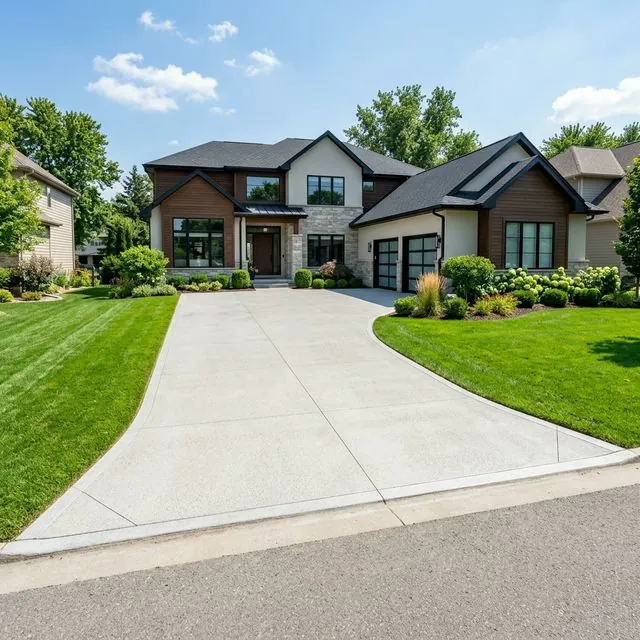
💡 Related: Hail can also damage your concrete driveway and walkways. After a major hailstorm, inspect all exterior surfaces — not just your roof.
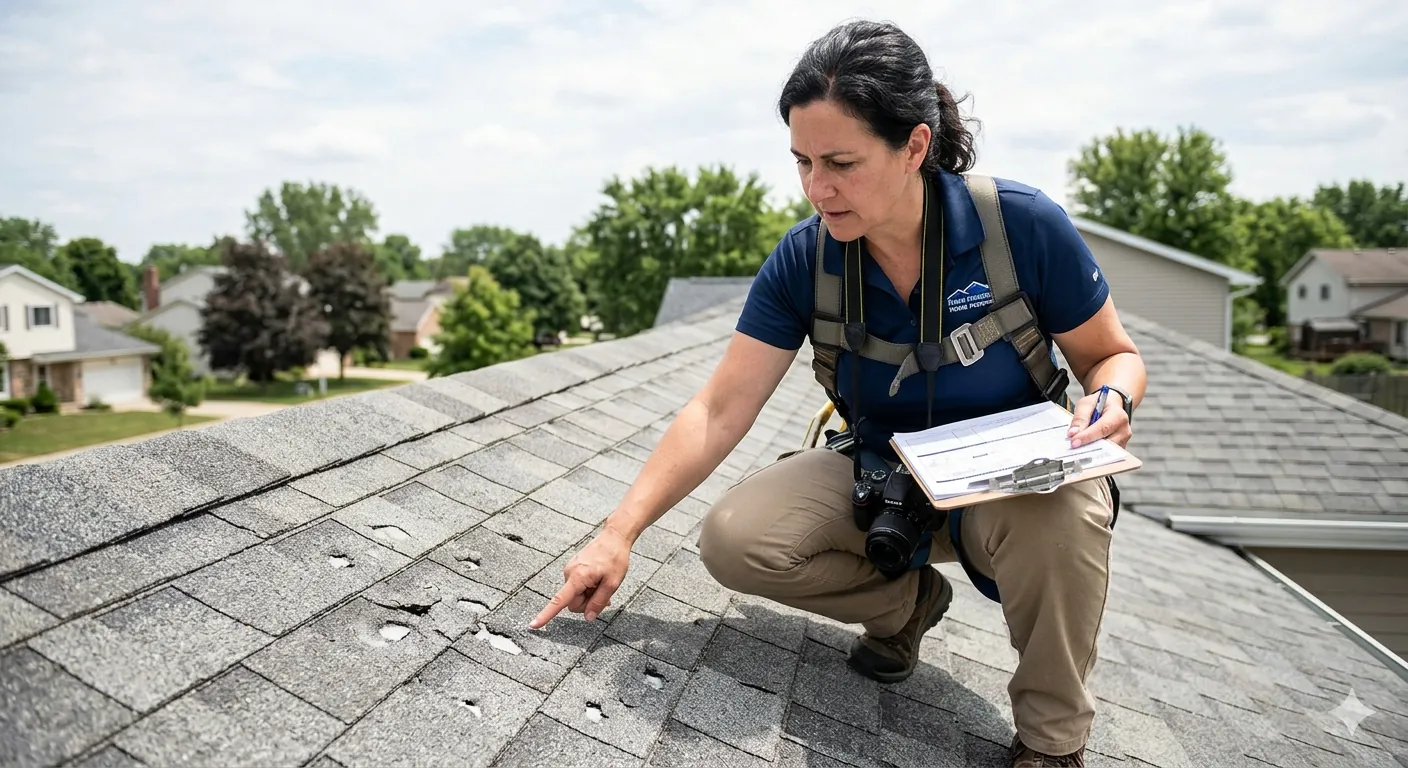
How Much Hail Damage to Replace Roof
Learn what level of hail damage qualifies for a full roof replacement through your insurance. Adjuster criteria explained.
Related Tools & Guides
Calculate costs and compare options with these helpful resources:
Related Topics
Disclaimer: This content is for informational purposes only and does not constitute professional roofing advice. Always consult a licensed roofing contractor for roof work. HouseFixGuide may earn a commission from links on this page.