Plumbing: The Complete Guide to Fixing Leaks, Drains, Toilets & Pipes
Browse Articles
Plumbing is the circulatory system of your home. It delivers clean water to every faucet, shower, and appliance while simultaneously removing wastewater safely. When plumbing works correctly, it's invisible. When it fails — a burst pipe at 3 AM, a backed-up sewer line during a dinner party, or a toilet that runs non-stop — it becomes the most urgent problem in your house.
The good news: many common plumbing problems are DIY-fixable with basic tools and a little knowledge. This comprehensive plumbing guide covers every issue homeowners encounter — from simple faucet drips and clogged drains to pipe replacement, sewer line issues, and knowing when a problem requires a licensed plumber.
Plumbing Emergencies: What to Do First
Every homeowner should know these emergency steps before a plumbing disaster strikes:
- Know your main water shut-off valve location — typically near the water meter, on the street side of the house, in the basement, or near the water heater. Turn it clockwise (or rotate the lever perpendicular to the pipe) to stop all water flow.
- Know individual fixture shut-offs — toilets and sinks have shut-off valves underneath or nearby. Use these for localized leaks.
- Stop the water first, then assess — water damage escalates by the minute. Shut off the water, then figure out the cause.
- Turn off the water heater — if you shut off the main water, turn off your water heater to prevent dry-firing (gas: set to "pilot"; electric: flip the breaker).
Fixing Leaks
Water leaks waste an average of 10,000 gallons per year in the typical American household, according to the EPA. A single dripping faucet at one drip per second wastes 3,000 gallons annually.
Dripping Faucets
Most faucet drips are caused by a worn internal component — a cartridge, washer, O-ring, or valve seat — that costs $3–$15 to replace:
- Single-handle cartridge faucets (Moen, Delta, etc.) — pull the cartridge and replace it. Cost: $8–$20 for the cartridge.
- Two-handle faucets — usually have a rubber washer or ceramic disc that wears out. Remove the handle, unscrew the stem, and replace the worn part.
- Ball-type faucets (common in kitchens) — Delta faucet repair kits ($12–$20) include all the springs and seats you need.
Leaking Pipes
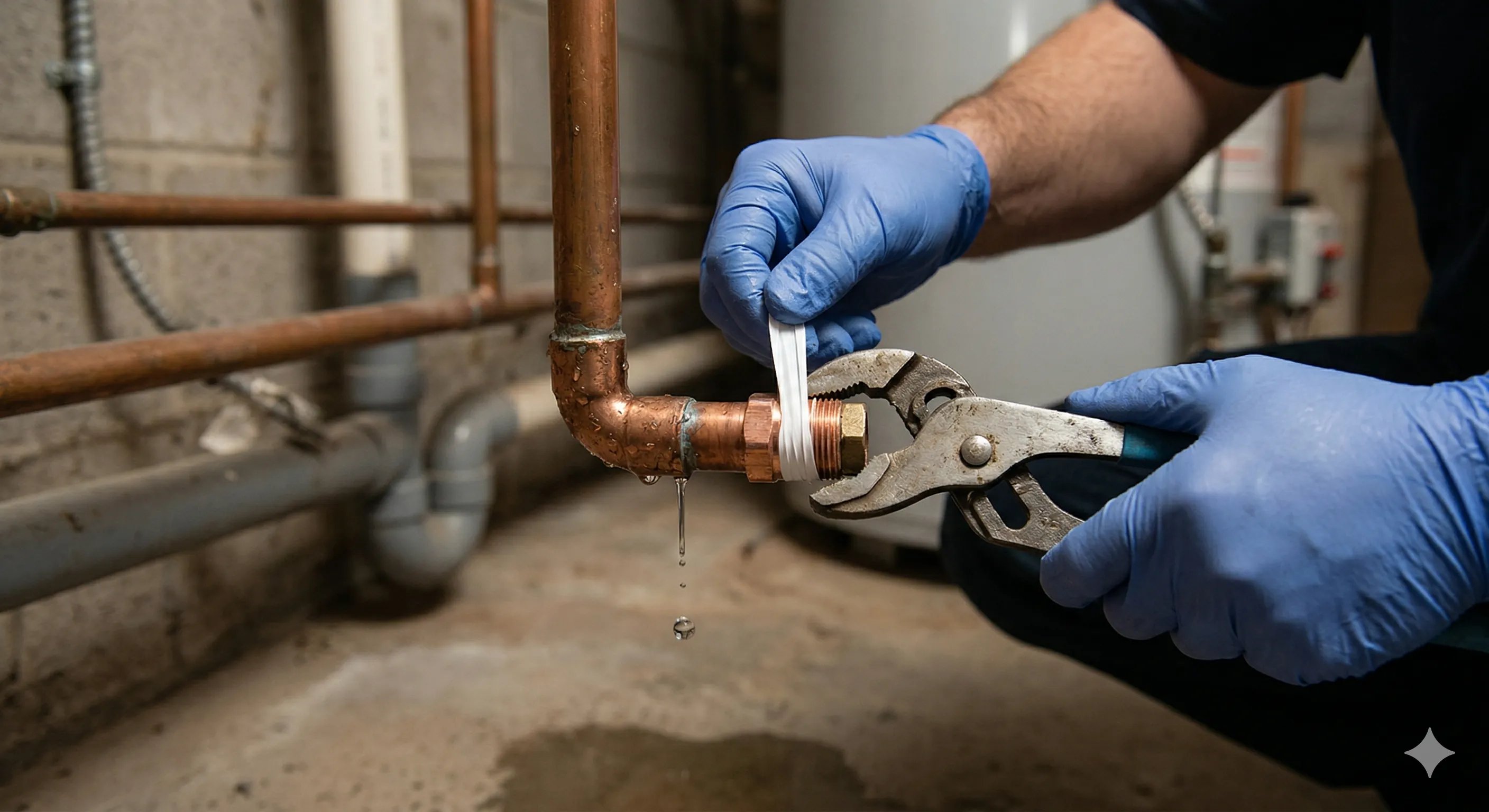
- Compression fitting leak — tighten the nut 1/4 turn. If it still leaks, replace the ferrule (compression ring).
- Soldered copper joint leak — temporary fix with epoxy putty or a pipe repair clamp ($5–$15). Permanent fix requires re-soldering or replacing the fitting.
- PVC/CPVC joint leak — cut out the leaking joint and re-glue with a coupling. PVC cement costs $5–$10.
- Under-sink P-trap leak — hand-tighten the slip-joint nuts. If threads are stripped, replace the trap assembly ($5–$15).
Unclogging Drains
How to unclog a drain depends on the location and severity. Start with the simplest method and work up:
Kitchen Sink Clogs
- Boiling water — pour a kettle of boiling water directly into the drain. Dissolves grease buildup. (Do NOT use on PVC pipes — hot water weakens PVC.)
- Plunger — use a flat-bottom cup plunger (not a flange plunger). Block the overflow hole with a wet rag. Plunge vigorously 15–20 times.
- Baking soda + vinegar — pour 1/2 cup baking soda, then 1/2 cup vinegar. Let it fizz for 30 minutes, then flush with hot water.
- Drain snake — feed a 1/4-inch drain snake into the drain opening and crank to break through the clog. Most kitchen clogs are grease buildup in the first 3 feet.
- P-trap removal — place a bucket underneath, unscrew the slip nuts, and clean the trap. The clog is often right in the U-bend.
Bathroom Drains (Hair Clogs)
Bathroom sink and shower clogs are almost always caused by hair wrapped around the drain stopper or crosshair. Remove the stopper, pull out the hair ball, and clean the drain opening. A $7 Zip-It drain cleaning tool is the easiest solution — push it in, twist, and pull out hair clogs in seconds.
Avoid chemical drain cleaners (Drano, Liquid-Plumr). They contain lye or sulfuric acid that corrode metal pipes, damage PVC glue joints, and are dangerous if they splash. A $25 drain snake solves the same problem without damaging your pipes.
Toilet Repair & Troubleshooting
Running Toilet
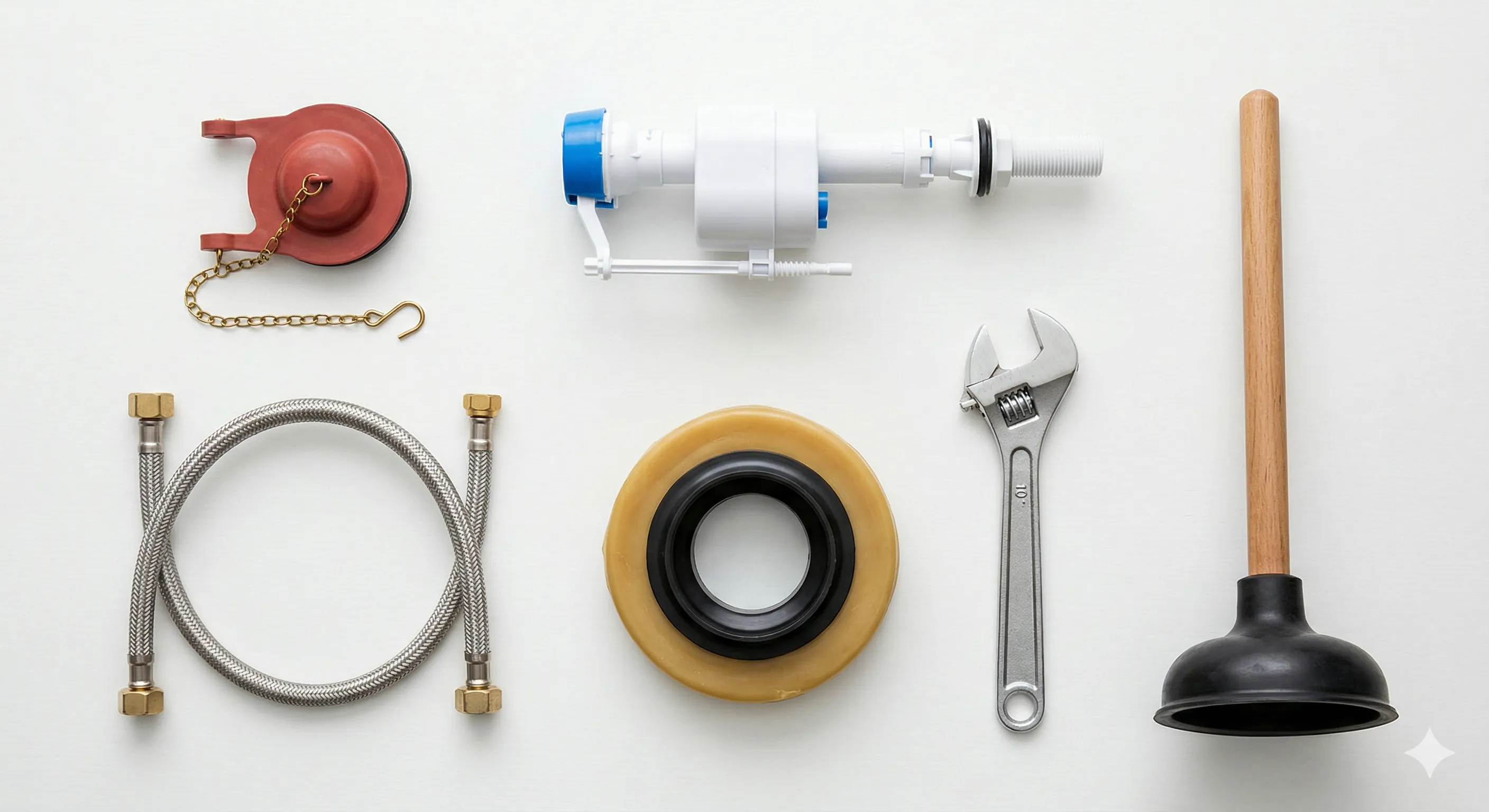
A running toilet wastes 200+ gallons per day. The cause is almost always the flapper — a rubber seal at the bottom of the tank that lifts when you flush and reseals to hold water. Over time, flappers warp, crack, or accumulate mineral deposits that prevent a tight seal.
Fix: Universal flappers cost $5–$10 at any hardware store. Turn off the water, flush, unhook the old flapper, and snap in the new one. Five-minute fix.
Toilet Won't Flush Properly
- Weak flush — clean the rim jets (small holes under the toilet rim) with a wire or toothbrush. Mineral deposits clog these holes over time.
- Phantom flush — the toilet occasionally refills on its own. This is a slow leak from the tank to the bowl — replace the flapper.
- Partial flush — the chain connecting the handle to the flapper may be too long (not lifting the flapper fully) or too short (preventing it from closing).
- Won't stop filling — the fill valve is stuck open or the float is set too high. Adjust the float or replace the fill valve ($8–$15).
Clogged Toilet
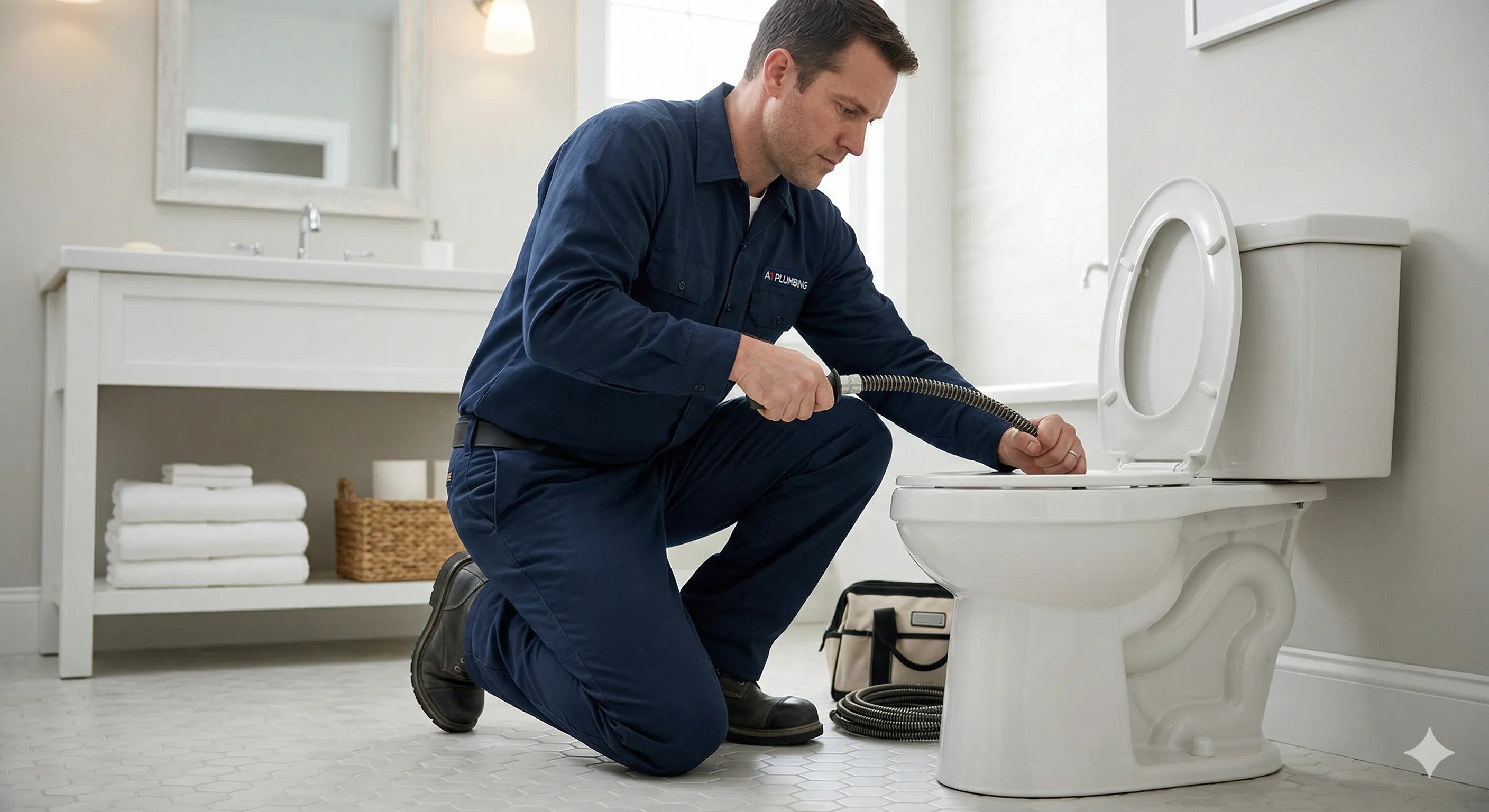
Use a flange plunger (the one with the extended rubber lip, not the flat cup). Create a tight seal over the drain opening and use firm, steady plunging motions — 15–20 pumps. If the plunger doesn't work, use a toilet auger ($15–$25) — it's specifically designed to reach clogs in the toilet's built-in trap without scratching the porcelain.
Faucet Replacement & Installation
Replacing a kitchen or bathroom faucet is one of the most rewarding DIY plumbing upgrades. A new faucet refreshes the entire look of your sink for $100–$400 and takes 1–2 hours to install.
Steps to Replace a Faucet
- Shut off the hot and cold supply valves under the sink
- Disconnect the supply lines from the old faucet using an adjustable wrench or basin wrench
- Remove the mounting nuts from underneath (a basin wrench is invaluable here)
- Clean the sink surface where the old faucet sat
- Install the new faucet following the manufacturer's instructions — most use a gasket or plumber's putty for the seal
- Connect the supply lines — hand-tighten, then 1/4 turn with a wrench
- Connect the drain assembly if replacing the pop-up drain
- Turn on water, check for leaks under every connection
Pipe Types & Replacement
Understanding what type of pipes are in your home helps you plan repairs and future repiping:
| Pipe Type | Used For | Lifespan | Common Issues |
|---|---|---|---|
| Copper | Water supply | 50–70 years | Pinhole leaks, green corrosion |
| PEX (cross-linked polyethylene) | Water supply | 40–50+ years | UV degradation (don't expose to sunlight) |
| PVC | Drain, waste, vent | 40–50+ years | Joint failures, can't handle hot water |
| CPVC | Hot/cold water supply | 40–50 years | Brittle with age, cracking |
| Galvanized steel | Water supply (pre-1970) | 40–60 years | Internal corrosion, low pressure, rust |
| Cast iron | Drain/sewer (older homes) | 80–100 years | Cracking, root intrusion, corrosion |
| Polybutylene (gray) | Water supply (1978–1995) | 10–15 years | Spontaneous failures — replace immediately |
If your home has polybutylene (PB) pipes (gray plastic, stamped "PB"), plan for a full repipe. These pipes are known to fail suddenly and catastrophically. Many insurance companies won't cover homes with polybutylene plumbing. Full repipe cost: $4,000–$15,000 depending on home size and access.
Sewer Line Issues
Sewer line problems are the most expensive and disruptive plumbing issues. Signs of a sewer line problem:
- Multiple drains backing up simultaneously
- Sewage smell coming from drains or the yard
- Gurgling sounds from toilets when you run water elsewhere
- Wet spots or unusually green patches in the yard
- Sewage backup in the lowest drain (typically a basement floor drain)
Sewer line repair options range from $300 for a simple cleaning to $3,000–$25,000 for line replacement. A sewer camera inspection ($150–$500) reveals the exact problem — roots, cracks, bellies, or blockages — before you commit to expensive repair work.
Preventing Frozen Pipes
Frozen pipes can burst and cause catastrophic water damage ($5,000–$70,000+ in repair costs). Prevent frozen pipes with these strategies:
- Insulate exposed pipes in unheated areas (crawlspace, attic, garage) with pipe insulation sleeves ($0.50–$2 per linear foot)
- Let faucets drip during extreme cold snaps — the slight flow prevents freezing in vulnerable pipes
- Open cabinet doors under sinks on exterior walls to let heated air circulate around pipes
- Keep the thermostat at 55°F minimum even when away from home
- Disconnect outdoor hoses before freezing weather and shut off their indoor supply valves
- If a pipe freezes but hasn't burst — apply heat gently with a hair dryer, heat lamp, or warm towels. Never use a torch.
Plumbing Costs in 2026
| Service | Cost Range | DIY Possible? |
|---|---|---|
| Faucet repair (cartridge/washer) | $5–$20 DIY / $100–$200 pro | Yes ★★★ |
| Faucet replacement | $100–$400 (faucet + install) | Yes ★★★ |
| Toilet repair (flapper/fill valve) | $5–$15 DIY / $80–$150 pro | Yes ★★★ |
| Toilet replacement | $200–$600 installed | Moderate ★★☆ |
| Drain cleaning (snake) | $25 DIY / $150–$300 pro | Yes ★★★ |
| Sewer line camera inspection | $150–$500 | No |
| Sewer line repair/replacement | $3,000–$25,000 | No |
| Whole-house repipe (PEX) | $4,000–$15,000 | No |
| Emergency plumber (after hours) | $200–$500 first hour | No |
Frequently Asked Questions About Plumbing
Plumbing Articles
Related Topics


Disclaimer: This content is for informational purposes only. Gas line and sewer line work requires licensed plumbers in most jurisdictions. HouseFixGuide may earn a commission from links on this page.