Garage Doors: The Complete Guide to Repair, Openers & Installation
Browse Articles
Your garage door is the largest moving component in your home — and one of the most mechanically complex. A standard two-car garage door weighs 150–250 pounds, cycles roughly 1,500 times per year, and relies on a precise system of springs, cables, tracks, rollers, and an electric opener working together. When any one of these components fails, your garage door stops working properly, becomes a safety hazard, or refuses to open entirely.
This comprehensive garage door guide covers every aspect of garage door ownership — from quick troubleshooting fixes that take five minutes to understanding when you need professional garage door repair. Whether your garage door opener isn't responding, your springs have snapped, or you're considering a full garage door replacement, this guide gives you the knowledge to make smart decisions.
- How a Garage Door System Works
- Garage Door Opener Troubleshooting
- Garage Door Springs: Types, Lifespan & Repair
- Garage Door Cables & Tracks
- Safety Sensors & Alignment
- Fixing a Noisy Garage Door
- Garage Door Insulation
- When to Replace Your Garage Door
- Garage Door Costs in 2026
- Smart Garage Door Technology
- Garage Door Safety
- Frequently Asked Questions
How a Garage Door System Works
Before troubleshooting any garage door issue, it helps to understand the system's core components and how they interact:
- Garage door panels — the door itself, made of steel, aluminum, wood, or fiberglass, divided into horizontal sections connected by hinges
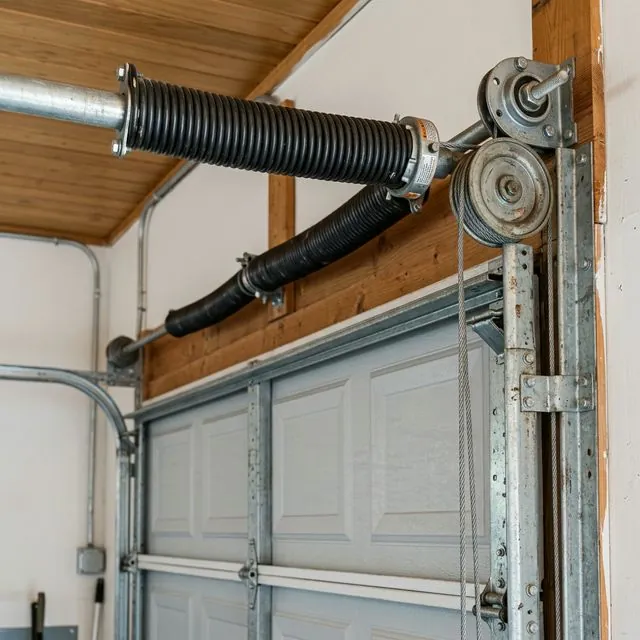
- Springs — counterbalance the door's weight, allowing the opener to lift it with minimal force. Either torsion springs (mounted above the door on a shaft) or extension springs (mounted along the horizontal tracks)
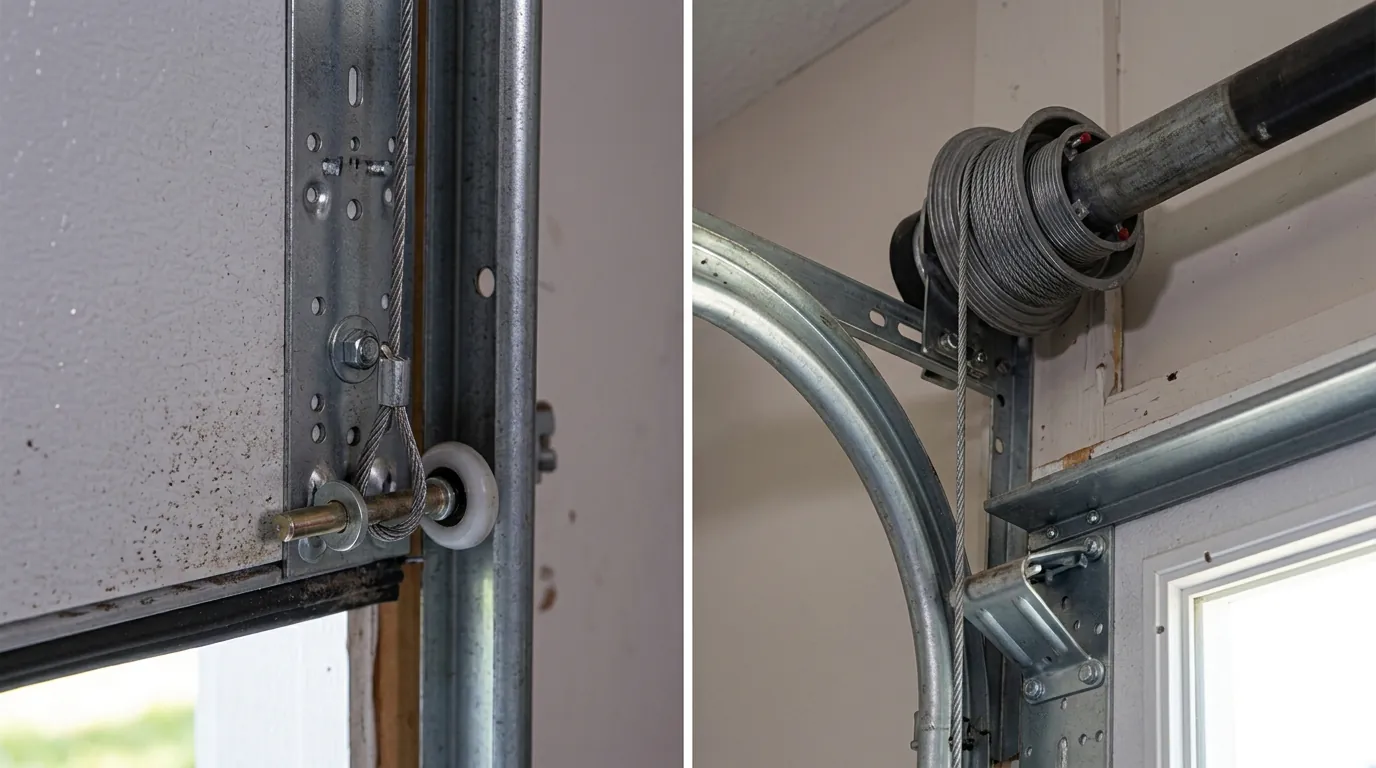
- Cables — steel cables connect the springs to the bottom corners of the door. They carry the lifting force from the springs to the door panels
- Tracks and rollers — vertical and horizontal metal tracks guide the door; nylon or steel rollers ride inside the tracks
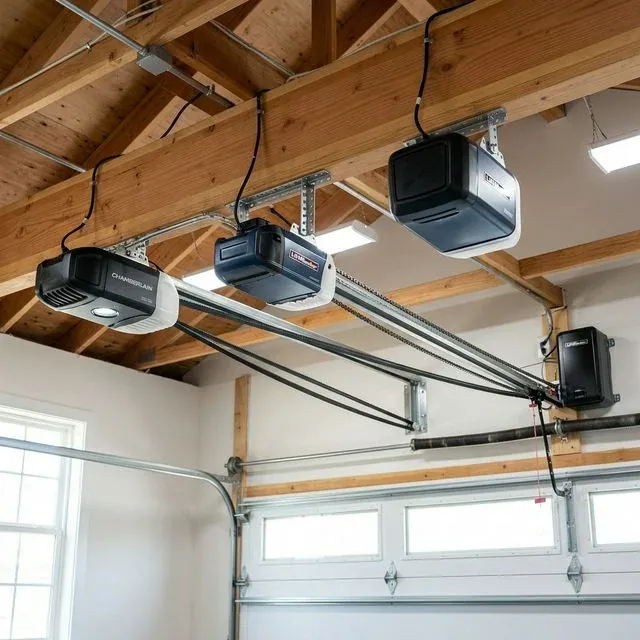
- Garage door opener — the motorized unit mounted to the ceiling that drives a chain, belt, or screw mechanism to move the door
- Safety sensors — photoelectric eyes mounted 6 inches above the floor on both sides of the door, designed to reverse the door if anything crosses the beam
- Remote controls and wall button — wireless remotes, wall-mounted buttons, and increasingly, smartphone apps that signal the opener to operate
Every time you press the button, this entire system must work in coordination. A failure in any single component — a broken spring, a slipped cable, a misaligned sensor, or a burned-out opener motor — can render your garage door inoperable or unsafe.
Garage Door Opener Troubleshooting & Reset
The most common garage door complaint is "my garage door opener won't work." Before calling a repair company, there are several fixes you can try yourself. Knowing how to reset a garage door opener solves the problem in many cases.
Step-by-Step: How to Reset a Garage Door Opener
- Unplug the opener from its power outlet (usually on the ceiling) for 30 seconds, then plug it back in. This clears temporary electronic glitches.
- Locate the "Learn" or "Program" button on the motor unit — it's usually on the back or side, near the antenna wire
- Press and hold the Learn button for 6–10 seconds until the indicator LED turns off. This erases all programmed remotes.
- Re-program your remotes: press the Learn button once (LED turns on), then within 30 seconds, press the button on your remote. The LED will blink to confirm pairing.
- Repeat for each remote and your wireless keypad
This reset process works for most major garage door opener brands including Chamberlain, LiftMaster, Genie, and Craftsman. If your opener still doesn't respond after a full reset, check these additional causes:
- Dead remote batteries — the simplest fix; replace with a fresh CR2032 or whatever battery your remote uses
- Tripped GFCI outlet — if the opener is plugged into a GFCI outlet, check if it's tripped and press the reset button
- Locked mode engaged — some openers have a "lock" button on the wall panel that disables the remote; press and hold it for 2 seconds to unlock
- Broken gear or stripped drive — if the motor runs but the door doesn't move, the internal gear may be stripped (common on older chain-drive openers)
- Burned-out motor — a humming sound without movement, or no response at all with power confirmed, usually means the motor needs replacement
Garage Door Opener Types
| Opener Type | Noise Level | Price Range | Durability | Best For |
|---|---|---|---|---|
| Chain Drive | Loud | $150–$250 | Very durable | Detached garages, budget |
| Belt Drive | Very quiet | $200–$400 | Excellent | Attached garages, bedrooms above |
| Screw Drive | Moderate | $180–$300 | Good | One-piece doors, moderate climates |
| Direct Drive (Jackshaft) | Quietest | $300–$500 | Excellent | Side-mounted, high ceilings |
Garage Door Springs: Types, Lifespan & Repair
Garage door springs are under extreme tension — a typical torsion spring supports 100–200+ pounds of force. When a garage door spring breaks, you'll hear a loud bang (often mistaken for an intruder) and the door will become too heavy to lift manually or with the opener.
Torsion Springs vs. Extension Springs
Torsion springs are mounted on a steel shaft directly above the closed garage door. They twist to store energy and are considered the superior design — they last longer (15,000–20,000 cycles vs. 10,000 for extension springs), provide smoother operation, and are safer because they're contained on the shaft if they break.
Extension springs run along the horizontal tracks on both sides of the door. They stretch to store energy. Extension springs are more common on older and lighter residential garage doors. They should always have safety cables threaded through them — if an extension spring breaks without a safety cable, it can become a dangerous projectile.
How Long Do Garage Door Springs Last?
Standard torsion springs are rated for approximately 10,000 cycles — that's roughly 7–10 years with average use (3–4 cycles per day). High-cycle springs (25,000–50,000 cycles) cost more upfront but can last 15–25 years, making them the better investment if you plan to stay in your home.
⚠️ Important: Garage door spring repair is NOT a DIY project. The extreme tension stored in these springs can cause serious injury or death if handled incorrectly. Professional spring replacement costs $200–$400 for a pair (always replace both springs together, even if only one broke) and takes about an hour.
Garage Door Cables & Tracks
Garage door cables work in tandem with the springs to lift and lower the door safely. When a cable snaps or comes off the drum, the door typically hangs crooked or won't move at all. A garage door cable came off the drum is one of the most common service calls, and it's usually caused by a broken spring (the sudden release of tension whips the cable loose), worn cable ends, or a door that was manually forced past its stop point.
Signs of Cable Problems
- The door hangs unevenly — one side higher than the other
- Visible fraying or strands poking out from the cable
- The cable has come off the drum (you can see loose cable hanging)
- The door jerks, hesitates, or makes grinding sounds during operation
- The cable is loose or has slack when the door is closed
Like springs, garage door cable repair involves high-tension components and should be handled by a trained technician. A cable replacement typically costs $100–$200 per cable plus labor.
Track Maintenance
Garage door tracks rarely fail outright, but they do need periodic attention:
- Check alignment — tracks should be plumb (vertical sections) and level (horizontal sections). Use a level to verify.
- Clean debris — dirt, leaves, and small objects can jam rollers. Wipe tracks with a damp cloth quarterly.
- Do NOT lubricate tracks — contrary to popular belief, tracks should be clean and dry. Lubricate the rollers, hinges, and springs instead.
- Tighten mounting brackets — the vibration of daily operation can loosen track brackets over time
Safety Sensors & Alignment
Federal law has required safety sensors on all garage door openers manufactured after 1993. These photoelectric sensors mount on both sides of the door, 6 inches above the floor, and project an invisible infrared beam. If anything breaks the beam while the door is closing, the door automatically reverses direction.
When sensors malfunction, the most common symptom is a garage door that closes partway then reverses, or a door that won't close at all (the opener light blinks and nothing happens). Here's how to fix common sensor issues:
- Clean the sensor lenses — dust, cobwebs, and moisture on the lens blocks the beam. Wipe with a soft dry cloth.
- Check alignment — both sensors must point directly at each other. The sending sensor (usually green LED) should have a steady light. The receiving sensor (orange/red LED) blinks when misaligned. Adjust the receiving sensor until its light is steady.
- Check wiring — vibration can loosen the wire connections at the sensor or at the opener's terminal. Push wires firmly into their terminals.
- Verify the path is clear — sunlight hitting the receiving sensor directly can interfere with the signal. A cardboard tube or toilet paper roll placed over the sensor as a shade can solve sun interference.
- Check for wire damage — if wires run along the floor or near foot traffic, they may be nicked or crushed
Fixing a Noisy Garage Door
A noisy garage door is annoying, especially when the garage is attached to the house and bedrooms are nearby. The most common causes and fixes:
- Worn steel rollers — replace with nylon rollers ($5–$8 each; 10–12 per door). Nylon rollers are dramatically quieter and don't require lubrication. This single upgrade often eliminates 80% of garage door noise.
- Dry hinges, springs, and bearings — apply a lithium or silicone-based lubricant to all moving metal parts every 6 months. Avoid WD-40 (it's a solvent, not a lubricant).
- Loose hardware — tighten all nuts, bolts, and lag screws on the tracks, brackets, and opener rail
- Chain-drive opener — chain drives are inherently louder. Upgrading to a belt-drive opener ($200–$400 installed) is the most effective noise solution for an attached garage.
- Vibration transfer — install anti-vibration pads between the opener and the ceiling mount to reduce noise transmission into the house
Garage Door Insulation
An insulated garage door makes a significant difference if your garage shares a wall with living space, if you use your garage as a workshop, or if you live in a climate with extreme temperatures. How to insulate a garage door is one of the easiest and most cost-effective home improvement projects.
Insulation Options
- Reflective foil insulation kits — the most popular DIY option; foil-faced bubble wrap panels cut to fit each door panel ($50–$100 per door kit). R-value of 4–6.
- Rigid foam board (EPS or XPS) — polystyrene panels cut to fit inside the door panel frames. R-value of 3.5–5 per inch. More effective than foil kits.
- Factory-insulated doors — steel doors with injected polyurethane foam. R-values of 12–18. The best thermal performance but requires replacing the entire door.
Adding aftermarket insulation to a non-insulated single-layer steel door can reduce temperature swings in your garage by 10–15°F. It also dampens noise from outside and makes the door slightly quieter during operation.
When to Replace Your Garage Door
A garage door replacement becomes the better investment versus repeated repairs in these situations:
- The door is more than 15–20 years old and showing rust, dents, or warping
- You're dealing with recurring breakdowns (springs, cables, panels) that collectively cost more than half the price of a new door
- The door is non-insulated and your garage shares walls with living space
- The door's appearance is hurting your home's curb appeal — a new garage door has one of the highest ROI of any home improvement project (averaging 102% return according to the 2026 Cost vs. Value report)
- Your current door doesn't meet modern safety standards (no pinch-resistant panels, no sensor auto-reverse)
Garage Door Costs in 2026
| Service/Product | Cost Range | Notes |
|---|---|---|
| Spring replacement (pair) | $200–$400 | Always replace both springs together |
| Cable replacement (pair) | $150–$300 | Usually done with spring work |
| Opener replacement | $200–$500 | Installed; belt-drive recommended |
| Roller replacement (full set) | $100–$200 | Nylon rollers recommended |
| Panel replacement (single) | $200–$800 | If matching panel is available |
| Single-car door (new) | $800–$2,000 | Installed, including hardware |
| Double-car door (new) | $1,200–$4,000 | Steel insulated; wood costs more |
| Smart opener upgrade | $50–$100 | Add-on WiFi controller for existing opener |
Smart Garage Door Technology
Smart garage door technology has become mainstream. You can monitor and control your garage door from anywhere using your smartphone, receive alerts when it opens or closes, and even set automatic closing schedules.
Smart Garage Door Options
- Built-in WiFi openers — Chamberlain myQ, LiftMaster, and Genie Aladdin Connect openers come with WiFi built in. Pair with the manufacturer's app for full remote control.
- Retrofit smart controllers — devices like the myQ Smart Garage Hub, Meross, or iSmartGate add WiFi control to any existing opener for $30–$80. If you want to know how to add WiFi to a garage door opener, these retrofit modules are the simplest solution.
- Voice assistant integration — most smart garage systems work with Amazon Alexa, Google Home, and Apple HomeKit (some require a bridge)
- Camera integration — some smart openers include a built-in camera so you can visually verify the door's status and see who's entering
Garage Door Safety
Garage doors cause approximately 30,000 injuries per year in the United States. Most are preventable with proper maintenance and awareness:
- Test the auto-reverse monthly — place a 2x4 flat on the ground under the door. Close the door; it must reverse immediately upon contacting the board. If it doesn't, call for service immediately.
- Test the photo-eye sensors monthly — close the door and wave an object (like a broom) through the sensor beam. The door should reverse immediately.
- Never stand or walk under a moving garage door — springs and cables can fail without warning
- Keep hands and fingers away from panel joints — pinch points between sections are the most common injury location. Modern doors have pinch-resistant panels.
- Teach children that the garage door is not a toy — keep remotes out of reach and explain the dangers
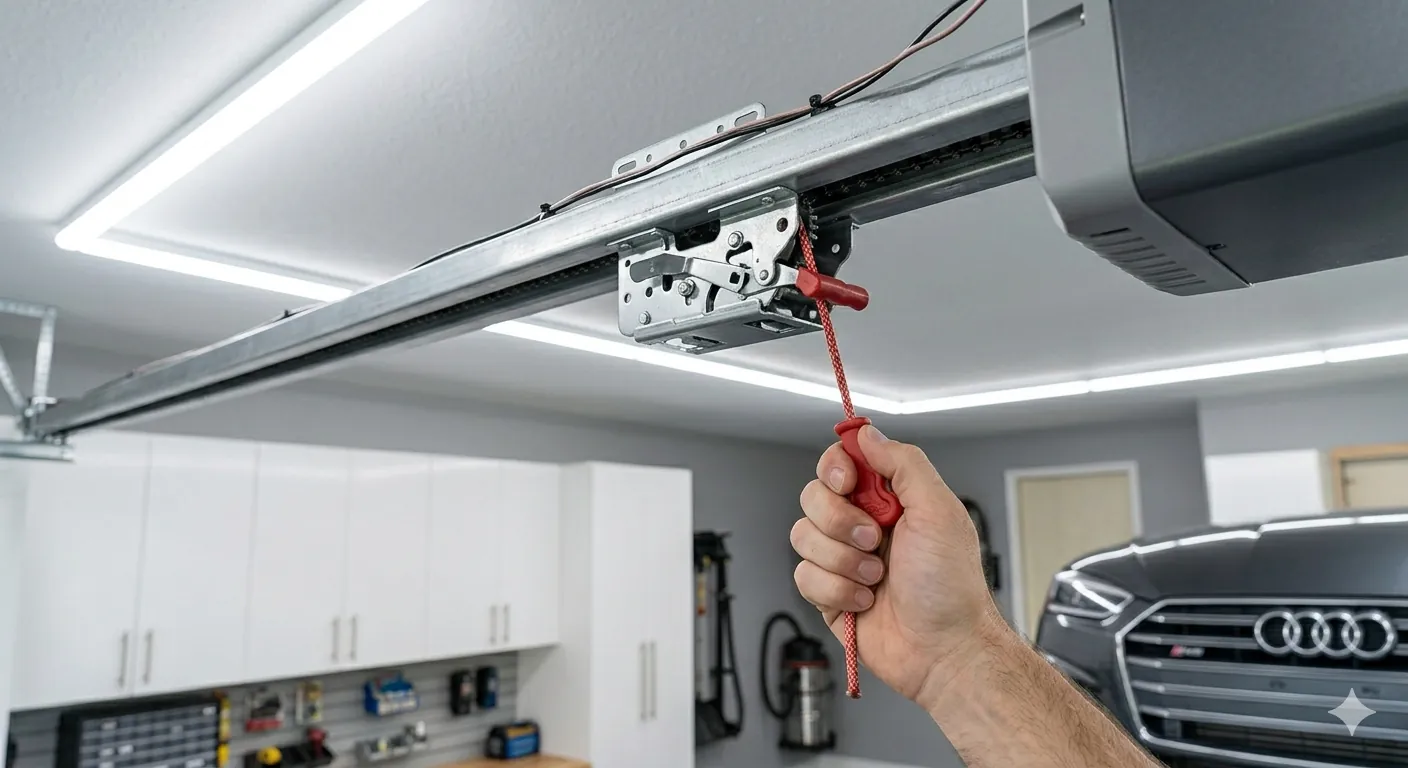
- Know where the emergency release is — the red cord hanging from the opener carriage. Pulling it disconnects the door from the opener for manual operation during power outages.
Frequently Asked Questions About Garage Doors
Garage Doors Articles
Related Topics

Disclaimer: Garage door springs and cables are under extreme tension. Never attempt spring or cable repair without proper training and tools. This content is for informational purposes only. HouseFixGuide may earn a commission from links on this page.