Home Electrical: The Complete Guide to Outlets, Wiring, Breakers & Safety
Browse Articles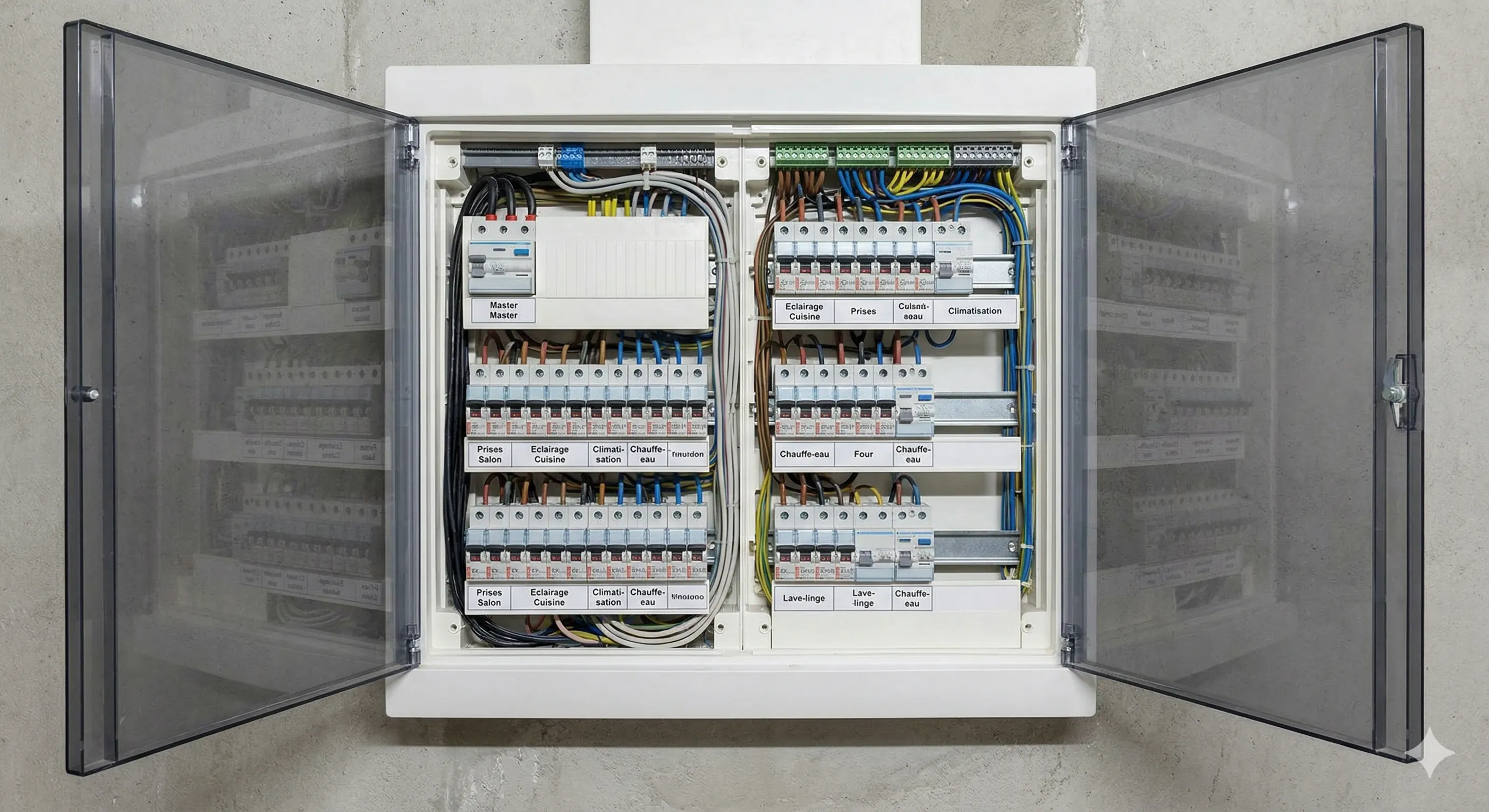
Your home's electrical system is both the most essential and the most dangerous utility system in your house. Electricity powers everything — lights, appliances, HVAC, electronics, and increasingly, electric vehicles. When electrical problems occur, they range from minor inconveniences (a tripped breaker) to life-threatening hazards (exposed wiring, overloaded circuits, or outdated panels that can cause house fires).
This comprehensive home electrical guide covers everything homeowners need to understand about their electrical system — from safely resetting a tripped breaker and replacing an outlet to understanding when you need a licensed electrician. Electrical work is one area where DIY has strict limits — knowing those limits keeps you safe and legal.
How Your Home Electrical System Works
Understanding the basics of your electrical system helps you troubleshoot problems and communicate effectively with electricians:
- Service entrance — power from the utility company enters your home through overhead wires or underground cable to the electric meter
- Electrical panel (breaker box) — distributes power from the meter to individual circuits throughout the house. Each circuit breaker protects a specific circuit.
- Branch circuits — individual circuits running from the panel to specific rooms or appliances. Most homes have 15-amp circuits (general lighting/outlets), 20-amp circuits (kitchens, bathrooms, laundry), and dedicated circuits for major appliances (30–50 amps for dryer, range, AC).
- Wiring — typically 14-gauge wire for 15-amp circuits and 12-gauge wire for 20-amp circuits. Wire runs through walls inside the cable sheathing (Romex/NM-B is most common).
- Outlets, switches, and fixtures — the endpoints where you access electricity throughout the home
- Grounding system — safety path for fault currents to flow to earth, preventing electrical shock. Includes the ground wire (bare copper), ground rod, and grounding electrode conductor.
Circuit Breaker Troubleshooting
A tripped circuit breaker is the most common electrical problem homeowners encounter. Here's how to reset a tripped breaker and what to do if it keeps tripping:
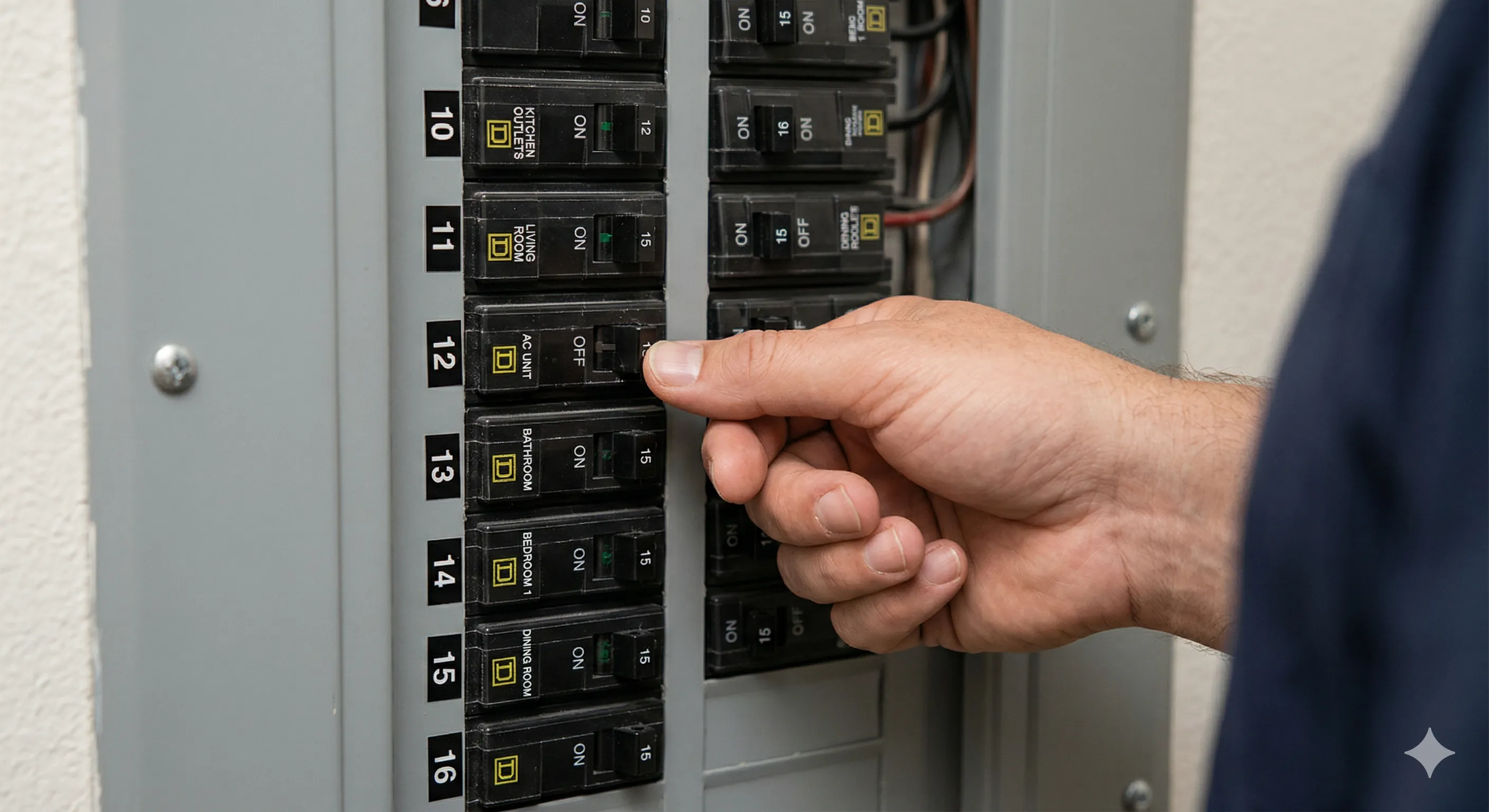
How to Reset a Tripped Breaker
- Open the electrical panel cover
- Find the tripped breaker — it will be in a middle position (not fully ON or OFF) or may show an orange/red indicator
- Push the breaker fully to OFF first, then flip it to ON. Don't just push it to ON — you must reset through the OFF position.
- If the breaker trips immediately upon resetting, don't keep trying — there's a short circuit or ground fault that needs diagnosis
Why Breakers Trip Repeatedly
- Overloaded circuit — too many devices drawing power on one circuit. Solution: redistribute loads to different circuits, or have an electrician add a new circuit.
- Short circuit — a hot wire touching a neutral or ground wire, creating a direct path. Usually caused by damaged wire insulation, a faulty appliance, or a rodent-chewed wire. The breaker trips instantly with a spark or pop.
- Ground fault — current flowing through an unintended path to ground (like through water or a person). GFCI protection detects ground faults as small as 5 milliamps.
- Bad breaker — breakers can wear out after years of use, developing a nuisance trip tendency. Replacement cost: $10–$30 for the breaker plus electrician labor.
Outlets: Types, GFCI & Replacement
Outlet problems — dead outlets, outlets that spark, or GFCI outlets that won't reset — are the second most common electrical concern for homeowners.
Types of Electrical Outlets
- Standard duplex outlet (15A, 125V) — the common two-plug outlet found in most rooms
- 20-amp outlet — has a T-shaped neutral slot; required in kitchens, bathrooms, and laundry rooms
- GFCI outlet — Ground Fault Circuit Interrupter with test/reset buttons. Required within 6 feet of water sources (kitchens, bathrooms, garages, outdoors, basements). Detects ground faults and cuts power in 1/40th of a second.
- AFCI outlet — Arc Fault Circuit Interrupter. Detects dangerous arcing (sparking) in wiring. Required by code in bedrooms and living areas in new construction.
- USB outlets — standard outlets with built-in USB-A and/or USB-C charging ports. Convenient for bedrooms and living rooms.
- 240V outlets — larger outlets for dryers (30A), ranges (50A), and EV chargers. Various configurations depending on amperage.
How to Replace an Outlet (DIY)
- Turn off the breaker for the circuit — verify power is off with a non-contact voltage tester at the outlet
- Remove the cover plate and unscrew the outlet from the box
- Note the wire connections — take a photo before disconnecting
- Connect wires to the new outlet: hot (black) to brass screw, neutral (white) to silver screw, ground (bare copper) to green screw
- Push the outlet back into the box and secure with screws
- Install the cover plate, restore power, and test
GFCI Outlets That Won't Reset
If a GFCI outlet won't reset, check these common causes:
- No power to the outlet — check the breaker
- An upstream GFCI has tripped — GFCIs protect downstream outlets. Check all GFCI outlets in the circuit.
- Moisture in the outlet box — dry the area and try again
- A ground fault exists somewhere on the circuit — unplug all devices and appliances on the circuit, then reset. If it resets, plug devices back in one at a time to find the faulty device.
- The GFCI itself is failed — GFCIs have a 10–15 year lifespan. Replace if the test/reset buttons don't work at all.
Light Switches & Dimmers
Replacing a light switch or installing a dimmer switch is one of the simplest electrical DIY projects. A basic switch swap takes 15 minutes.
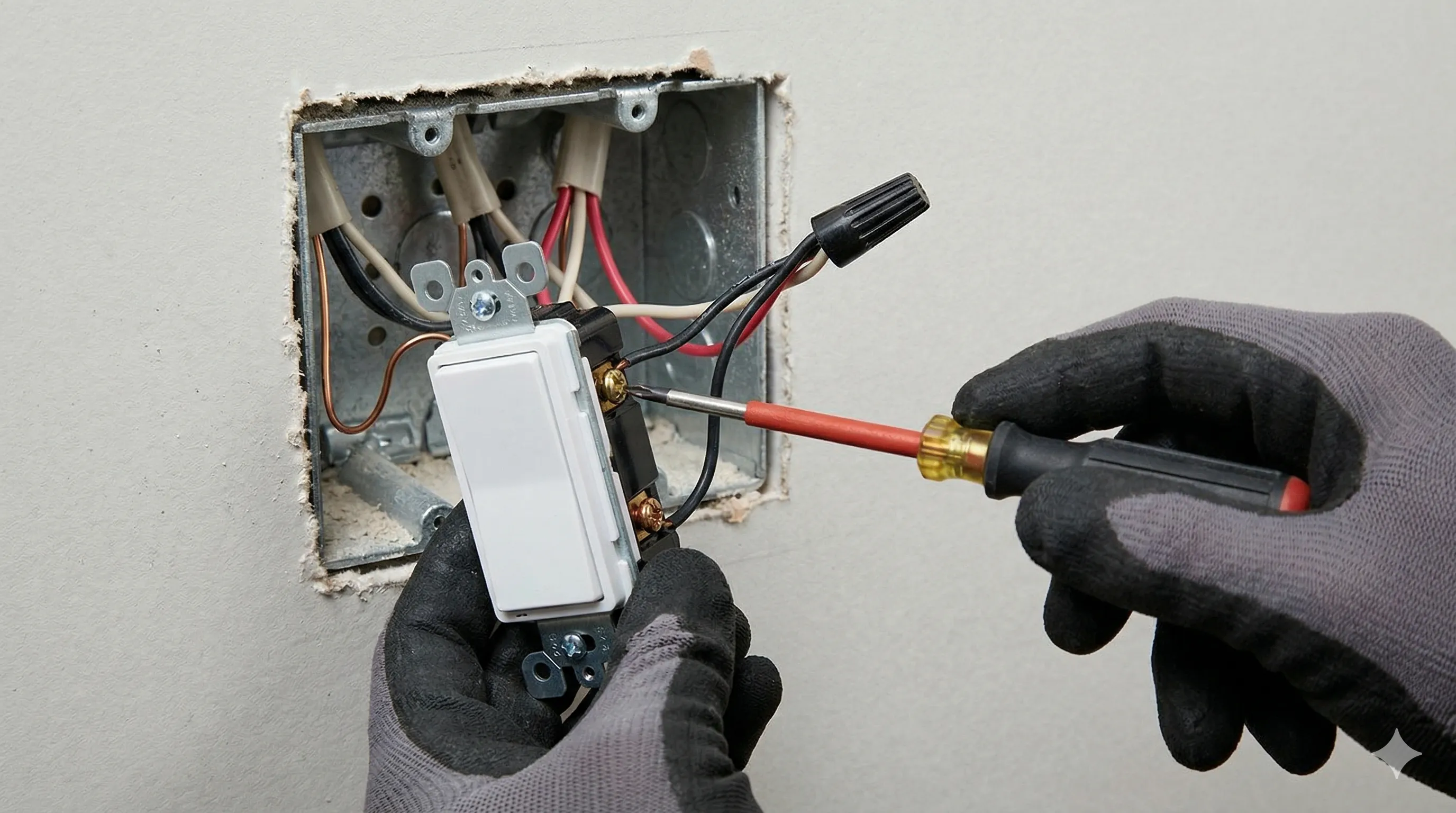
Switch Types
- Single-pole switch — controls a light from one location. Two brass terminal screws plus ground. The most common switch type.
- 3-way switch — two switches control one light (e.g., top and bottom of stairs). Three terminal screws plus ground. Wiring is more complex.
- Dimmer switch — adjusts light brightness. Must be compatible with your bulb type (LED dimmers for LED bulbs). Some dimmers require a neutral wire.
- Smart switch — WiFi-connected for app and voice control. Most require a neutral wire in the switch box (common in homes built after 1980).
Ceiling Fan Installation
How to install a ceiling fan is a popular search because ceiling fans are one of the most cost-effective comfort upgrades — they can make a room feel 4–6°F cooler in summer and push warm air down from the ceiling in winter when set to reverse (clockwise).
Key Requirements
- A fan-rated electrical box (standard light boxes can't support the weight and vibration of a ceiling fan — they must be rated for 35–70 lbs)
- Minimum ceiling height of 7 feet (fan blades must be at least 7 feet above the floor)
- For rooms with 8-foot ceilings, use a flush-mount (hugger) fan
- For rooms over 9 feet, use a downrod to keep the fan 8–9 feet above the floor
Home Wiring Basics
Wire Color Code
| Wire Color | Function | Safe to Touch? |
|---|---|---|
| Black | Hot (live) — carries current to devices | NEVER when energized |
| White | Neutral — return path for current | NEVER when energized |
| Bare copper / Green | Ground — safety path for fault current | Safe (should carry no current) |
| Red | Second hot (3-way switches, 240V circuits) | NEVER when energized |
| Blue / Yellow | Travelers (conduit wiring) or switched hot | NEVER when energized |
Critical rule: always verify power is off with a non-contact voltage tester before touching any wire, regardless of color. Wiring errors exist in many homes, and a wire's color doesn't always match its function.
Electrical Panel Upgrades
Your electrical panel may need an upgrade if:
- It's a fuse box instead of a breaker panel — fuse boxes are outdated and many insurers won't cover them
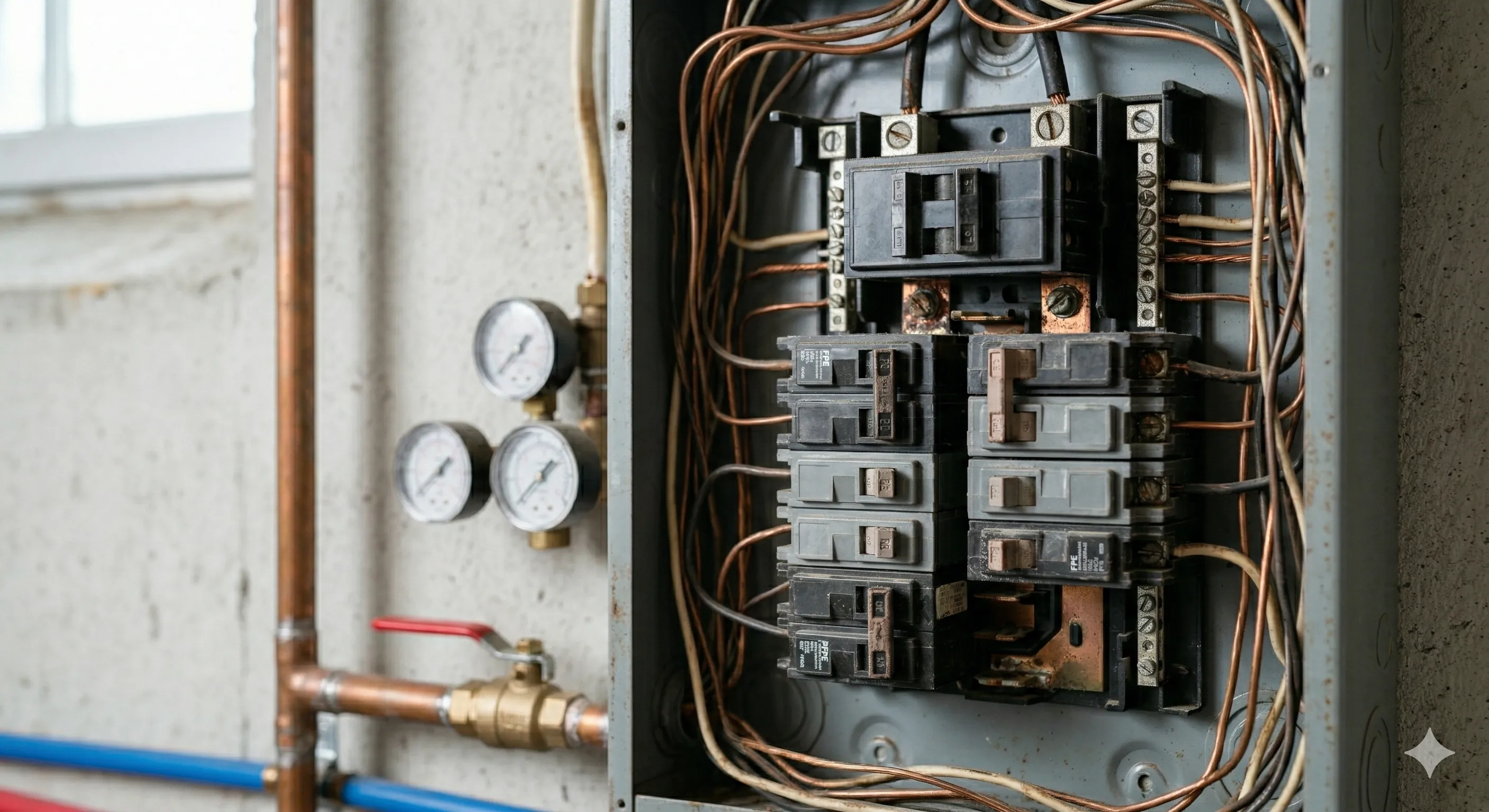
- It's a Federal Pacific (FPE) Stab-Lok or Zinsco panel — these panels have documented failure rates. Breakers fail to trip during overcurrents, causing fires. Replace immediately.
- You're adding major appliances (EV charger, heat pump, hot tub) and need more circuit capacity
- You're experiencing frequent breaker trips due to insufficient circuits
- Your current panel is 100 amps or less and your home's demands have grown
Panel upgrade costs: upgrading from 100 amps to 200 amps costs $1,500–$4,000. Adding a subpanel costs $500–$1,500. Replacing a dangerous FPE or Zinsco panel costs $1,500–$3,000.
Electrical Safety Essentials
Electrical fires cause an estimated 50,000 house fires per year in the U.S. Follow these safety practices:
- Never work on live circuits — always turn off the breaker AND verify with a voltage tester
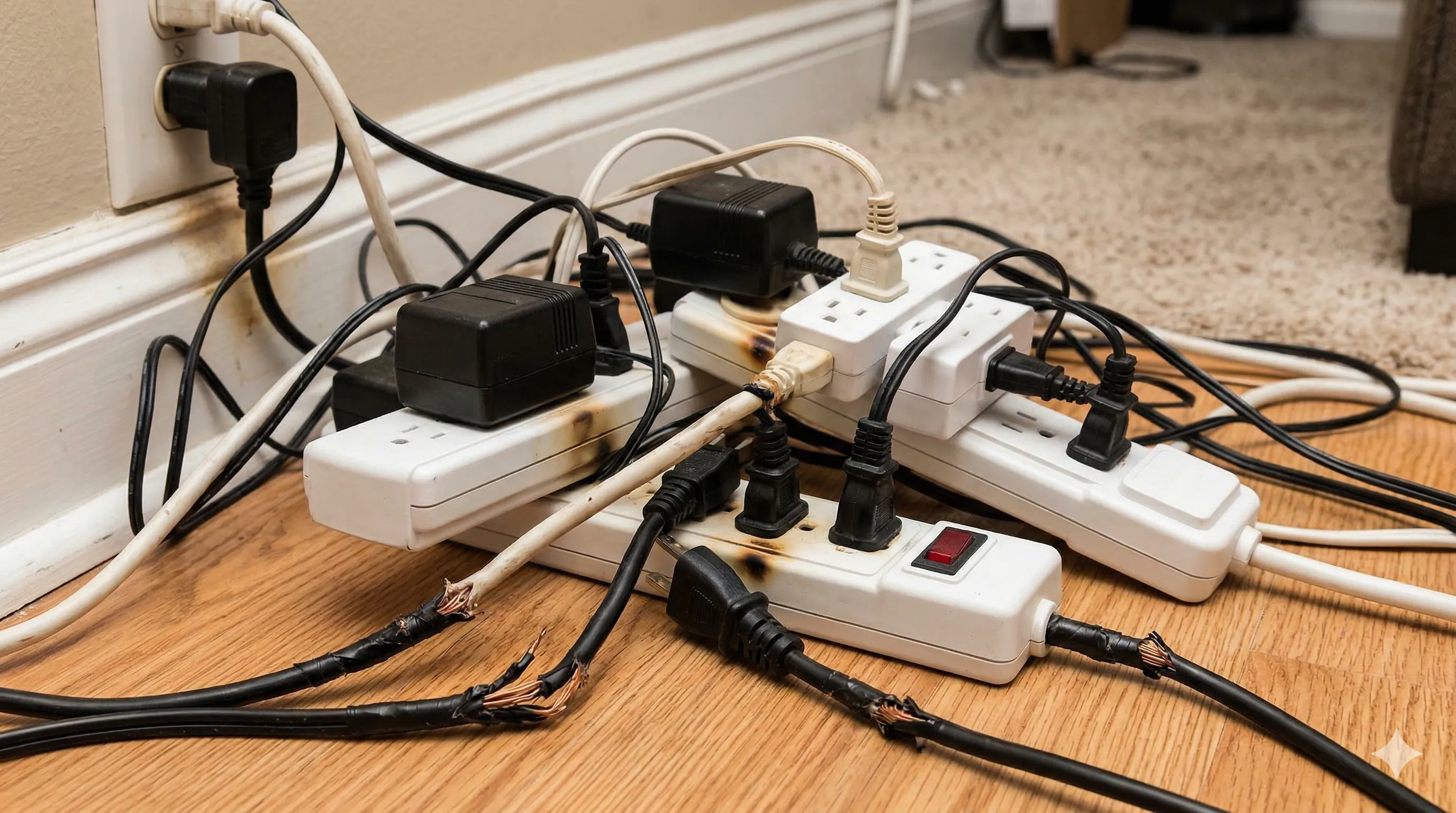
- Don't overload outlets — no more than 1,500 watts per outlet. Don't daisy-chain power strips.
- Replace damaged cords immediately — frayed or cracked extension cords and appliance cords are fire hazards
- Test GFCI outlets monthly — press the "Test" button; the outlet should cut power. Press "Reset" to restore.
- Test smoke detectors monthly — replace batteries twice yearly and replace the entire unit every 10 years
- Use a licensed electrician for any work beyond basic outlet and switch replacement — panel work, new circuits, rewiring, and 240V installations
- Get permits for major work — electrical permits and inspections exist to protect your safety and your insurance coverage
Electrical Costs in 2026
| Service | Cost Range | DIY Possible? |
|---|---|---|
| Outlet replacement | $3–$10 DIY / $75–$150 pro | Yes ★★★ |
| GFCI outlet installation | $15–$25 DIY / $100–$200 pro | Yes ★★★ |
| Light switch/dimmer replacement | $5–$30 DIY / $75–$150 pro | Yes ★★★ |
| Ceiling fan installation | $50–$200 fan / $150–$400 install | Moderate ★★☆ |
| New circuit (from panel) | $200–$500 | No — licensed electrician |
| Panel upgrade (100A to 200A) | $1,500–$4,000 | No — licensed electrician |
| Whole-house rewiring | $8,000–$20,000 | No — licensed electrician |
| EV charger installation (Level 2) | $500–$2,000 | No — licensed electrician |
Frequently Asked Questions About Home Electrical
Electrical Articles
Related Topics

Disclaimer: Electrical work can cause injury, death, or fire. This content is for informational purposes only. Always hire a licensed electrician for panel work, new circuits, and rewiring. HouseFixGuide may earn a commission from links on this page.